Und dann auf "Zum Home-Bildschirm [+]".

Stöbern
genialokal zum Startbildschirm hinzufügen
Installieren Sie die genialokal App auf Ihrem Startbildschirm für einen schnellen Zugriff und eine komfortable Nutzung.
Installieren Sie die genialokal App auf Ihrem Startbildschirm für einen schnellen Zugriff und eine komfortable Nutzung.
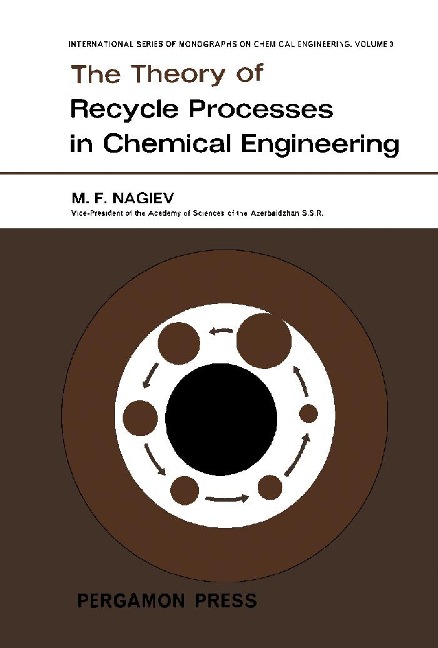
The Theory of Recycle Processes in Chemical Engineering deals with the theory and methods related to dynamic (flow) systems and with the processes in static systems with recycles, The book investigates complex recycle processes through the use of concepts and examples. The development and refinement of chemical technology involves processes that are purely chemical or technological in nature. The technological approach consists in the design of industrial processes where chemical reaction occurs with minimum by-products, and with the maximum useful employment of each unit of catalyst surface and reaction space. The book explores effective systems for the complex processing of chemical raw materials using the technological approach. The text reviews the elementary principles of the theory of recycle process through derivation of equations for simple recycling processes where one or more chemical reactions occur in a single medium or reactor in which the reactions happen consecutively, or in a parallel manner. The book also explains how the investigator can determine the technologically-optimum characteristics of the reaction unit employing five steps. The text will benefit industrial chemists, researchers, technical designers, and engineers, whose works are related with chemistry and recycling.
Foreword to the English EditionIntroductionI. Elementary Principles of the Theory of Recycle Processes 1. The Physical Essentials of Recycle Processes A. Recycle Process with Repeated Processing of the Entire Unreacted Raw Material B. Recycle Process with Repeated Processing of Part of the Unreacted Raw Material C. Permissible Error on Reaching the Virtuauy Steady State D. The Consecutive Chemical Conversion of Unreacted Raw Material E. Common Features of Continuous and Consecutive Processes in the Chemical Conversion of Unreacted Raw Material F. Connexion Between Reaction Time and Recycling Coefficient 2. Single-Reactor System with Multi-Component Recycle Stocks A. Recycle Process for Multi-Component System with Repeated Processing of the Entire Unreacted Raw Material B. Recycle Process for a Multi-Component System with Repeated Processing of Part of the Unreacted Raw Material C. Determining the Required Quantity of Fresh Feed Stock Components for a Given Constant Component Ratio in the Total Reactor Charge D. Practical Example 3. Process with Simple and Conjugate Recycling in Single-Reactor Systems A. Conversion of Single-Component Fresh Feed Stock with the Production of Conjugate Recycle Stock B. Conversion of A Single-Component Feed Stock with Simple Recycling, and of Reaction Products with Simple and Conjugate RecyclingII. Theory of Recycling Processes with Unrestricted Composition of Reactor Charge 1. Combinaton of Once-Through Chemical Processes and Recycle Processes 2. Theory of Recycle Processes with Unrestricted Ratio of the Charge Components 3. Prac-cal Application of the Recycling Theory to Systems with Unrestricted Ratio of Reactor Charge Components A. Material Balance for the Synthesis of Adipinic Acid for Synthetic Fibre (Nylon) Manufacture B. Material Balance for the Synthesis of the Detergent Alkylaryl Sulphonate (Dodecylbenzene Sulphonate) C. Material Balance for the Synthesis of Dimethylterephthalate for Synthetic Fibre (Terylene) Manufacture D. Material Balance for the Complex Processing of Straight-Run Fuel OilIII. Law and Rules for the Making-Up of Complex Mixtures Law of Making-Up Complex Mixtures Rule I Rule II Rule III Rule IVIV. General Theory of Recycle Processes 1. Derivation of Basic Equations 2. The Number of Possible Alternative Calculations for the System 3. Calculating the Total Mateioal Balance for a Multi-Stage Complex System 4. Example of the Determination of the Efficiencies of Various Alternatives for the Complex Processing of Chemical StocksV. Experimental Determination of the Steady-State Parameters of Chemical Processes 1. Determination of the Steady-State Parameters of Simple Reaction Systems A. Method of Consecutive Chemical Conversion of Recycle Stocks B. Pseudo-Continuous Method with Recycling 2. Determination of the Steady-State Parameters of Conjugately-Operating Complex Reacton Systems A. Three-Reactor System -. Multi-Reactor and Multi-Component System C. Examples of Determination of the Steady-State Parameters of Conjugate Recycling Systems Thermal Cracking of Fuel Oil with Recycling of the Debitumenized Cracking Residue Synthesis of Dimethylterephthalate 3. Application of Methods for Determining the Steady-State Parameters to the Solution of Practical Problems in Chemical Engineering A. Experimental Study of the Light Thermal Cracking of Fuel Oil with Recycling of the Distillates for Repeated Light Cracking Short Description of Technological Diagram Study of Light Cracking of Fuel Oil with Recycling of the Heavy Reflux Study of the Light Cracking of Fuel Oil with Recycling of the Heavy Reflux Obtained by Vacuum Distillation of Cracking ResidueVI.