Und dann auf "Zum Home-Bildschirm [+]".

Stöbern
genialokal zum Startbildschirm hinzufügen
Installieren Sie die genialokal App auf Ihrem Startbildschirm für einen schnellen Zugriff und eine komfortable Nutzung.
Installieren Sie die genialokal App auf Ihrem Startbildschirm für einen schnellen Zugriff und eine komfortable Nutzung.
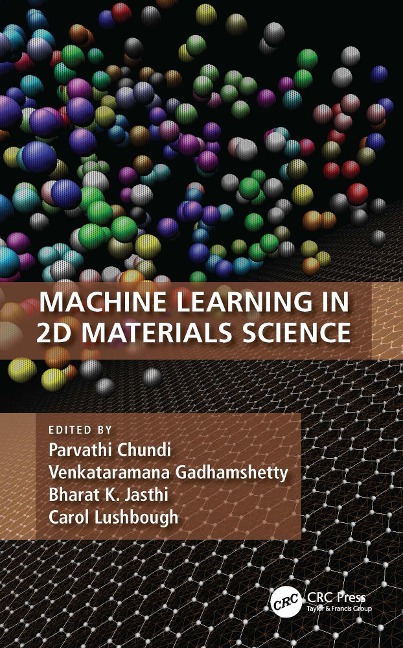
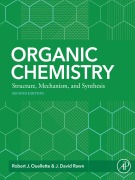
Data science and machine learning (ML) methods are increasingly being used to transform the way research is being conducted in materials science to enable new discoveries and design new materials. For any materials science researcher or student, it may be daunting to figure out if ML techniques are useful for them or, if so, which ones are applicable in their individual contexts, and how to study the effectiveness of these methods systematically. KEY FEATURES - Provides broad coverage of data science and ML fundamentals to materials science researchers so that they can confidently leverage these techniques in their research projects - Offers introductory material in topics such as ML, data integration, and 2D materials - Provides in-depth coverage of current ML methods for validating 2D materials using both experimental and simulation data, researching and discovering new 2D materials, and enhancing ML methods with physical properties of materials - Discusses customized ML methods for 2D materials data and applications and high-throughput data acquisition - Describes several case studies illustrating how ML approaches are currently leading innovations in the discovery, development, manufacturing, and deployment of 2D materials needed for strengthening industrial products - Gives future trends in ML for 2D materials, explainable AI, and dealing with extremely large and small, diverse datasets Aimed at materials science researchers, this book allows readers to quickly, yet thoroughly, learn the ML and AI concepts needed to ascertain the applicability of ML methods in their research.
Parvathi Chundi, PhD is Professor of Computer Science, University of Nebraska-Omaha. Prior to Omaha, Dr. Chundi was with Agilent Technologies and HP Labs, both in Palo Alto, CA. Venkataramana Gadhamshetty, PhD, PE is Professor of Environmental Engineering in Department of Civil and Environmental Engineering, South Dakota School of Mines and Technology. He is a cofounder of 2D materials for Biofilm Science Engineering and Technology (2DBEST) center and 2D materials laboratory (2DML) at SDSM&T. Bharat K. Jasthi, PhD is Associate Professor, Department of Materials and Metallurgical Engineering, South Dakota School of Mines and Technology. Dr. Jasthi has research expertise in the areas of microstructural modification, structure property correlation, new alloy development, powder metallurgy, additive manufacturing, and development of engineered surface thin films and coatings for a wide range of applications. Carol Lushbough, MA is an Emeritus Professor of Computer Science, University of South Dakota.
Chapter 1 Introduction to Machine Learning for Analyzing Material-Microbe Interactions Venkataramana Gadhamshetty, Parvathi Chundi, and Bharat K. Jasthi Chapter 2 Introduction to 2D Materials Roberta Amendola and Amit Acharjee Chapter 3 An Overview of Machine Learning Dilanga Abeyrathna, Mahadevan Subramaniam, and Parvathi Chundi Chapter 4 Discovery of 2D Materials with Machine Learning Md Mahmudul Hasan, Rabbi Sikder, Bharat K. Jasthi, Etienne Z. Gnimpieba, and Venkataramana Gadhamshetty Chapter 5 Bacterial Image Segmentation through Deep Learning Approach Ejan Shakya and Pei-Chi Huang Chapter 6 Self-Supervised Learning-Based Classification of Scanning Electron Microscope Images of Biofilms Md Ashaduzzaman and Mahadevan Subramaniam Chapter 7 Quorum Sensing Mechanisms, Biofilm Growth, and Microbial Corrosion Effects of Bacterial Species Vaibhav Handa, Saurabh Dhiman, Kalimuthu Jawaharraj, Vincent Peta, Alain Bomgni, Etienne Z. Gnimpieba, and Venkataramana Gadhamshetty Chapter 8 Data-Driven 2D Material Discovery Using Biofilm Data and Information Discovery System (Biofilm-DIDS) Tuyen Do, Alain Bomgni, Shiva Aryal, Venkataramana Gadhamshetty, Diing D. M. Agany, Tim Hartman, Bichar D. Shrestha Gurung, Carol M. Lushbough, and Etienne Z. Gnimpieba
Dieses eBook wird im PDF-Format geliefert und ist mit einem Adobe Kopierschutz (DRM) versehen. Sie können dieses eBook mit allen Geräten lesen, die das PDF-Format und den Adobe Kopierschutz (DRM) unterstützen.
Zum Beispiel mit den folgenden Geräten:
• tolino Reader
Laden Sie das eBook direkt über den Reader-Shop auf dem tolino herunter oder übertragen Sie das eBook auf Ihren tolino mit einer kostenlosen Software wie beispielsweise Adobe Digital Editions.
• Sony Reader & andere eBook Reader
Laden Sie das eBook direkt über den Reader-Shop herunter oder übertragen Sie das eBook mit der kostenlosen Software Sony READER FOR PC/Mac oder Adobe Digital Editions auf ein Standard-Lesegeräte mit epub- und Adobe DRM-Unterstützung.
• Tablets & Smartphones
Möchten Sie dieses eBook auf Ihrem Smartphone oder Tablet lesen, finden Sie hier unsere kostenlose Lese-App für iPhone/iPad und Android Smartphone/Tablets.
• PC & Mac
Lesen Sie das eBook direkt nach dem Herunterladen mit einer kostenlosen Lesesoftware, beispielsweise Adobe Digital Editions, Sony READER FOR PC/Mac oder direkt über Ihre eBook-Bibliothek in Ihrem Konto unter „Meine eBooks“ - „online lesen“.
Schalten Sie das eBook mit Ihrer persönlichen Adobe ID auf bis zu sechs Geräten gleichzeitig frei.
Bitte beachten Sie, dass die Kindle-Geräte das Format nicht unterstützen und dieses eBook somit nicht auf Kindle-Geräten lesbar ist.