Und dann auf "Zum Home-Bildschirm [+]".

Stöbern
genialokal zum Startbildschirm hinzufügen
Installieren Sie die genialokal App auf Ihrem Startbildschirm für einen schnellen Zugriff und eine komfortable Nutzung.
Installieren Sie die genialokal App auf Ihrem Startbildschirm für einen schnellen Zugriff und eine komfortable Nutzung.
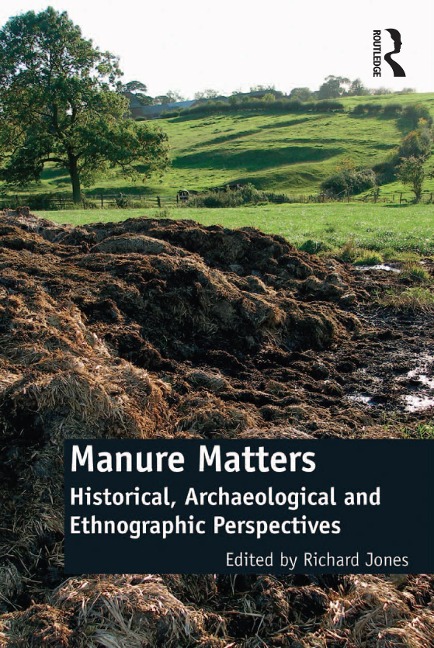
In pre-industrial societies, in which the majority of the population lived directly off the land, few issues were more important than the maintenance of soil fertility. Without access to biodegradable wastes from production processes or to synthetic agrochemicals, early farmers continuously developed strategies aimed at adding nutritional value to their fields using locally available natural materials. Manure really mattered, its collection/creation, storage, and spreading becoming major preoccupations for all agriculturalists no matter what environment they worked or at what period. This book brings together the work of a group of international scholars working on social, cultural, and economic issues relating to past manure and manuring. Contributors use textual, linguistic, archaeological, scientific and ethnographic evidence as the basis for their analyses. The scope of the papers is temporally and geographically broad; they span the Neolithic through to the modern period and cover studies from the Middle East, Britain and Atlantic Europe, and India. Together they allow us to explore the signatures that manure and manuring have left behind, and the vast range of attitudes that have surrounded both substance and activity in the past and present.
Richard Jones is Lecturer in Landscape History in the Centre for English Local History at the University of Leicester. He has published widely on settlement history, agriculture, place-naming and nature in the middle ages including The Medieval Natural World (Longman) and two co-authored books Medieval Villages in an English Landscape: Beginnings and Ends (Windgather Press) and Thorps in a Changing Landscape (University of Hertfordshire Press). He is also co-editor of Deserted Villages Revisited (University of Hertfordshire Press) and Sense of Place in Anglo-Saxon England (Shaun Tyas).
Chapter 1 Why Manure Matters, RichardJones; Chapter 2 Science and Practice, RobertShiel; Chapter 3 Middening and Manuring in Neolithic Europe, AmyBogaard; Chapter 4 (Re)cycles of Life in Late Bronze Age Southern Britain, KateWaddington; Chapter 5 Organic Geochemical Signatures of Ancient Manure Use, IanBull, RichardEvershed; Chapter 6 Dung and Stable Manure on Waterlogged Archaeological Occupation Sites, HarryKenward, AllanHall; Chapter 7 Manure and Middens in English Place-Names, PaulCullen, RichardJones; Chapter 8 The Formation of Anthropogenic Soils Across Three Marginal Landscapes on Fair Isle and in the Netherlands and Ireland, BenPears; Chapter 9 Zibl and Zir?'a, DanielVarisco; Chapter 10 Understanding Medieval Manure, RichardJones; Chapter 11 Lost Souls, HamishForbes; Chapter 12 Manure, Soil and the Vedic Literature, VanajaRamprasad; Chapter 101 Postscript;
Dieses eBook wird im PDF-Format geliefert und ist mit einem Adobe Kopierschutz (DRM) versehen. Sie können dieses eBook mit allen Geräten lesen, die das PDF-Format und den Adobe Kopierschutz (DRM) unterstützen.
Zum Beispiel mit den folgenden Geräten:
• tolino Reader
Laden Sie das eBook direkt über den Reader-Shop auf dem tolino herunter oder übertragen Sie das eBook auf Ihren tolino mit einer kostenlosen Software wie beispielsweise Adobe Digital Editions.
• Sony Reader & andere eBook Reader
Laden Sie das eBook direkt über den Reader-Shop herunter oder übertragen Sie das eBook mit der kostenlosen Software Sony READER FOR PC/Mac oder Adobe Digital Editions auf ein Standard-Lesegeräte mit epub- und Adobe DRM-Unterstützung.
• Tablets & Smartphones
Möchten Sie dieses eBook auf Ihrem Smartphone oder Tablet lesen, finden Sie hier unsere kostenlose Lese-App für iPhone/iPad und Android Smartphone/Tablets.
• PC & Mac
Lesen Sie das eBook direkt nach dem Herunterladen mit einer kostenlosen Lesesoftware, beispielsweise Adobe Digital Editions, Sony READER FOR PC/Mac oder direkt über Ihre eBook-Bibliothek in Ihrem Konto unter „Meine eBooks“ - „online lesen“.
Schalten Sie das eBook mit Ihrer persönlichen Adobe ID auf bis zu sechs Geräten gleichzeitig frei.
Bitte beachten Sie, dass die Kindle-Geräte das Format nicht unterstützen und dieses eBook somit nicht auf Kindle-Geräten lesbar ist.