Und dann auf "Zum Home-Bildschirm [+]".

Stöbern
genialokal zum Startbildschirm hinzufügen
Installieren Sie die genialokal App auf Ihrem Startbildschirm für einen schnellen Zugriff und eine komfortable Nutzung.
Installieren Sie die genialokal App auf Ihrem Startbildschirm für einen schnellen Zugriff und eine komfortable Nutzung.
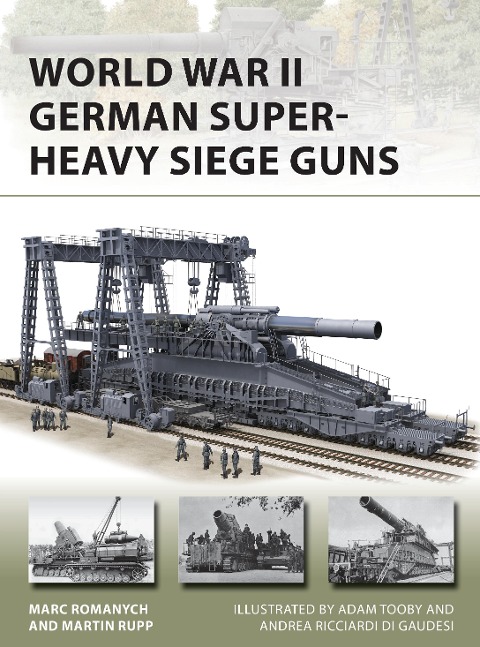
As the outbreak of World War II approached, Nazi Germany ordered artillery manufacturers Krupp and Rheimetall-Borsig to build several super-heavy siege guns, vital to smash through French and Belgian fortresses that stood in the way of the Blitzkrieg.
These 'secret weapons' were much larger than the siege artillery of World War I and included the largest artillery piece of the war, the massive 80cm railway gun 'schwere Gustav' (Heavy Gustav). However, these complex and massive artillery pieces required years to build and test and, as war drew near, the German High Command hastily brought several WWI-era heavy artillery pieces back into service and then purchased, and later confiscated, a large number of Czech Skoda mortars.
The new super siege guns began entering service in time for the invasion of Russia, notably participating in the attack on the fortress of Brest-Litovsk. The highpoint for the siege artillery was the siege of Sevastopol in the summer of 1942, which saw the largest concentration of siege guns in the war. Afterwards, when Germany was on the defensive in the second half of 1943, the utility of the guns was greatly diminished, and they were employed in a piecemeal and sporadic fashion on both the Eastern and Western Fronts. In total, the German Army used some 50 siege guns during World War II, far more than the thirty-five it had during World War I.
Supported by contemporary photographs and detailed artwork of the guns and their components, this is an essential guide to these guns, exploring their history, development, and deployment in stunning detail.
Marc Romanych is a retired US Army combat arms officer. He has a Bachelor of Arts degree in History from the University of Maryland and a Master of Arts degree in International Relations from St. Mary's University. He has co-authored several books on World War I and II artillery and fortifications for Osprey Publishing.
Martin Rupp has a Bachelor of Arts degree from the University of Applied Sciences, Saarbrücken. He specializes in fortification and artillery topics and has co-authored books about the battles for the Maginot Line in 1940 and World War I German siege artillery for Osprey Publishing.
Introduction
The Return of Fortress Europe
Design and Development
Operational History
Conclusion
Bibliography
Index
Dieses eBook wird im PDF-Format geliefert und ist mit einem Adobe Kopierschutz (DRM) versehen. Sie können dieses eBook mit allen Geräten lesen, die das PDF-Format und den Adobe Kopierschutz (DRM) unterstützen.
Zum Beispiel mit den folgenden Geräten:
• tolino Reader
Laden Sie das eBook direkt über den Reader-Shop auf dem tolino herunter oder übertragen Sie das eBook auf Ihren tolino mit einer kostenlosen Software wie beispielsweise Adobe Digital Editions.
• Sony Reader & andere eBook Reader
Laden Sie das eBook direkt über den Reader-Shop herunter oder übertragen Sie das eBook mit der kostenlosen Software Sony READER FOR PC/Mac oder Adobe Digital Editions auf ein Standard-Lesegeräte mit epub- und Adobe DRM-Unterstützung.
• Tablets & Smartphones
Möchten Sie dieses eBook auf Ihrem Smartphone oder Tablet lesen, finden Sie hier unsere kostenlose Lese-App für iPhone/iPad und Android Smartphone/Tablets.
• PC & Mac
Lesen Sie das eBook direkt nach dem Herunterladen mit einer kostenlosen Lesesoftware, beispielsweise Adobe Digital Editions, Sony READER FOR PC/Mac oder direkt über Ihre eBook-Bibliothek in Ihrem Konto unter „Meine eBooks“ - „online lesen“.
Schalten Sie das eBook mit Ihrer persönlichen Adobe ID auf bis zu sechs Geräten gleichzeitig frei.
Bitte beachten Sie, dass die Kindle-Geräte das Format nicht unterstützen und dieses eBook somit nicht auf Kindle-Geräten lesbar ist.