Und dann auf "Zum Home-Bildschirm [+]".

Stöbern
genialokal zum Startbildschirm hinzufügen
Installieren Sie die genialokal App auf Ihrem Startbildschirm für einen schnellen Zugriff und eine komfortable Nutzung.
Installieren Sie die genialokal App auf Ihrem Startbildschirm für einen schnellen Zugriff und eine komfortable Nutzung.
Ihr gewünschter Artikel ist in 0 Buchhandlungen vorrätig - wählen Sie hier eine Buchhandlung in Ihrer Nähe aus:

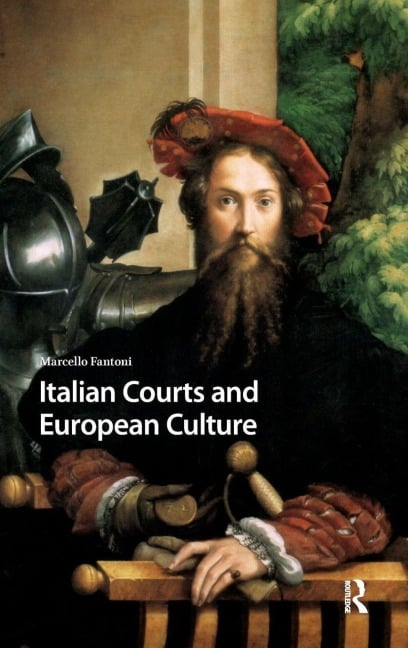
This book offers a comprehensive reconstruction of the Italian geo-political map focused on courts (thirteenth - seventeenth centuries) and analyses the homogeneity of political forms and of the Italian Christian-Classicist culture.
Marcello Fantoni is currently Professor of History and Vice President at Kent State University (USA). He received his Ph.D. in History and Civilization in 1991 from the European University Institute. In 1998-1999 he was awarded a grant from The Harvard University Center for Italian Renaissance Studies. Between 1995-2004 he was Director of the Georgetown University program in Florence and visiting professor of Renaissance History at Georgetown University, Washington D.C. In 2002 he received his tenure as full professor in Early Modern History at the University of Teramo (Italy) and in 2005 he was appointed Director of the Kent State University program in Florence. His academic positions include: Director of Centro studi Europa delle Corti (since 2004), member of the board of "Centre de recherche du château de Versailles" (France, since 2007). Some of his main publications are: La corte del Granduca. Forma e simboli del potere mediceo fra Cinque e Seicento (1994), The Anglo-Americans and Florence. Idea and Invention of the Renaissance (2000), Il potere dello spazio. Principi e città nell'Italia dei secoli XV-XVII (2002), The Art Market in Italy: 15th-17th centuries (2002); Catholicism as Decadence (2007) and Fès et Florence en quête d'absolu (2008); The Court in Europe (2012).
Acknowledgements, Preface, I: Republics and Princes, 1.The Historiographical Journey, 2.Historical Development, 3.A World of Courts, 3.a. What is a court?, 3.b. Courts everywhere, II: Italian Courts and European Culture, 4. Europe of the Courts, 4.a. The terms of the question, 4.b. From the Middle Ages to the finis Italiae, 4.c. Invasion and counter-invasion, 4.d. Italian courts and renovatio imperii, 4.e. A queen and two kings, 4.f. The 'Second Renaissance', 5.g. ... and beyond, 5. People, 5.a. Princesses and princes, 5.b. People going, 5.c. People coming, 6. Things, 6.a. The arts market, 6.b. Books, 6.c. Language, III: Models, 7. Spaces, 8. Images, 9. The performing arts, 10.The forma del vivere, 10.a. Dance, 10.b. Clothes, 10.c. The gentleman, IV. Common denominators, Index