Und dann auf "Zum Home-Bildschirm [+]".

Stöbern
genialokal zum Startbildschirm hinzufügen
Installieren Sie die genialokal App auf Ihrem Startbildschirm für einen schnellen Zugriff und eine komfortable Nutzung.
Installieren Sie die genialokal App auf Ihrem Startbildschirm für einen schnellen Zugriff und eine komfortable Nutzung.
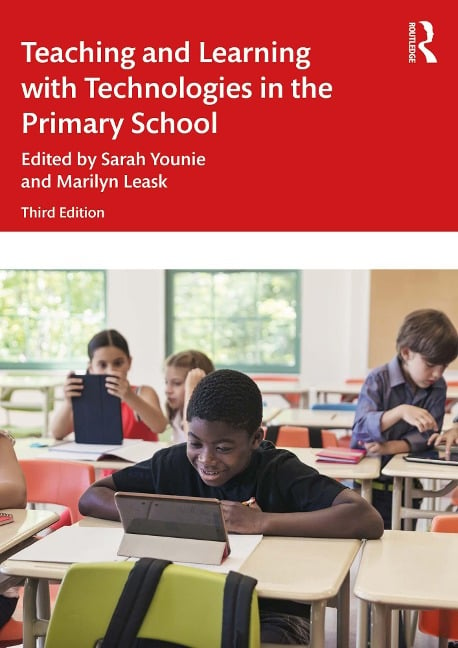
This fully updated third edition of Teaching and Learning with Technologies in the Primary School introduces practising and student teachers to the range of ways in which technology can be used to support and extend teaching and learning opportunities in their classrooms. Newly expanded to include 50% brand new chapters reflecting the abundant changes in the field since the last edition was published, it offers practical guidance underpinned by the latest research and teaching in the field. The authors draw on the extensive experience of educators in Australia, England, Ireland, Scotland, South Africa, the U.S.A. and Wales to provide local, national and international examples of the application of digital technologies to teaching and learning across the primary curriculum. Illustrated throughout with case studies and examples together with a glossary explaining key terms, chapters focus on how technology-based practices can support the teaching of individual subjects, as well as a range of teaching and learning styles. Key and new topics covered include: - Supporting reading and writing with technology - Technology in the early years - Developing e-skills of parents - Use of Virtual Reality in learning - PedTech - Resilience in the digital world Written for all training primary teachers, as well as more experienced teachers and technology co-ordinators looking for guidance on the latest innovative practice, Teaching and Learning with Technologies in the Primary School, 3rd edition, offers advice and ideas for creative, engaging and successful teaching and learning.
Sarah Younie is Professor in Education Innovation at De Montfort University, UK. Her primary research is in translational research in education, that is, the application of research in practice. Sarah is editor-in-chief of the Journal Technology, Pedagogy and Education. Marilyn Leask is Professor of Education at De Montfort University, UK, co-chair of the MESH Guides knowledge mobilisation initiative and has been a teacher, researcher, secondary school assistant head, local authority policy officer and university dean. She has had policy roles in two UK national agencies.
Foreword Introduction 1 - LEARNING IN THE DIGITAL AGE: DEVELOPING CRITICAL, CREATIVE AND COLLABORATIVE SKILLS 2 - TEACHING AND LEARNING FOR RESILIENCE IN A DIGITAL WORLD 3 - PEDAGOGY AND TECHNOLOGY 4 - SPECIAL EDUCATIONAL NEEDS AND TECHNOLOGY 5 - DIGITAL TECHNOLOGIES AND ASSESSMENT 6 - DIGITAL DILEMMAS IN THE EARLY YEARS 7 - DIGITAL TECHNOLOGY AND ART 8 - TECHNOLOGY AND DIALOGUE IN THE PRIMARY CLASSROOM 9 - DIGITAL STORYTELLING 10 - USING SHORT FILM TO DEVELOP CHILDREN'S MOVING IMAGE LITERACY 11 - USING TECHNOLOGY CREATIVELY IN ENGLISH AND MATHEMATICS 12 - USING TECHNOLOGY IN PRIMARY SCIENCE 13 - USING MOBILE TECHNOLOGY TO RAISE STEM ATTAINMENT AND DEVELOP SCIENTIFIC THINKING 14 - MODERN FOREIGN LANGUAGE TEACHING USING DIGITAL TOOLS 15 - ENHANCING PRIMARY MUSIC WITH TECHNOLOGY 16 - TECHNOLOGY AND COMPUTATIONAL THINKING IN EARLY CHILDHOOD 17 - COMPUTER PROGRAMMING IN THE PRIMARY SCHOOL 18 - AUGMENTED REALITY (AR) - INNOVATIVE USES IN PRIMARY EDUCATION 19 - INTERACTIVE TECHNOLOGIES AND OUTDOOR LEARNING 20 - VIDEO CONFERENCING AND AUTHENTIC LEARNING IN THE PRIMARY SCHOOL CLASSROOM 21 - VISUAL LITERACY, LEARNING AND CONCEPT MAPPING IN PRIMARY AGE CHILDREN - NEURO-POSITIVE STRATEGIES FOR BRAIN-BASED LEARNING 22 - GLOBAL CITIZENSHIP: EDUCATION IN AN INTERCONNECTED GLOBAL SPACE 23 - SCHOOL POLICY AND ONLINE SAFETY 24 - FAMILY LEARNING IN THE CONTEXT OF COMPUTER SCIENCE EDUCATION 25 - CASE STUDY: SUSTAINABLE STRATEGIES FOR ICT/DIGITAL TECHNOLOGY USE IN SCHOOLS 26 - USING DIGITAL TECHNOLOGIES TO SUPPORT CONTINUING PROFESSIONAL DEVELOPMENT APPENDIX 1: EMERGING TRENDS: ARTIFICIAL INTELLIGENCE AND EDUCATION
Dieses eBook wird im PDF-Format geliefert und ist mit einem Adobe Kopierschutz (DRM) versehen. Sie können dieses eBook mit allen Geräten lesen, die das PDF-Format und den Adobe Kopierschutz (DRM) unterstützen.
Zum Beispiel mit den folgenden Geräten:
• tolino Reader
Laden Sie das eBook direkt über den Reader-Shop auf dem tolino herunter oder übertragen Sie das eBook auf Ihren tolino mit einer kostenlosen Software wie beispielsweise Adobe Digital Editions.
• Sony Reader & andere eBook Reader
Laden Sie das eBook direkt über den Reader-Shop herunter oder übertragen Sie das eBook mit der kostenlosen Software Sony READER FOR PC/Mac oder Adobe Digital Editions auf ein Standard-Lesegeräte mit epub- und Adobe DRM-Unterstützung.
• Tablets & Smartphones
Möchten Sie dieses eBook auf Ihrem Smartphone oder Tablet lesen, finden Sie hier unsere kostenlose Lese-App für iPhone/iPad und Android Smartphone/Tablets.
• PC & Mac
Lesen Sie das eBook direkt nach dem Herunterladen mit einer kostenlosen Lesesoftware, beispielsweise Adobe Digital Editions, Sony READER FOR PC/Mac oder direkt über Ihre eBook-Bibliothek in Ihrem Konto unter „Meine eBooks“ - „online lesen“.
Schalten Sie das eBook mit Ihrer persönlichen Adobe ID auf bis zu sechs Geräten gleichzeitig frei.
Bitte beachten Sie, dass die Kindle-Geräte das Format nicht unterstützen und dieses eBook somit nicht auf Kindle-Geräten lesbar ist.