Und dann auf "Zum Home-Bildschirm [+]".

Stöbern
genialokal zum Startbildschirm hinzufügen
Installieren Sie die genialokal App auf Ihrem Startbildschirm für einen schnellen Zugriff und eine komfortable Nutzung.
Installieren Sie die genialokal App auf Ihrem Startbildschirm für einen schnellen Zugriff und eine komfortable Nutzung.
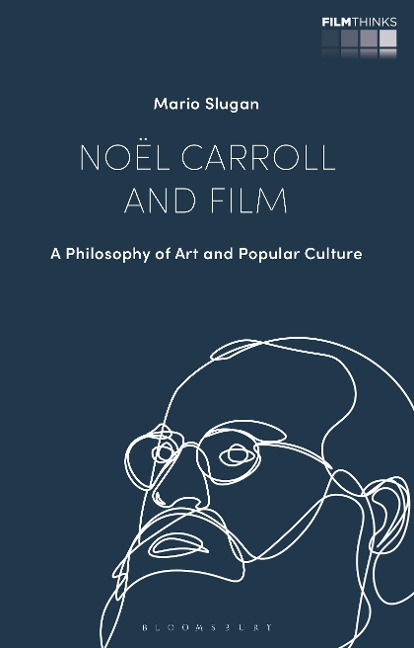
Noël Carroll is one of the most prolific, widely-cited and distinguished philosophers of art, but how, specifically, has cinema impacted his thought? This book, one of the first in the acclaimed 'Film Thinks' series, argues that Carroll's background in both cinema and philosophy has been crucial to his overall theory of aesthetics. Often a controversial figure within film studies, as someone who has assertively contested the psychoanalytic, semiotic and Marxist cornerstones of the field, his allegiance to alternative philosophical traditions has similarly polarised his readership.
Mario Slugan proposes that Carroll's defence of the notions of truth and objectivity provides a welcome antidote to 'anything goes' attitudes and postmodern scepticism towards art and popular culture, including film. Carroll's thinking has loosened the grip of continental philosophers on cinema studies - from Maurice Merleau-Ponty to Gilles Deleuze and Jacques Lacan - by turning to cognitive and analytical approaches. Slugan goes further to reveal that Carroll's methods of evaluation and interpretation in fact, usefully bridge gaps between these `opposing' sides, to look at artworks anew. Throughout, Slugan revisits and enriches Carroll's definitions of popular art, mass art, horror, humour and other topics and concludes by tracing their origins to this important thinker's relationship with the medium of cinema.
Mario Slugan is Lecturer in Film Studies, Queen Mary University of London, UK. He is the author of Montage as Perceptual Experience: Berlin Alexanderplatz from Döblin to Fassbinder (2017), Noël Carroll on Film: A Philosophy of Art and Popular Culture (Bloomsbury, 2018), and Fiction and Imagination in Early Cinema (Bloomsbury, 2019). He is also the editor of an open-access peer-reviewed academic journal Apparatus: Film, Media and Digital Cultures of Central and Eastern Europe and book review editor for Early Popular Visual Culture.
List of Illustrations
Acknowledgements
Introduction
1. Institutional Context
2. Film Theory
3.Assessment of Theory
4. Analytic and Cognitivist Debates
5. Interpretation and Filmmaking
6. Philosophy of Art
Conclusion
Bibliography
Index
Dieses eBook wird im PDF-Format geliefert und ist mit einem Adobe Kopierschutz (DRM) versehen. Sie können dieses eBook mit allen Geräten lesen, die das PDF-Format und den Adobe Kopierschutz (DRM) unterstützen.
Zum Beispiel mit den folgenden Geräten:
• tolino Reader
Laden Sie das eBook direkt über den Reader-Shop auf dem tolino herunter oder übertragen Sie das eBook auf Ihren tolino mit einer kostenlosen Software wie beispielsweise Adobe Digital Editions.
• Sony Reader & andere eBook Reader
Laden Sie das eBook direkt über den Reader-Shop herunter oder übertragen Sie das eBook mit der kostenlosen Software Sony READER FOR PC/Mac oder Adobe Digital Editions auf ein Standard-Lesegeräte mit epub- und Adobe DRM-Unterstützung.
• Tablets & Smartphones
Möchten Sie dieses eBook auf Ihrem Smartphone oder Tablet lesen, finden Sie hier unsere kostenlose Lese-App für iPhone/iPad und Android Smartphone/Tablets.
• PC & Mac
Lesen Sie das eBook direkt nach dem Herunterladen mit einer kostenlosen Lesesoftware, beispielsweise Adobe Digital Editions, Sony READER FOR PC/Mac oder direkt über Ihre eBook-Bibliothek in Ihrem Konto unter „Meine eBooks“ - „online lesen“.
Schalten Sie das eBook mit Ihrer persönlichen Adobe ID auf bis zu sechs Geräten gleichzeitig frei.
Bitte beachten Sie, dass die Kindle-Geräte das Format nicht unterstützen und dieses eBook somit nicht auf Kindle-Geräten lesbar ist.