Und dann auf "Zum Home-Bildschirm [+]".

Stöbern
genialokal zum Startbildschirm hinzufügen
Installieren Sie die genialokal App auf Ihrem Startbildschirm für einen schnellen Zugriff und eine komfortable Nutzung.
Installieren Sie die genialokal App auf Ihrem Startbildschirm für einen schnellen Zugriff und eine komfortable Nutzung.

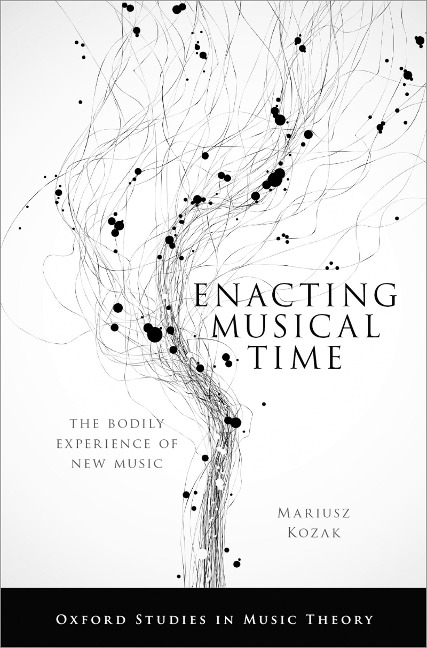
What is musical time? Where is it manifested? How does it enter into our experience, and how do we capture it in our analyses? A compelling approach among works on temporality, phenomenology, and the ecologies of the new sound worlds, Enacting Musical Time argues that musical time is itself the site of the interaction between musical sounds and a situated, embodied listener, created by the moving bodies of participants engaged in musical activities. Author Mariusz Kozak describes musical time as something that emerges when the listener enacts her implicit knowledge about "how music goes," from deliberate inactivity, to such simple actions as tapping her foot in time with the beat, to dancing in a way that engages her entire body. Kozak explores this idea in the context of modernist and postmodernist musical styles, where composers create unfamiliar and idiosyncratic temporal experiences, blur the line between spectatorship and participation, and challenge conventional notions of form. Basing his discussion on the phenomenology of Merleau-Ponty and on the ecological psychology of J. J. Gibson, Kozak examines different aspects of musical structure through the lens of embodied cognition and what phenomenologists call "lived time." A bold new theory derived from an unprecedented fusion of research perspectives, Enacting Musical Time will engage scholars across a range of disciplines, from music theory, music cognition, cognitive science, continental philosophy, and social anthropology.
Mariusz Kozak is an Assistant Professor of Music at Columbia University. His research focuses on the emergence of musical meaning in contemporary art music, the development and cognitive bases of musical experience, and the phenomenology of bodily interactions in musical behavior. In his work, he bridges experimental approaches from embodied cognition with phenomenology and music analysis, in particular using motion-capture technology to study the movements of performers and listeners. His articles have appeared in Music Theory Spectrum and Music Theory Online, among others.
Acknowledgements Introduction Lines Music and Time Enacting Musical Time 1. MEANING Musical Objects Objective Time Lived Time Significance Affordances 2. AFFORDANCES Breathing Becoming Music (Behave So Strangely) Musical Affordances Situation Semantics Cultural Information Situation Semantics and Musical Affordances Temporal Affordances Musical Affordances of Breath 3. BODY Embodied Cognition Temporal Bodies Kinesthetic Knowledge Kinesthetic Knowledge in Music Analysis 4. FLESH The Body's "I Can" From "I Can" to Time The Flesh of Time Temporal Objects and the Flesh of Music 5. AFFECTIVITY Auto-Affection Enacting Lived Time Louis Andriessen's De Tijd Eternity in Augustine's Confessions Temporal and Affective Dynamics of Movement Enacting Chronal Anxiety 6. VERTICALITY Vertical Time Eternal Return Affect Hosokawa's Vertical Time Malleable Musical Form Works Cited Index