Und dann auf "Zum Home-Bildschirm [+]".

Stöbern
genialokal zum Startbildschirm hinzufügen
Installieren Sie die genialokal App auf Ihrem Startbildschirm für einen schnellen Zugriff und eine komfortable Nutzung.
Installieren Sie die genialokal App auf Ihrem Startbildschirm für einen schnellen Zugriff und eine komfortable Nutzung.
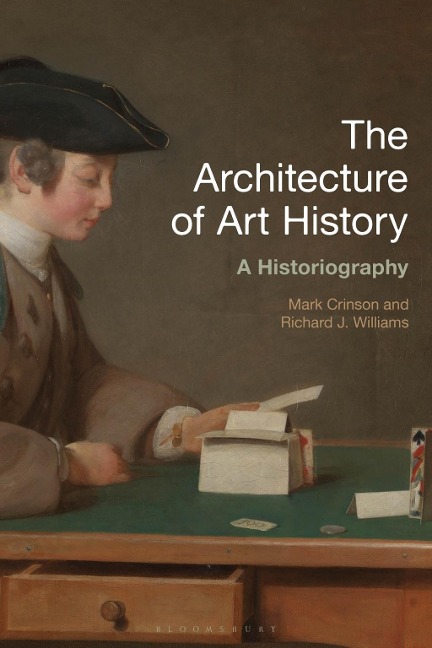
What is the place of architecture in the history of art? Why has it been at times central to the discipline, and at other times seemingly so marginal? What is its place now?
Many disciplines have a stake in the history of architecture - sociology, anthropology, human geography, to name a few. This book deals with perhaps the most influential tradition of all - art history - examining how the relation between the disciplines of art history and architectural history has waxed and waned over the last one hundred and fifty years.
In this highly original study, Mark Crinson and Richard J. Williams point to a decline in the importance attributed to the role of architecture in art history over the last century - which has happened without crisis or self-reflection. The book explores the problem in relation to key art historical approaches, from formalism, to feminism, to the social history of art, and in key institutions from the Museum of Modern Art, to the journal October. Among the key thinkers explored are Banham, Baxandall, Giedion, Panofsky, Pevsner, Pollock, Riegl, Rowe, Steinberg, Wittkower and Wölfflin. The book will provoke debate on the historiography and present state of the discipline of art history, and it makes a powerful case for the reconsideration of architecture.
Mark Crinson is Professor of Architectural History and Assistant Dean for Research, School of Arts at Birkbeck, University of London. He won the 2004 Spiro Kostof Prize for his work Modern Architecture and the End of Empire, and the 2012 Historians of British Art Prize for Stirling and Gowan: Architecture from Austerity to Affluence.
Richard Williams is Professor of Contemporary Visual Cultures at the University of Edinburgh, UK. His other books include Why Cities Look The Way They Do (2019), Sex and Buildings (2013), Brazil: Modern Architectures in History (2009) and The Anxious City (2004).
Introduction
1. The German Tradition
2. The Architectural Unconscious - Steinberg and Baxandall
3. Modernism- Institutional and Phenomenal
4. From Image to Environment - Reyner Banham's Architecture
5. The New Art History
6. October's Architecture
Conclusion
Dieses eBook wird im PDF-Format geliefert und ist mit einem Adobe Kopierschutz (DRM) versehen. Sie können dieses eBook mit allen Geräten lesen, die das PDF-Format und den Adobe Kopierschutz (DRM) unterstützen.
Zum Beispiel mit den folgenden Geräten:
• tolino Reader
Laden Sie das eBook direkt über den Reader-Shop auf dem tolino herunter oder übertragen Sie das eBook auf Ihren tolino mit einer kostenlosen Software wie beispielsweise Adobe Digital Editions.
• Sony Reader & andere eBook Reader
Laden Sie das eBook direkt über den Reader-Shop herunter oder übertragen Sie das eBook mit der kostenlosen Software Sony READER FOR PC/Mac oder Adobe Digital Editions auf ein Standard-Lesegeräte mit epub- und Adobe DRM-Unterstützung.
• Tablets & Smartphones
Möchten Sie dieses eBook auf Ihrem Smartphone oder Tablet lesen, finden Sie hier unsere kostenlose Lese-App für iPhone/iPad und Android Smartphone/Tablets.
• PC & Mac
Lesen Sie das eBook direkt nach dem Herunterladen mit einer kostenlosen Lesesoftware, beispielsweise Adobe Digital Editions, Sony READER FOR PC/Mac oder direkt über Ihre eBook-Bibliothek in Ihrem Konto unter „Meine eBooks“ - „online lesen“.
Schalten Sie das eBook mit Ihrer persönlichen Adobe ID auf bis zu sechs Geräten gleichzeitig frei.
Bitte beachten Sie, dass die Kindle-Geräte das Format nicht unterstützen und dieses eBook somit nicht auf Kindle-Geräten lesbar ist.