Und dann auf "Zum Home-Bildschirm [+]".

Stöbern
genialokal zum Startbildschirm hinzufügen
Installieren Sie die genialokal App auf Ihrem Startbildschirm für einen schnellen Zugriff und eine komfortable Nutzung.
Installieren Sie die genialokal App auf Ihrem Startbildschirm für einen schnellen Zugriff und eine komfortable Nutzung.
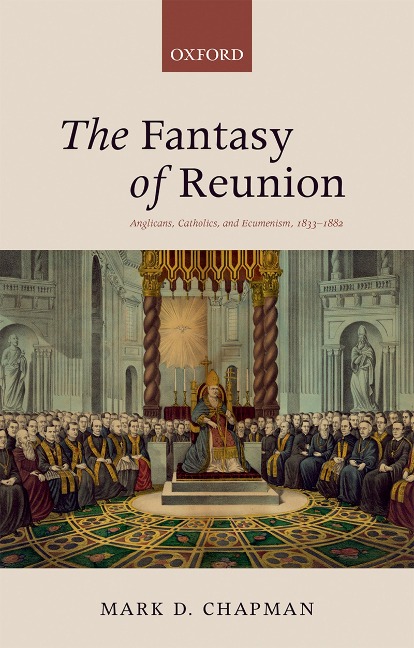
This book discusses the different understandings of 'catholicity' that emerged in the interactions between the Church of England and other churches - particularly the Roman Catholic Church and later the Old Catholic Churches - from the early 1830s to the early 1880s. It presents a pre-history of ecumenism, which isolates some of the most distinctive features of the ecclesiological positions of the different churches as these developed through the turmoil of the nineteenth century. It explores the historical imagination of a range of churchmen and theologians, who sought to reconstruct their churches through an encounter with the past whose relevance for the construction of identity in the present went unquestioned. The past was no foreign country but instead provided solutions to the perceived dangers facing the church of the present. Key protagonists are John Henry Newman and Edward Bouverie Pusey, the leaders of the Oxford Movement, as well as a number of other less well-known figures who made their distinctive mark on the relations between the churches. The key event in reshaping the terms of the debates between the churches was the Vatican Council of 1870, which put an end to serious dialogue for a very long period, but which opened up new avenues for the Church of England and other non-Roman European churches including the Orthodox. In the end, however, ecumenism was halted in the 1880s by an increasingly complex European situation and an energetic expansion of the British Empire, which saw the rise of Pan-Anglicanism at the expense of ecumenism.
Mark Chapman is Vice-Principal of Ripon College, Cuddesdon and Reader in Modern Theology in the University of Oxford. He has written widely on the history and theology of Anglicanism as well as in Church History and political Theology. He is also assistant priest in three rural Church of England parishes. He is a member of the General Synod of the Church of England.
- Introduction - 1: The Oxford Movement and Ecumenism - 2: Romantic Ecumenism - 3: Doctrinal Ecumenism: Pusey, Newman, and the first Eirenicon - 4: Pusey, Newman, and the end of a healthful Reunion : The Second and Third Volumes of Pusey s Eirenicon - 5: An ecumenical front against liberalism: Bishop Alexander Penrose Forbes of Brechin and An Explanation of the Thirty-nine Articles - 6: Forbes, Pusey and the First Vatican Council - 7: Forbes, Victor De Buck and the Progress of the Council - 8: Redefining Ecumenism in the 1870s - 9: Henry Liddon and the Bonn Conferences - 10: Eduard Herzog and the Anglo-American Church - Epilogue - Bibliography
Dieses eBook wird im PDF-Format geliefert und ist mit einem Adobe Kopierschutz (DRM) versehen. Sie können dieses eBook mit allen Geräten lesen, die das PDF-Format und den Adobe Kopierschutz (DRM) unterstützen.
Zum Beispiel mit den folgenden Geräten:
• tolino Reader
Laden Sie das eBook direkt über den Reader-Shop auf dem tolino herunter oder übertragen Sie das eBook auf Ihren tolino mit einer kostenlosen Software wie beispielsweise Adobe Digital Editions.
• Sony Reader & andere eBook Reader
Laden Sie das eBook direkt über den Reader-Shop herunter oder übertragen Sie das eBook mit der kostenlosen Software Sony READER FOR PC/Mac oder Adobe Digital Editions auf ein Standard-Lesegeräte mit epub- und Adobe DRM-Unterstützung.
• Tablets & Smartphones
Möchten Sie dieses eBook auf Ihrem Smartphone oder Tablet lesen, finden Sie hier unsere kostenlose Lese-App für iPhone/iPad und Android Smartphone/Tablets.
• PC & Mac
Lesen Sie das eBook direkt nach dem Herunterladen mit einer kostenlosen Lesesoftware, beispielsweise Adobe Digital Editions, Sony READER FOR PC/Mac oder direkt über Ihre eBook-Bibliothek in Ihrem Konto unter „Meine eBooks“ - „online lesen“.
Schalten Sie das eBook mit Ihrer persönlichen Adobe ID auf bis zu sechs Geräten gleichzeitig frei.
Bitte beachten Sie, dass die Kindle-Geräte das Format nicht unterstützen und dieses eBook somit nicht auf Kindle-Geräten lesbar ist.