Und dann auf "Zum Home-Bildschirm [+]".

Stöbern
genialokal zum Startbildschirm hinzufügen
Installieren Sie die genialokal App auf Ihrem Startbildschirm für einen schnellen Zugriff und eine komfortable Nutzung.
Installieren Sie die genialokal App auf Ihrem Startbildschirm für einen schnellen Zugriff und eine komfortable Nutzung.
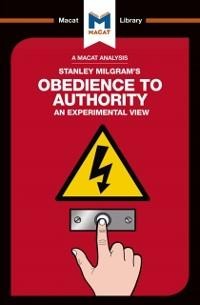
Stanley Milgram is one of the most influential and widely-cited social psychologists of the twentieth century. Recognized as perhaps the most creative figure in his field, he is famous for crafting social-psychological experiments with an almost artistic sense of creative imagination - casting new light on social phenomena in the process. His 1974 study Obedience to Authority exemplifies creative thinking at its most potent, and controversial. Interested in the degree to which an "authority figure" could encourage people to commit acts against their sense of right and wrong, Milgram tricked volunteers for a "learning experiment" into believing that they were inflicting painful electric shocks on a person in another room. Able to hear convincing sounds of pain and pleas to stop, the volunteers were told by an authority figure - the "scientist" - that they should continue regardless. Contrary to his own predictions, Milgram discovered that, depending on the exact set up, as many as 65% of people would continue right up to the point of "killing" the victim. The experiment showed, he believed, that ordinary people can, and will, do terrible things under the right circumstances, simply through obedience. As infamous and controversial as it was creatively inspired, the "Milgram experiment" shows just how radically creative thinking can shake our most fundamental assumptions.
Dr Mark Gridley teaches psychology at Heidelberg University, Ohio. His research interests include social psychology and the history and psychology of music. Dr Bill Jenkins holds a PhD in psychology from the University of Michigan. He is currently co-chair of the Department of Psychology at Mercer University.
Ways in to the text Who was Stanley Milgram? What does Obedience to Authority say? Why does Obedience to Authority matter? Section 1: Influences Module 1: The Author and the Historical Context Module 2: Academic Context Module 3: The Problem Module 4: The Author's Contribution Section 2: Ideas Module 5: Main Ideas Module 6: Secondary Ideas Module 7: Achievement Module 8: Place in the Author's Work Section 3: Impact Module 9: The First Responses Module 10: The Evolving Debate Module 11: Impact and Influence Today Module 12: Where Next? Glossary of Terms People Mentioned in the Text Works Cited
Dieses eBook wird im PDF-Format geliefert und ist mit einem Adobe Kopierschutz (DRM) versehen. Sie können dieses eBook mit allen Geräten lesen, die das PDF-Format und den Adobe Kopierschutz (DRM) unterstützen.
Zum Beispiel mit den folgenden Geräten:
• tolino Reader
Laden Sie das eBook direkt über den Reader-Shop auf dem tolino herunter oder übertragen Sie das eBook auf Ihren tolino mit einer kostenlosen Software wie beispielsweise Adobe Digital Editions.
• Sony Reader & andere eBook Reader
Laden Sie das eBook direkt über den Reader-Shop herunter oder übertragen Sie das eBook mit der kostenlosen Software Sony READER FOR PC/Mac oder Adobe Digital Editions auf ein Standard-Lesegeräte mit epub- und Adobe DRM-Unterstützung.
• Tablets & Smartphones
Möchten Sie dieses eBook auf Ihrem Smartphone oder Tablet lesen, finden Sie hier unsere kostenlose Lese-App für iPhone/iPad und Android Smartphone/Tablets.
• PC & Mac
Lesen Sie das eBook direkt nach dem Herunterladen mit einer kostenlosen Lesesoftware, beispielsweise Adobe Digital Editions, Sony READER FOR PC/Mac oder direkt über Ihre eBook-Bibliothek in Ihrem Konto unter „Meine eBooks“ - „online lesen“.
Schalten Sie das eBook mit Ihrer persönlichen Adobe ID auf bis zu sechs Geräten gleichzeitig frei.
Bitte beachten Sie, dass die Kindle-Geräte das Format nicht unterstützen und dieses eBook somit nicht auf Kindle-Geräten lesbar ist.