Und dann auf "Zum Home-Bildschirm [+]".

Stöbern
genialokal zum Startbildschirm hinzufügen
Installieren Sie die genialokal App auf Ihrem Startbildschirm für einen schnellen Zugriff und eine komfortable Nutzung.
Installieren Sie die genialokal App auf Ihrem Startbildschirm für einen schnellen Zugriff und eine komfortable Nutzung.
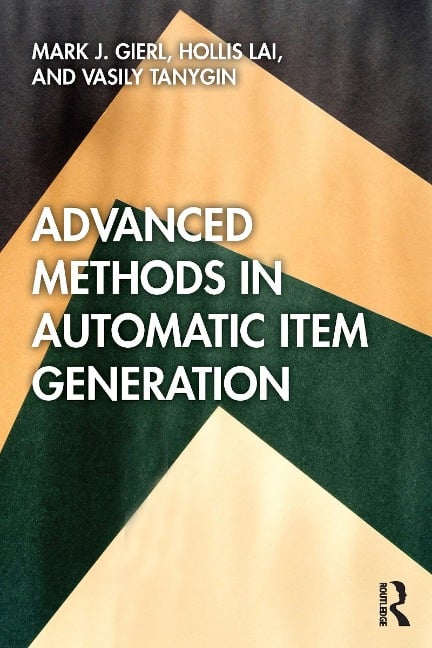
Advanced Methods in Automatic Item Generation is an up-to-date survey of the growing research on automatic item generation (AIG) in today's technology-enhanced educational measurement sector. As test administration procedures increasingly integrate digital media and Internet use, assessment stakeholders-from graduate students to scholars to industry professionals-have numerous opportunities to study and create different types of tests and test items. This comprehensive analysis offers thorough coverage of the theoretical foundations and concepts that define AIG, as well as the practical considerations required to produce and apply large numbers of useful test items.
Mark J. Gierl is Professor of Educational Psychology at the University of Alberta, Canada. He holds the Tier 1 Canada Research Chair in Educational Measurement. Hollis Lai is Associate Professor of Dentistry in the Faculty of Medicine and Dentistry at the University of Alberta, Canada. Vasily Tanygin is a full-stack software developer who has over a decade of experience creating automatic item generation and educational assessment technologies. He graduated with a specialist degree in software systems development from Mari State Technical University, Russia.
Preface Chapter 1. Introduction: The Changing Context of Educational Testing Section 1: Basic Concepts Required for Generating Constructed- and Selected-Response Items Chapter 2. Cognitive Model Development: Cognitive Models and Item Generation Chapter 3. Item Model Development: Template-Based AIG Using Item Modelling Chapter 4. Item Generation: Three General Approaches for Generating Test Items Chapter 5. Distractor Generation: The Importance of the Selected-Response Item in Educational Testing Chapter 6. Putting It All Together to Generate Test Items: Overview Chapter 7. Methods for Validating Generated Items: A Focus on Model-Level Outcomes Section 2: Advanced Topics in AID Chapter 8. Content Coding: Challenges Inherent to Managing Generated Items in a Bank Chapter 9. Generating Alternative Item Types Using Auxiliary Information: Expanding the Expression of Generated Items Chapter 10. Rationale Generation: Creating Rationales as Part of the Generation Process Chapter 11. Multilingual Item Generation: Beyond Monolingual Item Development Chapter 12. Conclusions and Future Directions
Dieses eBook wird im PDF-Format geliefert und ist mit einem Adobe Kopierschutz (DRM) versehen. Sie können dieses eBook mit allen Geräten lesen, die das PDF-Format und den Adobe Kopierschutz (DRM) unterstützen.
Zum Beispiel mit den folgenden Geräten:
• tolino Reader
Laden Sie das eBook direkt über den Reader-Shop auf dem tolino herunter oder übertragen Sie das eBook auf Ihren tolino mit einer kostenlosen Software wie beispielsweise Adobe Digital Editions.
• Sony Reader & andere eBook Reader
Laden Sie das eBook direkt über den Reader-Shop herunter oder übertragen Sie das eBook mit der kostenlosen Software Sony READER FOR PC/Mac oder Adobe Digital Editions auf ein Standard-Lesegeräte mit epub- und Adobe DRM-Unterstützung.
• Tablets & Smartphones
Möchten Sie dieses eBook auf Ihrem Smartphone oder Tablet lesen, finden Sie hier unsere kostenlose Lese-App für iPhone/iPad und Android Smartphone/Tablets.
• PC & Mac
Lesen Sie das eBook direkt nach dem Herunterladen mit einer kostenlosen Lesesoftware, beispielsweise Adobe Digital Editions, Sony READER FOR PC/Mac oder direkt über Ihre eBook-Bibliothek in Ihrem Konto unter „Meine eBooks“ - „online lesen“.
Schalten Sie das eBook mit Ihrer persönlichen Adobe ID auf bis zu sechs Geräten gleichzeitig frei.
Bitte beachten Sie, dass die Kindle-Geräte das Format nicht unterstützen und dieses eBook somit nicht auf Kindle-Geräten lesbar ist.