Und dann auf "Zum Home-Bildschirm [+]".

Stöbern
genialokal zum Startbildschirm hinzufügen
Installieren Sie die genialokal App auf Ihrem Startbildschirm für einen schnellen Zugriff und eine komfortable Nutzung.
Installieren Sie die genialokal App auf Ihrem Startbildschirm für einen schnellen Zugriff und eine komfortable Nutzung.
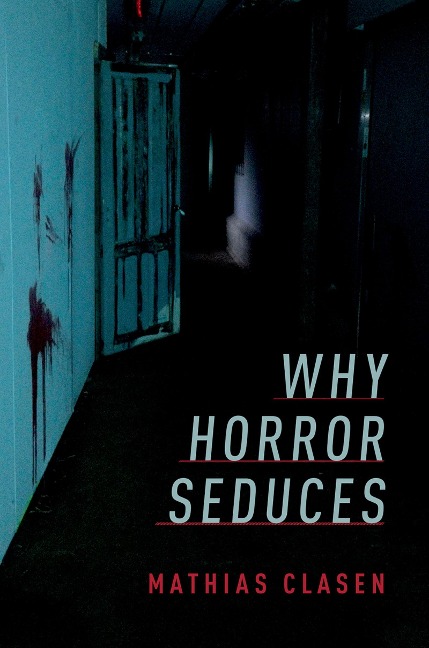
From vampire apocalypses, shark attacks, witches, and ghosts, to murderous dolls bent on revenge, horror has been part of the American cinematic imagination for almost as long as pictures have moved on screens. But why do they captivate us so? What is the drive to be frightened, and why is it so perennially popular? Why Horror Seduces addresses these questions through evolutionary social sciences. Explaining the functional seduction of horror entertainment, this book draws on cutting-edge findings in the evolutionary social sciences, showing how the horror genre is a product of human nature. Integrating the study of horror with the sciences of human nature, the book claims that horror entertainment works by targeting humans' adaptive tendency to find pleasure in make-believe, allowing a high intensity experience within a safe context. Through analyses of well-known and popular modern American works of horror--Rosemary's Baby; The Shining; I Am Legend; Jaws; and several others--author Mathias Clasen illustrates how these works target evolved cognitive and emotional mechanisms; we are attracted to horrifying entertainment because we have an adaptive tendency to find pleasure in make-believe that allows us to experience negative emotions at high levels of intensity within a safe context. Organized into three parts identifying fictional works by evolutionary mode--the evolution of horror; evolutionary interpretations of horror; the future of horror--Why Horror Seduces succinctly explores the cognitive processes behind spectators' need to scream.
Mathias Clasen is Associate Professor of Literature and Media in the Department of English, Aarhus University.
Acknowledgments Introduction: Horror, Fear, and Evolution Part 1: An Evolutionary Theory of Horror 1. Sizing Up the Beast: What Horror Is, and How It Is Studied 2. How Horror Works, I: The Evolution and Stimulation of Negative Emotion 3. How Horror Works, II: Spooky Monsters, Scary Scenarios, and Terrified Characters 4. Fear for Your Life: The Appeals, Functions, and Effects of Horror Part 2: Evolutionary Perspectives on American Horror 5. Monsters Everywhere: A Very Brief Overview of American Horror 6. Vampire Apocalypse: I Am Legend (1954) 7. Trust No One: Rosemary's Baby (1967) 8. Fight the Dead, Fear the Living: Night of the Living Dead (1968) 9. Never Go Swimming Again: Jaws (1975) 10. Haunted Houses, Haunted Minds: The Shining (1977) 11. Hack n' Slash: Halloween (1978) 12. Lost and Hunted in Bad Woods: The Blair Witch Project (1999) Part 3: Future Evolutions in Horror Entertainment and Horror Research 13. The Future of Horror References Index
Dieses eBook wird im PDF-Format geliefert und ist mit einem Adobe Kopierschutz (DRM) versehen. Sie können dieses eBook mit allen Geräten lesen, die das PDF-Format und den Adobe Kopierschutz (DRM) unterstützen.
Zum Beispiel mit den folgenden Geräten:
• tolino Reader
Laden Sie das eBook direkt über den Reader-Shop auf dem tolino herunter oder übertragen Sie das eBook auf Ihren tolino mit einer kostenlosen Software wie beispielsweise Adobe Digital Editions.
• Sony Reader & andere eBook Reader
Laden Sie das eBook direkt über den Reader-Shop herunter oder übertragen Sie das eBook mit der kostenlosen Software Sony READER FOR PC/Mac oder Adobe Digital Editions auf ein Standard-Lesegeräte mit epub- und Adobe DRM-Unterstützung.
• Tablets & Smartphones
Möchten Sie dieses eBook auf Ihrem Smartphone oder Tablet lesen, finden Sie hier unsere kostenlose Lese-App für iPhone/iPad und Android Smartphone/Tablets.
• PC & Mac
Lesen Sie das eBook direkt nach dem Herunterladen mit einer kostenlosen Lesesoftware, beispielsweise Adobe Digital Editions, Sony READER FOR PC/Mac oder direkt über Ihre eBook-Bibliothek in Ihrem Konto unter „Meine eBooks“ - „online lesen“.
Schalten Sie das eBook mit Ihrer persönlichen Adobe ID auf bis zu sechs Geräten gleichzeitig frei.
Bitte beachten Sie, dass die Kindle-Geräte das Format nicht unterstützen und dieses eBook somit nicht auf Kindle-Geräten lesbar ist.