Und dann auf "Zum Home-Bildschirm [+]".

Stöbern
genialokal zum Startbildschirm hinzufügen
Installieren Sie die genialokal App auf Ihrem Startbildschirm für einen schnellen Zugriff und eine komfortable Nutzung.
Installieren Sie die genialokal App auf Ihrem Startbildschirm für einen schnellen Zugriff und eine komfortable Nutzung.
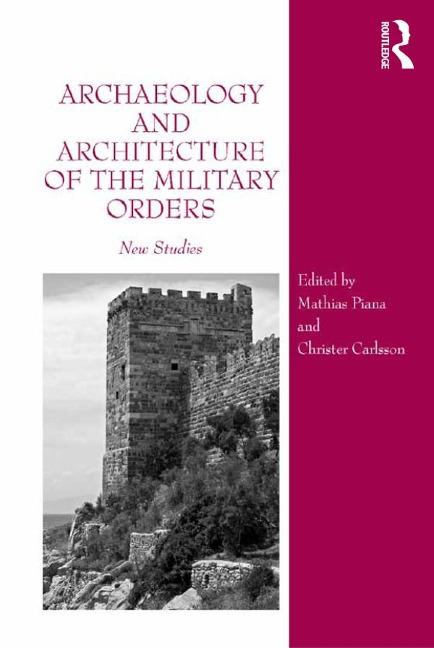
As elite communities in medieval societies the Military Orders were driven by the ambition to develop built environments that fulfilled monastic needs as well as military requirements and, in addition, residential and representational purposes. Growing affluence and an international orientation provided a wide range of development potential. That this potential was in fact exploited may be exemplified by the advanced fortifications erected by Templars and Hospitallers in the Levant. Although the history of the Military Orders has been the subject of research for a long time, their material legacy has attracted less attention. In recent years, however, a vast range of topics concerning the Orders' building activities has become the object of investigation, primarily with the help of archaeology. They comprise the choice of sites and building materials, provision and storage of food and water, aspects of the daily life, the design and layout of commanderies, churches and fortifications, their spatial arrangement, and the role these buildings played in their environmental context. This volume contains ten articles discussing the archaeology and architecture of buildings erected by the three major Military Orders in different geographical regions. They cover most countries of Western Europe and include a number of important fortifications in the Levant. These studies break new ground in the investigation of the built fabric of the Military Orders. Written by noted international scholars this publication is an important contribution to modern research on these institutions, which, in their association of monasticism and knighthood, were so typical for the Middle Ages.
Mathias Piana graduated from Augsburg University in the History of Arts, Archaeology and Medieval History and is an independent architectural historian and archaeologist, focusing on the medieval fortification architecture of the Eastern Mediterranean. He has surveyed and excavated at different Crusader period sites in the Levant and has edited a major work on the castles and towns of the Crusader period. At present, he is engaged in a project to establish a database of the fortified sites of the Crusader era. Christer Carlsson is a medieval archaeologist who received his PhD from the University of Southern Denmark in 2010 and has published on historical and archaeological approaches to the Military Religious Orders in medieval Scandinavia. He is currently working on research excavations and also holds a position as a Project Officer in an Archaeological consultancy company.
Archaeology and Architecture of the Military Orders
Dieses eBook wird im PDF-Format geliefert und ist mit einem Adobe Kopierschutz (DRM) versehen. Sie können dieses eBook mit allen Geräten lesen, die das PDF-Format und den Adobe Kopierschutz (DRM) unterstützen.
Zum Beispiel mit den folgenden Geräten:
• tolino Reader
Laden Sie das eBook direkt über den Reader-Shop auf dem tolino herunter oder übertragen Sie das eBook auf Ihren tolino mit einer kostenlosen Software wie beispielsweise Adobe Digital Editions.
• Sony Reader & andere eBook Reader
Laden Sie das eBook direkt über den Reader-Shop herunter oder übertragen Sie das eBook mit der kostenlosen Software Sony READER FOR PC/Mac oder Adobe Digital Editions auf ein Standard-Lesegeräte mit epub- und Adobe DRM-Unterstützung.
• Tablets & Smartphones
Möchten Sie dieses eBook auf Ihrem Smartphone oder Tablet lesen, finden Sie hier unsere kostenlose Lese-App für iPhone/iPad und Android Smartphone/Tablets.
• PC & Mac
Lesen Sie das eBook direkt nach dem Herunterladen mit einer kostenlosen Lesesoftware, beispielsweise Adobe Digital Editions, Sony READER FOR PC/Mac oder direkt über Ihre eBook-Bibliothek in Ihrem Konto unter „Meine eBooks“ - „online lesen“.
Schalten Sie das eBook mit Ihrer persönlichen Adobe ID auf bis zu sechs Geräten gleichzeitig frei.
Bitte beachten Sie, dass die Kindle-Geräte das Format nicht unterstützen und dieses eBook somit nicht auf Kindle-Geräten lesbar ist.