Und dann auf "Zum Home-Bildschirm [+]".

Stöbern
genialokal zum Startbildschirm hinzufügen
Installieren Sie die genialokal App auf Ihrem Startbildschirm für einen schnellen Zugriff und eine komfortable Nutzung.
Installieren Sie die genialokal App auf Ihrem Startbildschirm für einen schnellen Zugriff und eine komfortable Nutzung.
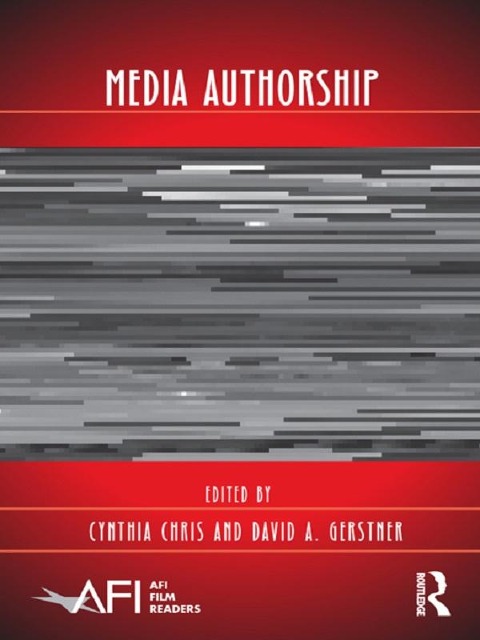
Contemporary media authorship is frequently collaborative, participatory, non-site specific, or quite simply goes unrecognized. In this volume, media and film scholars explore the theoretical debates around authorship, intention, and identity within the rapidly transforming and globalized culture industry of new media. Defining media broadly, across a range of creative artifacts and production cultures-from visual arts to videogames, from textiles to television-contributors consider authoring practices of artists, designers, do-it-yourselfers, media professionals, scholars, and others. Specifically, they ask: - What constitutes "media" and "authorship" in a technologically converged, globally conglomerated, multiplatform environment for the production and distribution of content? - What can we learn from cinematic and literary models of authorship-and critiques of those models-with regard to authorship not only in television and recorded music, but also interactive media such as videogames and the Internet? - How do we conceive of authorship through practices in which users generate content collaboratively or via appropriation? - What institutional prerogatives and legal debates around intellectual property rights, fair use, and copyright bear on concepts of authorship in "new media"? By addressing these issues, Media Authorship demonstrates that the concept of authorship as formulated in literary and film studies is reinvigorated, contested, remade-even, reauthored-by new practices in the digital media environment.
Cynthia Chris is Associate Professor of Media Culture at the College of Staten Island, City University of New York. She is the author of Watching Wildlife and co-editor, with Sarah Banet-Weiser and Anthony Freitas, of Cable Visions: Television Beyond Broadcasting. David A. Gerstner is Professor of Cinema Studies at the City University of New York's Graduate Center and the College of Staten Island. He is the author of Queer Pollen: White Seduction, Black Male Homosexuality, and the Cinematic and Manly Arts: Masculinity and Nation in Early American Cinema. He is also editor of The Routledge International Encyclopedia of Queer Culture, and co-editor with Janet Staiger of Authorship and Film.
Introduction Cynthia Chris and David A. Gerstner I. Signature 1. Creativity, Copyright, and Authorship Pat Aufderheide 2. Copyright Shakedown: The Rise and Fall of Righthaven Pam Spaulding and Michelangelo Signorile 3. Appropriation Art, Subjectivism, Crisis: The Battle for Fair Uses Nate Harrison 4. Authorship Versus Ownership: The Case of Socialist China Laikwan Pang 5. Authoring Cloth: The Copyright Protection of Fabric Designs in Ghana and the United States Boatema Boateng 6. Sufi Homoerotic Authorship and Its Heterosexualization in Pakistan Usman Shaukat II. Event 7. Authoring User-Generated Content Mark Andrejevic 8. Invention, Authorship, and Massively Collaborative Media Judd Ruggill and Ken S. McAllister 9. Abductive Authorship of the New Media Artifact Gregory Turner-Rahman 10. Creative Authorship: Self-Actualizing Individuals and the Self-Brand Sarah Banet-Weiser and Inna Arzumanova 11. Authoring the Occupation: The Mic Check, the Human Microphone, and the Loudness of Listening Edward D. Miller III. Context 12. The Myth of Democratizing Media: Software-Specific Production Cultures Elizabeth Losh 13. Global Flows of Women's Cinema: Nadine Labaki and Female Authorship, Patricia White 14. Anxieties of Authorship in the Colonial Archive Jane Anderson 15. Perceptions of Place: The Nowhere and the Somewhere of Al Jazeera Matthew Tinkcom 16. Amateur Auteurs? The Cultivation of Online Video Partners and Creators Susan Murray 17. Publish. Perish? The Academic Author and Open Access Publishing Polly Thistlethwaite
Dieses eBook wird im PDF-Format geliefert und ist mit einem Adobe Kopierschutz (DRM) versehen. Sie können dieses eBook mit allen Geräten lesen, die das PDF-Format und den Adobe Kopierschutz (DRM) unterstützen.
Zum Beispiel mit den folgenden Geräten:
• tolino Reader
Laden Sie das eBook direkt über den Reader-Shop auf dem tolino herunter oder übertragen Sie das eBook auf Ihren tolino mit einer kostenlosen Software wie beispielsweise Adobe Digital Editions.
• Sony Reader & andere eBook Reader
Laden Sie das eBook direkt über den Reader-Shop herunter oder übertragen Sie das eBook mit der kostenlosen Software Sony READER FOR PC/Mac oder Adobe Digital Editions auf ein Standard-Lesegeräte mit epub- und Adobe DRM-Unterstützung.
• Tablets & Smartphones
Möchten Sie dieses eBook auf Ihrem Smartphone oder Tablet lesen, finden Sie hier unsere kostenlose Lese-App für iPhone/iPad und Android Smartphone/Tablets.
• PC & Mac
Lesen Sie das eBook direkt nach dem Herunterladen mit einer kostenlosen Lesesoftware, beispielsweise Adobe Digital Editions, Sony READER FOR PC/Mac oder direkt über Ihre eBook-Bibliothek in Ihrem Konto unter „Meine eBooks“ - „online lesen“.
Schalten Sie das eBook mit Ihrer persönlichen Adobe ID auf bis zu sechs Geräten gleichzeitig frei.
Bitte beachten Sie, dass die Kindle-Geräte das Format nicht unterstützen und dieses eBook somit nicht auf Kindle-Geräten lesbar ist.