Und dann auf "Zum Home-Bildschirm [+]".

Stöbern
genialokal zum Startbildschirm hinzufügen
Installieren Sie die genialokal App auf Ihrem Startbildschirm für einen schnellen Zugriff und eine komfortable Nutzung.
Installieren Sie die genialokal App auf Ihrem Startbildschirm für einen schnellen Zugriff und eine komfortable Nutzung.
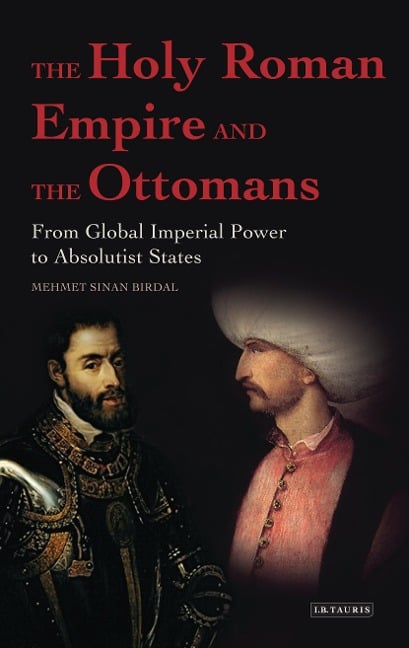
Charles V's Holy Roman Empire and Suleyman I's Ottoman Empire were the most significant empires of the early-modern era. Both rulers exercised global power as the leaders of the universal "res publica Christiana" and "dar-es Islam," respectively, both subject to exploits of lavishness, extravagance, and self-indulgence with respect to their demonstrations of power and world dominance. The most obvious example of this was Charles V's crowning as the Holy Roman Emperor by Pope Clement V, which included a procession of 20 cardinals, 400 papal guards and 300 knights, as well as a commemorative painting by Parmigianino that depicted Charles being handed the globe by the infant Hercules while being crowned with laurel by Fame.
The modality of power reflective of aristocratic society and exhibited by both Charles V and Suleyman I is one of many different style of leadership and Mehmet Sinan Birdal here explores how these power modalities determine the performance of a state in foreign politics and the emergence of the dominant unit in the state system. This book examines the Habsburgs' and Ottomans' transformation from medieval empires with claims of global domination to absolutist nations that recognized the sovereignty of others. In fact the Austro-Hungarian Empire and Austria's "Enlightened Despotism" developed from the Holy Roman Empire, while the Ottoman Empire, through modernization and reform, became the present-day Republic of Turkey.
Drawing upon the teachings of Habermas and the Frankfurt School, as well as original historical sources, Birdal uses the doctrine of "legitimation" as the theoretical basis for political authority in The Holy Roman Empire and the Ottomans, creating a revisionist work that is an invaluable read for historians, international relations specialists and political scientists alike.
List of tables and figures
Preface and acknowledgements
1. Introduction
2. From empires to absolutist states: political change in early modern Europe
3. Institution and worldviews
4. Legal evolution and state formation: a comparison of Roman law and Islamic law
5. State formation in the Holy Roman Empire
6. State formation in the Ottoman Empire
Conclusion
Notes
Bibliography
Index
Dieses eBook wird im PDF-Format geliefert und ist mit einem Adobe Kopierschutz (DRM) versehen. Sie können dieses eBook mit allen Geräten lesen, die das PDF-Format und den Adobe Kopierschutz (DRM) unterstützen.
Zum Beispiel mit den folgenden Geräten:
• tolino Reader
Laden Sie das eBook direkt über den Reader-Shop auf dem tolino herunter oder übertragen Sie das eBook auf Ihren tolino mit einer kostenlosen Software wie beispielsweise Adobe Digital Editions.
• Sony Reader & andere eBook Reader
Laden Sie das eBook direkt über den Reader-Shop herunter oder übertragen Sie das eBook mit der kostenlosen Software Sony READER FOR PC/Mac oder Adobe Digital Editions auf ein Standard-Lesegeräte mit epub- und Adobe DRM-Unterstützung.
• Tablets & Smartphones
Möchten Sie dieses eBook auf Ihrem Smartphone oder Tablet lesen, finden Sie hier unsere kostenlose Lese-App für iPhone/iPad und Android Smartphone/Tablets.
• PC & Mac
Lesen Sie das eBook direkt nach dem Herunterladen mit einer kostenlosen Lesesoftware, beispielsweise Adobe Digital Editions, Sony READER FOR PC/Mac oder direkt über Ihre eBook-Bibliothek in Ihrem Konto unter „Meine eBooks“ - „online lesen“.
Schalten Sie das eBook mit Ihrer persönlichen Adobe ID auf bis zu sechs Geräten gleichzeitig frei.
Bitte beachten Sie, dass die Kindle-Geräte das Format nicht unterstützen und dieses eBook somit nicht auf Kindle-Geräten lesbar ist.