Und dann auf "Zum Home-Bildschirm [+]".

Stöbern
genialokal zum Startbildschirm hinzufügen
Installieren Sie die genialokal App auf Ihrem Startbildschirm für einen schnellen Zugriff und eine komfortable Nutzung.
Installieren Sie die genialokal App auf Ihrem Startbildschirm für einen schnellen Zugriff und eine komfortable Nutzung.
Ihr gewünschter Artikel ist in 0 Buchhandlungen vorrätig - wählen Sie hier eine Buchhandlung in Ihrer Nähe aus:

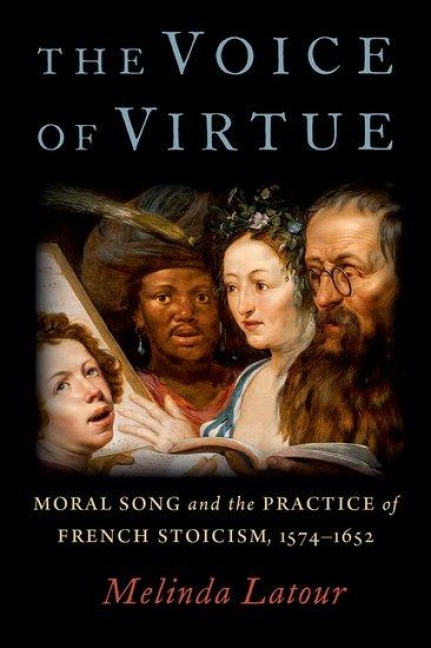
The Voice of Virtue illuminates the musical practices at the heart of the Neostoic movement that spread across French lands during the Wars of Religion in the latter half of the sixteenth century, revealing that virtue--as voiced in these Stoic practices--proves to be both rational and fully invested in the sensory processes of the singing body.
Melinda Latour is Rumsey Family Assistant Professor in the Humanities and Arts and Assistant Professor of Musicology at Tufts University. Her scholarship on early music has appeared in Music and Letters, the Journal of Musicology, and the Cambridge History of Sixteenth-Century Music. She has recently published an edited collection (co-edited with Robert Fink and Zachary Wallmark), The Relentless Pursuit of Tone: Timbre in Popular Music (2018), which won the Ruth A. Solie Award from the American Musicological Society. Her research has been supported by the American Council of Learned Societies and the National Endowment for the Humanities.
List of Tables, Figures, and Examples
List of Web Examples
Preface
Introduction
Chapter 1: Neostoic Remedies
Chapter 2: Imprinting Virtue
Chapter 3: The Exercise of Harmony
Chapter 4: Musical Paradoxes
Chapter 5: Sensing Beauty
Chapter 6: Sound Judgment
Chapter 7: Moral Ordering
Chapter 8: Rehearsing Death
Conclusion: Suspensions of Desire
Appendix
Select Bibliography