Und dann auf "Zum Home-Bildschirm [+]".

Stöbern
genialokal zum Startbildschirm hinzufügen
Installieren Sie die genialokal App auf Ihrem Startbildschirm für einen schnellen Zugriff und eine komfortable Nutzung.
Installieren Sie die genialokal App auf Ihrem Startbildschirm für einen schnellen Zugriff und eine komfortable Nutzung.

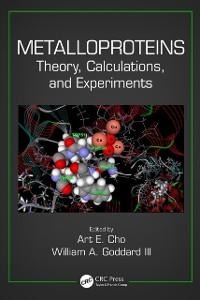
Numerous essential biological functions involve metalloproteins; therefore, understanding metalloproteins and how to manipulate them is significant in the biological and medical fields. An examination of current research, Metalloproteins: Theory, Calculations, and Experiments explores the interplay between theory and experiment, detailing the role
William Andrew Goddard III is the Charles and Mary Ferkel Professor of Chemistry and Applied Physics, and director of the Materials and Process Simulation Center at the California Institute of Technology. He earned his BS from the University of California, Los Angeles, in 1960 and his PhD from the California Institute of Technology in 1965. After his PhD, he remained at the California Institute of Technology as Arthur Amos Noyes Research Fellow (1964-1966), professor of theoretical chemistry (1967-1978), and professor of chemistry and applied physics (1978-). Dr. Goddard has pioneering methods for quantum mechanics (generalized valence bond theory, first principles pseudo potentials) and reactive fields molecular dynamics (ReaxFF and eFF), and complete sampling for protein structure prediction and docking (GEnSeMBLE and DarwinDock) which he has applied to many areas of chemical reaction theory, catalysis, materials science, and selective ligand design. He has been a member of the US National Academy of Sciences since 1984 and is a fellow (IAQMS, APS, AAAS, Am. Acad. Arts Science) or a member (ACS, MRS, Protein Society) of many other organizations. He was a cofounder of Materials Simulation Inc. and Schrodinger Inc. and continues with recent startups in electron etching of semiconductors (Systine) and design of therapeutics (GIRx). Art E. Cho is Professor in the Department of Bioinformatics, Korea University. He graduated from the University of California at Berkeley in 1988, with a double major in physics and mathematics. After completing the master's program in mathematics at the University of Chicago, he pursued a PhD in physics at Brown University. Before finishing his PhD, he took time off and returned to his home country of Korea to fulfill mandatory military duty. As a substitution for service in the army, he worked as a senior research scientist at the supercomputing center of Samsung Advanced Institute of Technology a
Introduction. History of metalloprotein science. Recent surge in theoretical methods for study of metalloproteins. Roles, importance of metalloproteins in biology. Structures. X-ray structures of various metalloproteins including heme binding proteins. Ferritin structures. Quantum chemical calculations for study of metalloprotein structures. Functions. Functions of various metalloproteins including cytochrome. Quantum mechanics based simulation techniques that are applied to study functions of metalloproteins. Interactions. Interactions of metalloproteins with ligands. Interactions of metalloproteins with other proteins. Interactions of metalloproteins with DNA/RNA. QM/MM (quantum mechanical/molecular mechanical) based docking methods to study metalloprotein interactions.