Und dann auf "Zum Home-Bildschirm [+]".

Stöbern
genialokal zum Startbildschirm hinzufügen
Installieren Sie die genialokal App auf Ihrem Startbildschirm für einen schnellen Zugriff und eine komfortable Nutzung.
Installieren Sie die genialokal App auf Ihrem Startbildschirm für einen schnellen Zugriff und eine komfortable Nutzung.
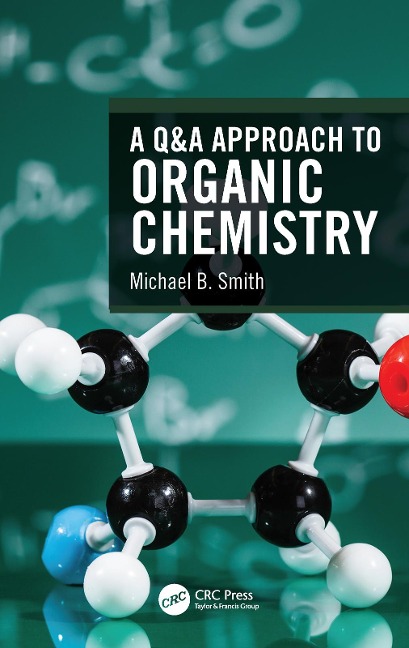
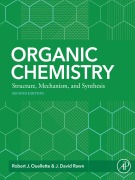
A Q&A Approach to Organic Chemistry is a book of leading questions that begins with atomic orbitals and bonding. All critical topics are covered, including bonding, nomenclature, stereochemistry, conformations, acids and bases, oxidations, reductions, substitution, elimination, acyl addition, acyl substitution, enolate anion reactions, the Diels-Alder reaction and sigmatropic rearrangements, aromatic chemistry, spectroscopy, amino acids and proteins, and carbohydrates and nucleosides. All major reactions are covered. Each chapter includes end-of-chapter homework questions with the answer keys in an Appendix at the end of the book. This book is envisioned to be a supplementary guide to be used with virtually any available undergraduate organic chemistry textbook. This book allows for a "self-guided" approach that is useful as one studies for a coursework exam or as one reviews organic chemistry for postgraduate exams. Key Features: - Allows a "self-guided tour" of organic chemistry - Discusses all important areas and fundamental reactions of organic chemistry - Classroom tested - Useful as a study guide that will supplement most organic chemistry textbooks - Assists one in study for coursework exams or allows one to review organic chemistry for postgraduate exams - Includes 21 chapters of leading questions that covers all major topics and major reactions of organic chemistry
Professor Michael B. Smith was born in Detroit, Michigan in 1946 and moved to Madison Heights, Virginia in 1957, where he attended high school at Amherst County High School. He received an A.A. from Ferrum College in 1967 and a B.S. in chemistry from Virginia Polytechnic Institute in 1969. After working for three years at the Newport News Shipbuilding and Dry Dock Co. in Newport News VA as an analytical chemist, he entered graduate school at Purdue University. He received a Ph.D. in Organic chemistry in 1977, under the auspices of Professor Joe Wolinsky. Professor Smith spent one year as a faculty research associate at the Arizona State University with Professor G. Robert Pettit, working on the isolation of cytotoxic principles from plants and sponges. He spent a second year of postdoctoral work with Professor Sidney M. Hecht at the Massachusetts Institute of Technology, working on the synthesis of bleomycin A2. Professor Smith began his academic career at the University of Connecticut in 1979, where he achieved the rank of professor of chemistry. In 1986 he spent a sabbatical leave in the laboratories of Professor Leon Ghosez, at the Université Catholique de Louvain in Louvain-la-Neuve, Belgium, as a visiting professor. He retired as a full professor from the University of Connecticut on January 1, 2017, and is currently pursuing his interests as an author.
Preface. Common Abbreviations. Author. Part A A Q&A Approach to Organic Chemistry. 1 Orbitals and Bonding. 2 Structure of Molecules. 3 Acids and Bases. 4 Alkanes, Isomers, and Nomenclature. 5 Conformations. 6 Stereochemistry. 7 Alkenes and Alkynes: Structure, Nomenclature, and Reactions. 8 Alkyl Halides and Substitution Reactions. 9 Elimination Reactions. 10 Organometallic Compounds. 11 Spectroscopy. 12 Aldehydes and Ketones. Acyl Addition Reactions. Part B A Q&A Approach to Organic Chemistry. 13 Oxidation Reactions. 14 Reduction Reactions. 15 Carboxylic Acids, Carboxylic Acid Derivatives, and Acyl Substitution Reactions. 16 Benzene, Aromaticity, and Benzene Derivatives. 17 Enolate Anions and Condensation Reactions. 18 Conjugation and Reactions of Conjugated Compounds. 19 Amines. 20 Amino Acids, Peptides, and Proteins. 21 Carbohydrates and Nucleic Acids. Appendix: Answers to End of Chapter Problems. Index.
Dieses eBook wird im PDF-Format geliefert und ist mit einem Adobe Kopierschutz (DRM) versehen. Sie können dieses eBook mit allen Geräten lesen, die das PDF-Format und den Adobe Kopierschutz (DRM) unterstützen.
Zum Beispiel mit den folgenden Geräten:
• tolino Reader
Laden Sie das eBook direkt über den Reader-Shop auf dem tolino herunter oder übertragen Sie das eBook auf Ihren tolino mit einer kostenlosen Software wie beispielsweise Adobe Digital Editions.
• Sony Reader & andere eBook Reader
Laden Sie das eBook direkt über den Reader-Shop herunter oder übertragen Sie das eBook mit der kostenlosen Software Sony READER FOR PC/Mac oder Adobe Digital Editions auf ein Standard-Lesegeräte mit epub- und Adobe DRM-Unterstützung.
• Tablets & Smartphones
Möchten Sie dieses eBook auf Ihrem Smartphone oder Tablet lesen, finden Sie hier unsere kostenlose Lese-App für iPhone/iPad und Android Smartphone/Tablets.
• PC & Mac
Lesen Sie das eBook direkt nach dem Herunterladen mit einer kostenlosen Lesesoftware, beispielsweise Adobe Digital Editions, Sony READER FOR PC/Mac oder direkt über Ihre eBook-Bibliothek in Ihrem Konto unter „Meine eBooks“ - „online lesen“.
Schalten Sie das eBook mit Ihrer persönlichen Adobe ID auf bis zu sechs Geräten gleichzeitig frei.
Bitte beachten Sie, dass die Kindle-Geräte das Format nicht unterstützen und dieses eBook somit nicht auf Kindle-Geräten lesbar ist.