Und dann auf "Zum Home-Bildschirm [+]".

Stöbern
genialokal zum Startbildschirm hinzufügen
Installieren Sie die genialokal App auf Ihrem Startbildschirm für einen schnellen Zugriff und eine komfortable Nutzung.
Installieren Sie die genialokal App auf Ihrem Startbildschirm für einen schnellen Zugriff und eine komfortable Nutzung.
Ihr gewünschter Artikel ist in 0 Buchhandlungen vorrätig - wählen Sie hier eine Buchhandlung in Ihrer Nähe aus:

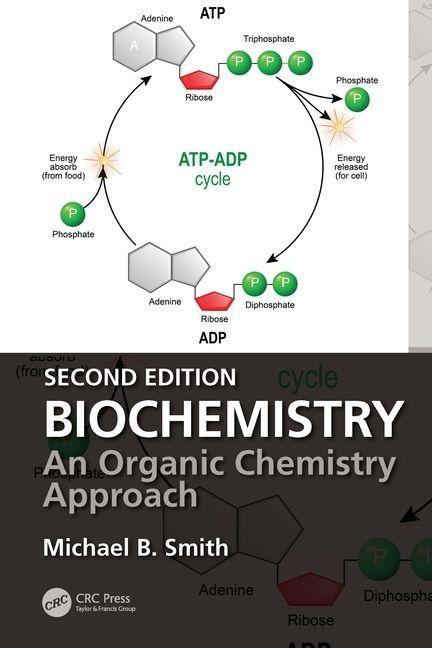
Reactions in biochemistry can be explained by an understanding of fundamental organic chemistry principles and reactions. This paradigm is extended to biochemical principles and to a myriad of biomolecules. The text provides a framework for understanding various topics in biochemistry, including the chemical behavior of biomolecules, enzyme activity, and more. It goes beyond mere memorization. Using several techniques to develop a relational understanding, including homework, this text helps students fully grasp and better correlate essential organic chemistry concepts with those at the root of biochemistry. The goal is to achieve a better understanding of the fundamental principles of biochemistry. Key Features - Presents a review chapter of fundamental organic chemistry principles and reactions. - Presents and explains the fundamental principles of biochemistry using principles and common reactions of organic chemistry. - Discusses enzymes, proteins, fatty acids, lipids, vitamins, hormones, nucleic acids and other biomolecules by comparing and contrasting them with the organic chemistry reactions that constitute the foundation of these classes of biomolecules. - Discusses the organic synthesis and reactions of amino acids, carbohydrates, nucleic acids and other biomolecules.
Professor Michael B. Smith was born in Detroit, Michigan in 1946 and moved to Madison Heights, Virginia in 1957, where he attended high school at Amherst County High School. He received an A.A. from Ferrum College in 1967 and a B.S. in chemistry from Virginia Polytechnic Institute in 1969. After working for three years at the Newport News Shipbuilding and Dry Dock Co. in Newport News VA as an analytical chemist, he entered graduate school at Purdue University. He received a Ph.D. in Organic chemistry in 1977, under the auspices of Professor Joe Wolinsky. Professor Smith spent one year as a faculty research associate at the Arizona State University with Professor G. Robert Pettit, working on the isolation of cytotoxic principles from plants and sponges. He spent a second year of postdoctoral work with Professor Sidney M. Hecht at the Massachusetts Institute of Technology, working on the synthesis of bleomycin A2. Professor Smith began his academic career at the University of Connecticut in 1979, where he achieved the rank of professor of chemistry. In 1986 he spent a sabbatical leave in the laboratories of Professor Leon Ghosez, at the Université Catholique de Louvain in Louvain-la-Neuve, Belgium, as a visiting professor. He retired as a full professor from the University of Connecticut on January 1, 2017, and is currently pursuing his interests as an author.
Chapter 01: Water, Acids and Bases. Chapter 02: Amino Acids. Chapter 03: Peptides and Proteins. Chapter 04: Enzymes. Chapter 05: A Review of Organic Chemistry. Chapter 6: Nucleophilic Substitution and Elimination Reactions. Chapter 7: Dienes and Conjugated Carbonyl Compounds in Biochemistry. Chapter 8: Radical Reactions. Chapter 9: Enols and Enolate Anions. Chapter 10: Lipids. Chapter 11: Aromatic Compounds and Heterocyclic Compounds. Chapter 12: Metals. Carbon-Metal Bonds, Chelating Agents and Coordination Complexes. Chapter 13: Carbohydrates. Chapter 14: Glycosides. Chapter 15: Nucleic Acids, Nucleosides and Nucleotides. Chapter 16: Answers To Homework Problems