Und dann auf "Zum Home-Bildschirm [+]".

Stöbern
genialokal zum Startbildschirm hinzufügen
Installieren Sie die genialokal App auf Ihrem Startbildschirm für einen schnellen Zugriff und eine komfortable Nutzung.
Installieren Sie die genialokal App auf Ihrem Startbildschirm für einen schnellen Zugriff und eine komfortable Nutzung.
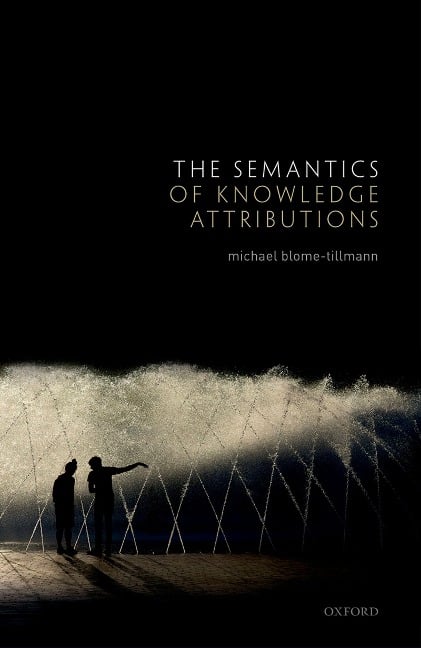
In this book, Michael Blome-Tillmann offers a critical overview of the current debate on the semantics of knowledge attributions. The book is divided into five parts. Part 1 introduces the reader to the literature on 'knowledge' attributions by outlining the historical roots of the debate and providing an in-depth discussion of epistemic contextualism. After examining the advantages and disadvantages of the view, Part 2 offers a detailed investigation of epistemic impurism (or pragmatic encroachment views), while Part 3 is devoted to a careful examination of epistemic relativism and Part 4 to two different types of strict invariantism (psychological and pragmatic). The final part of the book explores Presuppositional Epistemic Contextualism - a version of contextualism that is argued to provide a more powerful and elegant account of the semantics of 'knowledge' attributions than many of its competitors. A clear and precise account is provided of the main principles underlying each view and of how they aim to explain the pertinent data and resolve philosophical puzzles and challenges. The book also provides charts outlining the relations between the positions discussed and offers suggestions for further reading.
Michael Blome-Tillmann is Associate Professor of Philosophy at McGill University. He received his DPhil from the University of Oxford in 2007. His research is primarily in epistemology and the philosophy of language broadly construed. He is the author of Knowledge and Presuppositions (OUP 2014).
- Introduction - Part I: Epistemic Contextualism - 1: Epistemic Contextualism - 2: Semantic Implementations - 3: Versions of Contextualism - 4: Linguistic Objections - 5: Philosophical Objections - Part II: Epistemic Impurism - 6: Epistemic Impurism - 7: Problems and Objections - Part III: Epistemic Relativism - 8: Epistemic Relativism - Part IV: Strict Invariantism - 9: Psychological Invariantism - 10: Pragmatic Invariantism - Part V: Presuppositional Epistemic Contextualism - 11: The Presupposition Effect - 12: Presuppositional Epistemic Contextualism - References
Dieses eBook wird im PDF-Format geliefert und ist mit einem Adobe Kopierschutz (DRM) versehen. Sie können dieses eBook mit allen Geräten lesen, die das PDF-Format und den Adobe Kopierschutz (DRM) unterstützen.
Zum Beispiel mit den folgenden Geräten:
• tolino Reader
Laden Sie das eBook direkt über den Reader-Shop auf dem tolino herunter oder übertragen Sie das eBook auf Ihren tolino mit einer kostenlosen Software wie beispielsweise Adobe Digital Editions.
• Sony Reader & andere eBook Reader
Laden Sie das eBook direkt über den Reader-Shop herunter oder übertragen Sie das eBook mit der kostenlosen Software Sony READER FOR PC/Mac oder Adobe Digital Editions auf ein Standard-Lesegeräte mit epub- und Adobe DRM-Unterstützung.
• Tablets & Smartphones
Möchten Sie dieses eBook auf Ihrem Smartphone oder Tablet lesen, finden Sie hier unsere kostenlose Lese-App für iPhone/iPad und Android Smartphone/Tablets.
• PC & Mac
Lesen Sie das eBook direkt nach dem Herunterladen mit einer kostenlosen Lesesoftware, beispielsweise Adobe Digital Editions, Sony READER FOR PC/Mac oder direkt über Ihre eBook-Bibliothek in Ihrem Konto unter „Meine eBooks“ - „online lesen“.
Schalten Sie das eBook mit Ihrer persönlichen Adobe ID auf bis zu sechs Geräten gleichzeitig frei.
Bitte beachten Sie, dass die Kindle-Geräte das Format nicht unterstützen und dieses eBook somit nicht auf Kindle-Geräten lesbar ist.