Und dann auf "Zum Home-Bildschirm [+]".

Stöbern
genialokal zum Startbildschirm hinzufügen
Installieren Sie die genialokal App auf Ihrem Startbildschirm für einen schnellen Zugriff und eine komfortable Nutzung.
Installieren Sie die genialokal App auf Ihrem Startbildschirm für einen schnellen Zugriff und eine komfortable Nutzung.
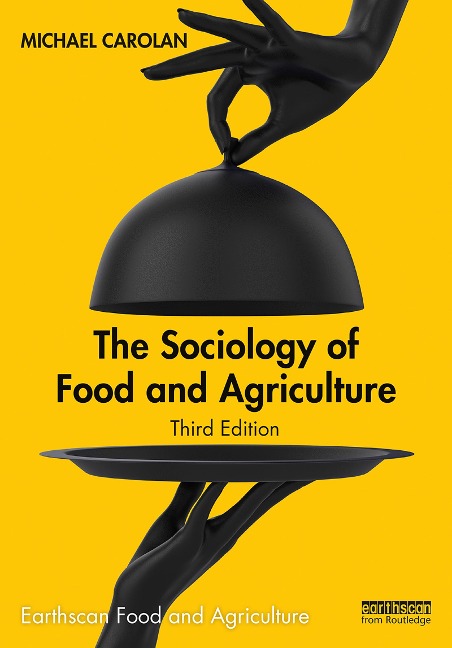
Thoroughly revised and updated, the third edition of The Sociology of Food and Agriculture provides a cutting-edge, comprehensive introduction to the study of food and society. The book begins by examining the food economy, with chapters focusing on foodscapes, the financialization of food, and a new chapter dedicated to food and nutrition (in)security. In Part II, the book addresses community and culture. While some books only look at the interrelationships between food and culture, this section problematizes the food system from the standpoint of marginalized bodies. It contains chapters focusing on agricultural and food labor and the peasantries, topics which are often overlooked, and gender, ethnicity, and poverty. Part III examines food and the environment, with chapters addressing important topics such as agro-ecosystems, food justice, sustainable food, and agriculture and food sovereignty. The final part focuses on food futures and includes a brand-new chapter on sustainable diets and ethical consumption. The book concludes by showcasing how we can rethink food production and consumption in a way that can help heal social, political, and cultural divisions. All chapters draw on international case studies and include learning objectives, suggested discussion questions, and recommendations for further reading to aid student learning. The Sociology of Food and Agriculture is perfect for students of food studies, including food justice, food and nutrition security, sustainable diets, food sovereignty, environmental sociology, agriculture, and cultural studies.
Michael Carolan is Professor of Sociology and Associate Dean for Research and Faculty Development in the College of Liberal Arts at Colorado State University, USA. He is the author or co-editor of numerous books, including the Routledge Handbook of Sustainable and Regenerative Food Systems (2020), The Real Cost of Cheap Food (2018), Society and the Environment (2017), and Cheaponomics (2014), all published by Routledge.
1 Introduction to a complex and ever-changing field; PART I The multi-scalar food economy 2 Understanding foodscapes: past, present, and future; 3 Food and nutrition (in)security; 4 Financialization of food; PART II Community, culture, and knowledge 5 Community, labor, and peasantries; 6 Food and culture; 7 Gender, ethnicity, and poverty; PART III Food justice and the environment 8 Agro-ecosystems and the nature of "natures"; 9 Food, agriculture, and the environment; 10 Food sovereignty - beyond food security; PART IV Agrifood futures: solutions, trade-offs, and opportunities 11 Sustainable diets and ethical consumption; 12 The "traps" in agrifood studies ... and beyond; 13 Reimagining healthy eating
Dieses eBook wird im PDF-Format geliefert und ist mit einem Adobe Kopierschutz (DRM) versehen. Sie können dieses eBook mit allen Geräten lesen, die das PDF-Format und den Adobe Kopierschutz (DRM) unterstützen.
Zum Beispiel mit den folgenden Geräten:
• tolino Reader
Laden Sie das eBook direkt über den Reader-Shop auf dem tolino herunter oder übertragen Sie das eBook auf Ihren tolino mit einer kostenlosen Software wie beispielsweise Adobe Digital Editions.
• Sony Reader & andere eBook Reader
Laden Sie das eBook direkt über den Reader-Shop herunter oder übertragen Sie das eBook mit der kostenlosen Software Sony READER FOR PC/Mac oder Adobe Digital Editions auf ein Standard-Lesegeräte mit epub- und Adobe DRM-Unterstützung.
• Tablets & Smartphones
Möchten Sie dieses eBook auf Ihrem Smartphone oder Tablet lesen, finden Sie hier unsere kostenlose Lese-App für iPhone/iPad und Android Smartphone/Tablets.
• PC & Mac
Lesen Sie das eBook direkt nach dem Herunterladen mit einer kostenlosen Lesesoftware, beispielsweise Adobe Digital Editions, Sony READER FOR PC/Mac oder direkt über Ihre eBook-Bibliothek in Ihrem Konto unter „Meine eBooks“ - „online lesen“.
Schalten Sie das eBook mit Ihrer persönlichen Adobe ID auf bis zu sechs Geräten gleichzeitig frei.
Bitte beachten Sie, dass die Kindle-Geräte das Format nicht unterstützen und dieses eBook somit nicht auf Kindle-Geräten lesbar ist.