Und dann auf "Zum Home-Bildschirm [+]".

Stöbern
genialokal zum Startbildschirm hinzufügen
Installieren Sie die genialokal App auf Ihrem Startbildschirm für einen schnellen Zugriff und eine komfortable Nutzung.
Installieren Sie die genialokal App auf Ihrem Startbildschirm für einen schnellen Zugriff und eine komfortable Nutzung.

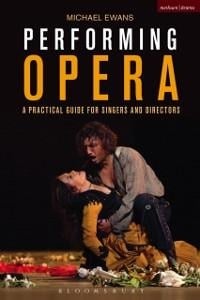
In Performing Opera: A Practical Guide for Singers and Directors Michael Ewans provides a detailed and practical workbook to performing many of the most commonly produced operas. Drawing on examples from twenty-four operas ranging in period from Gluck and Mozart to Britten and Tippett, it illustrates exactly how opera functions as dramatic form.
Grounded in close analyses of performances of thirty scenes and five whole operas by first-rate singers and celebrated directors, Performing Opera provides readers with an appreciation of the unique challenges and skills required by performers and directors. It will assist them in their own performance and equip them with detailed knowledge of works most commonly featured in the repertoire. In the first part of the book the analysis progresses from scenes in which the singers are silent, via arias and monologues, duets and confrontations, up to ensembles. Wider issues are subsequently addressed: encounters with offstage events, encounters with the numinous, characterization, and the sense of inevitability in tragic opera.
Michael Ewans is Conjoint Professor of Drama in the School of Humanities, Creative Industries and Social Science at the University of Newcastle, Australia. His many publications include translations with theatrical commentaries of plays by Aeschylus, Sophocles, Euripides and Aristophanes. He is active in production, and has recently directed professional performances in his own translations of Theocritus' Love Magic, Euripides' Medea and Aristophanes' Lysistrata. He is also the author of Performing Opera: A Practical Guide for Singers and Directors (Methuen Drama, 2016).
1 Introduction PART ONE: FORMS 2 Arias and Monologues 2.1 'Great work, boss!' (Mozart) 2.2 Wotan confides in his 'will' (Wagner) 2.3 Iago's Credo (Verdi) 2.4 'One fine day...' (Puccini) 2.5 Kát'a's ecstasy (Janácek) 2.6 'Now the Great Bear...' (Britten) 2.7 Conclusion 3 Duets 3.1 The art of seduction (Mozart) 3.2 'On such a night...' (Berlioz) 3.3 Love in a garret (Puccini) 3.4 Jenufa and Laca alone (Janácek) 3.5 Conclusion 4 Confrontations 4.1 Elektra and Klytämnestra (Strauss) 4.2 Kát'a and Tichon (Janácek) 4.3 Lulu masters Dr Schön (Berg) 4.4 Not going to church (Britten) 4.5 Conclusion 5 Ensembles 5.1 A cruel departure (Mozart) 5.2 Lust and treachery (Verdi) 5.3 Death in the cards (Bizet) 5.4 Siegfried must die! (Wagner) 5.5 'Stone her!' (Janácek) 5.6 Conclusion PART TWO: ENCOUNTERS 6 Noises off 6.1 Cassandre and the Trojan horse (Berlioz) 6.2 The death of Carmen (Bizet) 6.3 'Hoé! Hisse hoé!' (Debussy) 6.4 Treasure, flowers and domain (Bartók) 6.5 'Peter Grimes!' (Britten) 6.6 Conclusion 7 Interactions with the numinous 7.1 The trial by fire and water (Mozart) 7.2 Parsifal and the Grail (Wagner) 7.3 Kát'a and the river voices (Janácek) 7.4 Wozzeck in the open field (Berg) 7.5 'Fire! Fire! St John's Fire.' (Tippett) 7.6 Conclusion PART THREE: SHAPING THE OPERA 8 Characterization 8.1 Véronique Gens as Iphigénie, directed by Pierre Audi 8.2 Rodney Gilfrey as Don Giovanni, directed by Jürgen Flimm 8.3 Teresa Stratas as Salome, directed by Götz Friedrich 8.4 Conclusion 9 The Sense of Inevitability 9.1 Carmen: Meilhac & Halévy/Bizet /Zambello 9.2 Elektra; Hofmannsthal/ Strauss/Friedrich 9.3 Conclusion 10 Conclusion Bibliography, Discography, Scores