Und dann auf "Zum Home-Bildschirm [+]".

Stöbern
genialokal zum Startbildschirm hinzufügen
Installieren Sie die genialokal App auf Ihrem Startbildschirm für einen schnellen Zugriff und eine komfortable Nutzung.
Installieren Sie die genialokal App auf Ihrem Startbildschirm für einen schnellen Zugriff und eine komfortable Nutzung.
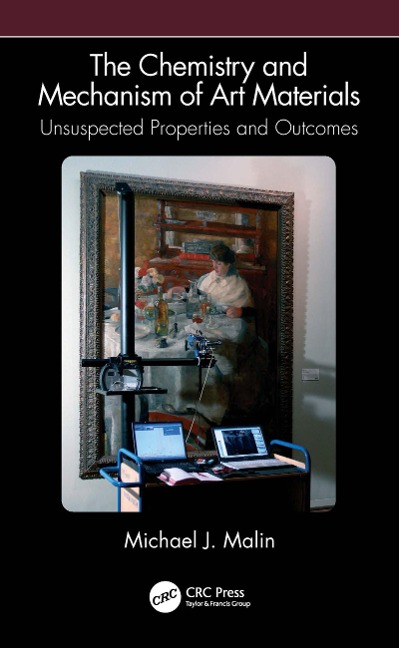
This unique book presents an integrated approach to the chemistry of art materials, exploring the many chemical processes involved. The Chemistry and Mechanism of Art Materials: Unsuspected Properties and Outcomes engages readers with historical vignettes detailing examples of unexpected outcomes due to materials used by known artists. The book discusses artists' materials focusing on relevant chemical mechanisms which underlie the synthesis and deterioration of inorganic pigments in paintings, the ageing of the binder in oil paintings, and sulfation of wall paintings as well as the toxicology of these pigments and solvents used by artists. Mechanisms illustrate the stepwise structural transformation of a variety of art materials. Based on the author's years of experience teaching college chemistry, the approach is descriptive and non-mathematical throughout. An introductory section includes a review of basic concepts and provides concise descriptions of analytical methods used in contemporary art conservation. Additional features include: - Illustrations of chemical reactivity associated with art materials - Includes a review of chemical bonding principles, redox and mechanism writing - Covers analytical techniques used by art conservation scientists - Accessible for readers with a limited science background - Provides numerous references for readers seeking additional information
Michael Malin received a BS from City College of New York and a Ph.D. from Rutgers (Biochemistry). This was followed by postdoctorals at Rutgers (Organic) and then Brandeis (Bio-organic). He taught chemistry at Western Connecticut State College/University (16 years) and at Sarah Lawrence College (2 years). He covered courses in general, organic and biochemistry. At SLC, he taught a course in the chemistry of art materials, and this book came out of that experience. When not teaching, he was employed by Technicon Instruments Corporation/Bayer Diagnostics for 23 years. His role was generally to solve stability problems related to both liquid reagent formulations and machine parts in the development of automated blood analyzers. The scope of these problems varied widely; from the instability of a photo-polymerizable acrylic adhesive to the erosion of alumina shear valves. When he left industry, he resumed thinking about art materials, and found common chemical/mechanistic themes relating to stability problems. Eventually, this book was the result. His hobbies include: international travel, playing double bass in jazz groups, salsa dancing and cycling.
Chapter 1 Essential Concepts Chemical Bonding, Solubility, Properties of Solids, Hard and Soft Acids and Bases Oxidation-Reduction Chemical Reaction Mechanisms Experimental Methods Used to Characterize Works of Art Chapter 2 Preparation of Inorganic Pigments Introduction Black Pigments Antimony Black Carbon Blacks Cobalt Black Iron Oxide, Magnetite Manganese Black Blue Pigments Azurite Cerulean Blue Egyptian Blue Prussian Blue Smalt Ultramarine Verdigris Brown Pigments Iron (III) Oxide Pigments Lead Dioxide Green Pigments Chromium Oxide Hydrated Chromium Oxide, Viridian Malachite, see Azurite Paris Green Verdigris Red Pigments a-Cinnabar and Vermilion Red Lead Iron (III) Oxide, Hematite a-Realgar, see Orpiment Violet Pigments Pigment Violet 14 White Pigments Antimony White Barium White Lithopone Titanium White White Lead Zinc White Zinc Sulfide Yellow Pigments Bismuth Vanadate Cadmium Pigments Cobalt Yellow Iron (III) Oxide Lead Chromate Lead Tin Yellow type I Lead Tin Yellow type II Lead Monoxide, Litharge and Massicot Lead Tin Antimonate, Naples Yellow Orpiment Titanium Yellow Chapter 3 Silica, Silicates and Aluminosilicates Introduction Silica Silicates Pigment-Silicate Interactions Pottery Glazes Aluminosilicates Chapter 4 Discoloration Stories Introduction Smalt Red Lead Realgar Cinnabar Hematite Chrome Yellow Silverpoint Cadmium Yellow Blackening of Pigments by H2S Ultramarine Azurite and Malachite Medieval Pigments Chapter 5 Toxicology of Art Materials Introduction Organics Methylene Chloride Carbon Tetrachloride Trichloroethylene n-Hexane N-Methylpyrrolidone Diisocyanates Alcohols, Glycols and Glycol Ethers Mineral Spirits Inorganics Lead Zinc, Cadmium and Mercury Familial Properties Cadmium Mercury Silver Arsenic Chromium Chapter 6 Ageing of Oil Paint Oxidative Degradation of Oil Binder Metal Soap formation Chapter 7 Ageing of Wall Paintings Secco and Fresco methods Reversal of Sulfation Deposition of Water Soluble Salts Degradation of Oil Binder
Dieses eBook wird im PDF-Format geliefert und ist mit einem Adobe Kopierschutz (DRM) versehen. Sie können dieses eBook mit allen Geräten lesen, die das PDF-Format und den Adobe Kopierschutz (DRM) unterstützen.
Zum Beispiel mit den folgenden Geräten:
• tolino Reader
Laden Sie das eBook direkt über den Reader-Shop auf dem tolino herunter oder übertragen Sie das eBook auf Ihren tolino mit einer kostenlosen Software wie beispielsweise Adobe Digital Editions.
• Sony Reader & andere eBook Reader
Laden Sie das eBook direkt über den Reader-Shop herunter oder übertragen Sie das eBook mit der kostenlosen Software Sony READER FOR PC/Mac oder Adobe Digital Editions auf ein Standard-Lesegeräte mit epub- und Adobe DRM-Unterstützung.
• Tablets & Smartphones
Möchten Sie dieses eBook auf Ihrem Smartphone oder Tablet lesen, finden Sie hier unsere kostenlose Lese-App für iPhone/iPad und Android Smartphone/Tablets.
• PC & Mac
Lesen Sie das eBook direkt nach dem Herunterladen mit einer kostenlosen Lesesoftware, beispielsweise Adobe Digital Editions, Sony READER FOR PC/Mac oder direkt über Ihre eBook-Bibliothek in Ihrem Konto unter „Meine eBooks“ - „online lesen“.
Schalten Sie das eBook mit Ihrer persönlichen Adobe ID auf bis zu sechs Geräten gleichzeitig frei.
Bitte beachten Sie, dass die Kindle-Geräte das Format nicht unterstützen und dieses eBook somit nicht auf Kindle-Geräten lesbar ist.