Und dann auf "Zum Home-Bildschirm [+]".

Stöbern
genialokal zum Startbildschirm hinzufügen
Installieren Sie die genialokal App auf Ihrem Startbildschirm für einen schnellen Zugriff und eine komfortable Nutzung.
Installieren Sie die genialokal App auf Ihrem Startbildschirm für einen schnellen Zugriff und eine komfortable Nutzung.
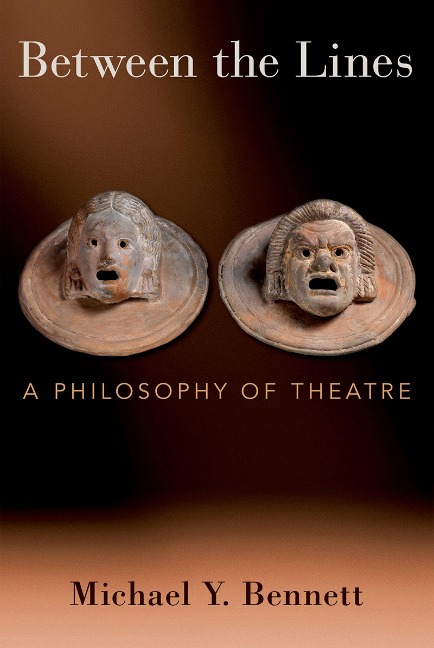
In Between the Lines: A Philosophy of Theatre, theatre theorist, Michael Y. Bennett offers a systematic account of theatre--thinking about theatre metaphysically, epistemologically, and ethically. To investigate theatre and its in-between spaces, Bennett introduces some basic ideas about coherence and correspondence and, much more prominently, conversations surrounding subsumption and distinctness in order to better describe theatre as a form of art. Instead of limiting the concept and use of subsumption to suggest that constituent parts are subsumed within a distinct whole, Bennett broadens the concept to claim that many of the properties of a theatrical character and/or a theatrical world are subsumed within the text. Unlike some forms of literary fiction in which a narrator describes the properties of characters in general terms, theatre (particularly for the theatregoer) is largely devoid of distinct properties attributed to theatrical characters. Outside of the fact that theatrical characters speak and perform actions during the time of the play, there are little-to-no specified properties regarding theatrical characters and/or theatrical worlds. In thinking about the conceptual empty spaces of theatre, Bennett investigates three main topics: theatre as an art form, the properties of theatrical characters and theatrical worlds, and the difference between truth and truthfulness in the theatre.
Michael Y. Bennett is an Associate Professor of English and Affiliated Faculty in Philosophy at the University of Wisconsin-Whitewater. In addition to being a past fellow at the Institute for Research in the Humanities at the University of Wisconsin-Madison, he is a Life Member of Clare Hall, University of Cambridge, where he was a Visiting Fellow. Known for his work on absurd drama and on the philosophy of theatre, he is the author or editor of fifteen books.
Acknowledgments Glossary of Terms and Concepts Introduction: The Conceptual Spaces of Theatre and Performance PART I: Pieces of Theatre: Defining Theatre and its Empty Spaces Chapter 1. Previous Conceptions of Theatre Chapter 2. The Nature of Theatre Chapter 3. The Nature of Viewing Theatre Chapter 4. The Nature of Theatre's Empty Spaces PART II: Spaces of Theatre: Offstage Characters, Imagined Objects, and Other Prickly Philosophical Problems Chapter 5. Distinctness in the Theatre: Theatrical Language and Events Chapter 6. Subsumption in the Theatre: The Question of Lady Bracknell's Nose and Offstage Characters Chapter 7. Truthfulness in the Theatre: Actors and Acting and Imagined Objects Conclusion: Teatri Topia for the Curious: Constants, Variables, and Theatre's Rules of Engagement Notes Bibliography Index
Dieses eBook wird im PDF-Format geliefert und ist mit einem Adobe Kopierschutz (DRM) versehen. Sie können dieses eBook mit allen Geräten lesen, die das PDF-Format und den Adobe Kopierschutz (DRM) unterstützen.
Zum Beispiel mit den folgenden Geräten:
• tolino Reader
Laden Sie das eBook direkt über den Reader-Shop auf dem tolino herunter oder übertragen Sie das eBook auf Ihren tolino mit einer kostenlosen Software wie beispielsweise Adobe Digital Editions.
• Sony Reader & andere eBook Reader
Laden Sie das eBook direkt über den Reader-Shop herunter oder übertragen Sie das eBook mit der kostenlosen Software Sony READER FOR PC/Mac oder Adobe Digital Editions auf ein Standard-Lesegeräte mit epub- und Adobe DRM-Unterstützung.
• Tablets & Smartphones
Möchten Sie dieses eBook auf Ihrem Smartphone oder Tablet lesen, finden Sie hier unsere kostenlose Lese-App für iPhone/iPad und Android Smartphone/Tablets.
• PC & Mac
Lesen Sie das eBook direkt nach dem Herunterladen mit einer kostenlosen Lesesoftware, beispielsweise Adobe Digital Editions, Sony READER FOR PC/Mac oder direkt über Ihre eBook-Bibliothek in Ihrem Konto unter „Meine eBooks“ - „online lesen“.
Schalten Sie das eBook mit Ihrer persönlichen Adobe ID auf bis zu sechs Geräten gleichzeitig frei.
Bitte beachten Sie, dass die Kindle-Geräte das Format nicht unterstützen und dieses eBook somit nicht auf Kindle-Geräten lesbar ist.