Und dann auf "Zum Home-Bildschirm [+]".

Stöbern
genialokal zum Startbildschirm hinzufügen
Installieren Sie die genialokal App auf Ihrem Startbildschirm für einen schnellen Zugriff und eine komfortable Nutzung.
Installieren Sie die genialokal App auf Ihrem Startbildschirm für einen schnellen Zugriff und eine komfortable Nutzung.
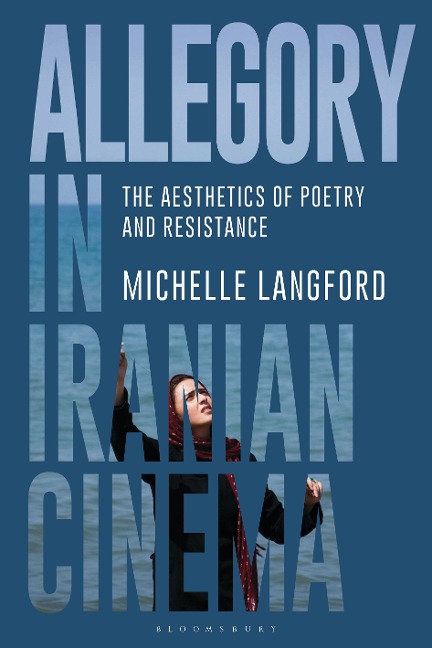
Iranian filmmakers have long been recognised for creating a vibrant, aesthetically rich cinema whilst working under strict state censorship regulations. As Michelle Langford reveals, many have found indirect, allegorical ways of expressing forbidden topics and issues in their films. But for many, allegory is much more than a foil against haphazardly applied censorship rules. Drawing on a long history of allegorical expression in Persian poetry and the arts, allegory has become an integral part of the poetics of Iranian cinema. Allegory in Iranian Cinema explores the allegorical aesthetics of Iranian cinema, explaining how it has emerged from deep cultural traditions and how it functions as a strategy for both supporting and resisting dominant ideology.
As well as tracing the roots of allegory in Iranian cinema before and after the 1979 revolution, Langford also theorizes this cinematic mode. She draws on a range of cinematic, philosophical and cultural concepts - developed by thinkers such as Walter Benjamin, Gilles Deleuze, Pier Paolo Pasolini, Christian Metz and Vivian Sobchack - to provide a theoretical framework for detailed analyses of films by renowned directors of the pre-and post-revolutionary eras including Masoud Kimiai, Dariush Mehrjui, Ebrahim Golestan, Kamran Shirdel, Majid Majidi, Jafar Panahi, Marziyeh Meshkini, Mohsen Makhmalbaf, Rakhshan Bani-Etemad and Asghar Farhadi.
Allegory in Iranian Cinema explains how a centuries-old means of expression, interpretation, encoding and decoding becomes, in the hands of Iran's most skilled cineastes, a powerful tool with which to critique and challenge social and cultural norms.
Michelle Langford is Senior Lecturer in Film Studies at the University of New South Wales, Sydney, Australia. Her research spans the cinemas of Iran and Germany. She is author of Allegorical Images: Tableau, Time and Gesture in the Cinema of Werner Schroeter (2006) and the editor of The Directory of World Cinema: Germany (2012, 2013). Her work on Iranian cinema has appeared in leading film studies journals including Camera Obscura, Screen and Screening the Past.
List of Figures
Acknowledgements
Note on Transliteration
Introduction - Allegory in Iranian Cinema: The Aesthetics of Poetry and Resistance
1 Locating Allegory in Pre-Revolutionary Iranian Cinema
2 The Allegorical Children of Iranian Cinema
3 Allegory and the Aesthetics of Becoming-Woman
4 Allegories of Love: The Cinematic Ghazal
5 Tending the Wounds of the Nation: Gender in Iranian War Cinema
6 Between Laughter and Mourning: About Elly as Trauerspiel of a Generation
Coda: Allegory Spills into the Streets
Bibliography
Index
Dieses eBook wird im PDF-Format geliefert und ist mit einem Adobe Kopierschutz (DRM) versehen. Sie können dieses eBook mit allen Geräten lesen, die das PDF-Format und den Adobe Kopierschutz (DRM) unterstützen.
Zum Beispiel mit den folgenden Geräten:
• tolino Reader
Laden Sie das eBook direkt über den Reader-Shop auf dem tolino herunter oder übertragen Sie das eBook auf Ihren tolino mit einer kostenlosen Software wie beispielsweise Adobe Digital Editions.
• Sony Reader & andere eBook Reader
Laden Sie das eBook direkt über den Reader-Shop herunter oder übertragen Sie das eBook mit der kostenlosen Software Sony READER FOR PC/Mac oder Adobe Digital Editions auf ein Standard-Lesegeräte mit epub- und Adobe DRM-Unterstützung.
• Tablets & Smartphones
Möchten Sie dieses eBook auf Ihrem Smartphone oder Tablet lesen, finden Sie hier unsere kostenlose Lese-App für iPhone/iPad und Android Smartphone/Tablets.
• PC & Mac
Lesen Sie das eBook direkt nach dem Herunterladen mit einer kostenlosen Lesesoftware, beispielsweise Adobe Digital Editions, Sony READER FOR PC/Mac oder direkt über Ihre eBook-Bibliothek in Ihrem Konto unter „Meine eBooks“ - „online lesen“.
Schalten Sie das eBook mit Ihrer persönlichen Adobe ID auf bis zu sechs Geräten gleichzeitig frei.
Bitte beachten Sie, dass die Kindle-Geräte das Format nicht unterstützen und dieses eBook somit nicht auf Kindle-Geräten lesbar ist.