Und dann auf "Zum Home-Bildschirm [+]".

Stöbern
genialokal zum Startbildschirm hinzufügen
Installieren Sie die genialokal App auf Ihrem Startbildschirm für einen schnellen Zugriff und eine komfortable Nutzung.
Installieren Sie die genialokal App auf Ihrem Startbildschirm für einen schnellen Zugriff und eine komfortable Nutzung.
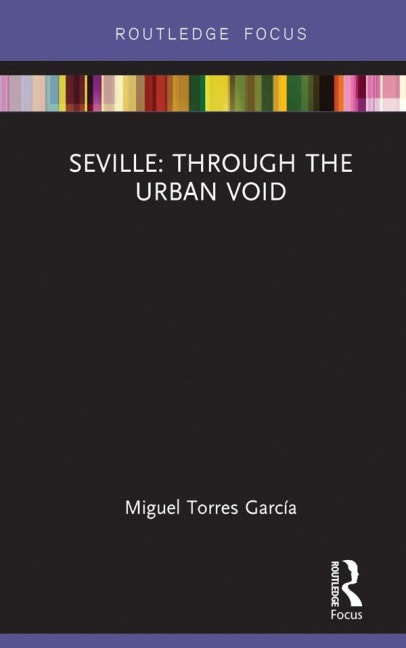
Recent years have seen a growing interest in undetermined and unqualified urban spaces. Understanding cities as spaces for encounter, conflict and otherness, this book argues that this indeterminacy is not marginal but a key characteristic of urban space, and degrees of liberty foster change, creativity, and political action. The urban void is a conceptual construct that aims to render a principle of absence apprehensible, and to describe how it intervenes in place-making in the city. Seville: Through the Urban Void build mostly upon Henri Lefebvre's work using concepts drawn on the social sciences, in order to articulate a biographic narrative of the Alameda de Hércules in Seville, Spain, which stands both as an outstanding instance of urban space and a very influential urban type. During its long historical span the Alameda has undergone alternating periods of decline and development, revealing the relations between successive urban paradigms and ideas of nature, territory, and the people. For the first time its whole history is told in a single account, which adds new perspectives to its understanding, and brings forward formerly disregarded aspects. This book shows how its liminal nature, which stubbornly persists over time, creates the conditions for creative processes.
Miguel Torres García is an architect, holding an MSc degree in Spatial Planning (KTH, Sweden) and a PhD in Human Geography (University of Manchester, UK). Experienced in the fields of architecture, planning, heritage, and landscape, his research interests encompass urban studies, history, and the rapport between practice and the built environment.
Introduction, 1. Towards Understanding Urban Voids, 2. The Bricolage of an Urban Space: Seville and the Alameda as Colonial Centres in the 16th Century, 3. Clashing Urbanisms: Enlightened vs. Religious Ritualisation in the Alameda de Hércules, 4. A Void Again: Decay of the Alameda from the 19th Century to Francoism, 5. Fetishisation and the Recovery of the Alameda, Conclusions, Appendice
Dieses eBook wird im PDF-Format geliefert und ist mit einem Adobe Kopierschutz (DRM) versehen. Sie können dieses eBook mit allen Geräten lesen, die das PDF-Format und den Adobe Kopierschutz (DRM) unterstützen.
Zum Beispiel mit den folgenden Geräten:
• tolino Reader
Laden Sie das eBook direkt über den Reader-Shop auf dem tolino herunter oder übertragen Sie das eBook auf Ihren tolino mit einer kostenlosen Software wie beispielsweise Adobe Digital Editions.
• Sony Reader & andere eBook Reader
Laden Sie das eBook direkt über den Reader-Shop herunter oder übertragen Sie das eBook mit der kostenlosen Software Sony READER FOR PC/Mac oder Adobe Digital Editions auf ein Standard-Lesegeräte mit epub- und Adobe DRM-Unterstützung.
• Tablets & Smartphones
Möchten Sie dieses eBook auf Ihrem Smartphone oder Tablet lesen, finden Sie hier unsere kostenlose Lese-App für iPhone/iPad und Android Smartphone/Tablets.
• PC & Mac
Lesen Sie das eBook direkt nach dem Herunterladen mit einer kostenlosen Lesesoftware, beispielsweise Adobe Digital Editions, Sony READER FOR PC/Mac oder direkt über Ihre eBook-Bibliothek in Ihrem Konto unter „Meine eBooks“ - „online lesen“.
Schalten Sie das eBook mit Ihrer persönlichen Adobe ID auf bis zu sechs Geräten gleichzeitig frei.
Bitte beachten Sie, dass die Kindle-Geräte das Format nicht unterstützen und dieses eBook somit nicht auf Kindle-Geräten lesbar ist.