Und dann auf "Zum Home-Bildschirm [+]".

Stöbern
genialokal zum Startbildschirm hinzufügen
Installieren Sie die genialokal App auf Ihrem Startbildschirm für einen schnellen Zugriff und eine komfortable Nutzung.
Installieren Sie die genialokal App auf Ihrem Startbildschirm für einen schnellen Zugriff und eine komfortable Nutzung.
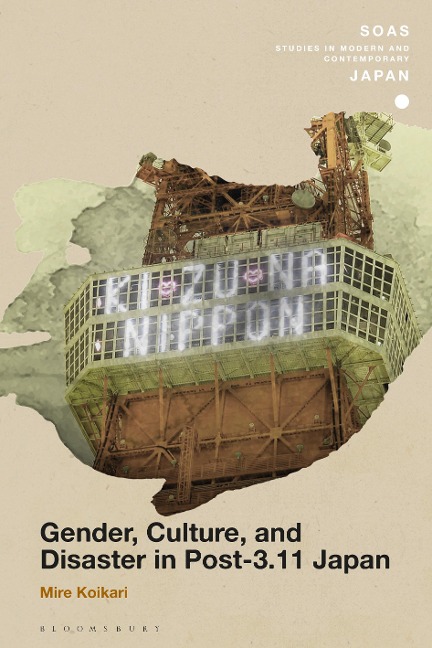
The Great East Japan Disaster - a compound catastrophe of earthquake, tsunami, and nuclear meltdown that began on March 11, 2011 - has ushered in a new era of cultural production dominated by discussions on safety and security, risk and vulnerability, and recovery and refortification. Gender, Culture, and Disaster in Post-3.11 Japan re-frames post-disaster national reconstruction as a social project imbued with dynamics of gender, race, and empire and in doing so Mire Koikari offers an innovative approach to resilience building in contemporary Japan.
From juvenile literature to civic manuals to policy statements, Koikari examines a vast array of primary sources to demonstrate how femininity and masculinity, readiness and preparedness, militarism and humanitarianism, and nationalism and transnationalism inform cultural formation and transformation triggered by the unprecedented crisis. Interdisciplinary in its orientation, the book reveals how militarism, neoliberalism, and neoconservatism drive Japan's resilience building while calling attention to historical precedents and transnational connections that animate the ongoing mobilization toward safety and security.
An important contribution to studies of gender and Japan, the book is essential reading for all those wishing to understand local and global politics of precarity and its proposed solutions amid the rising tide of pandemics, ecological hazards, industrial disasters, and humanitarian crises.
Mire Koikari is Professor of Women's Studies at University of Hawaii, USA. She is the author of Cold War Encounters in US-Occupied Okinawa: Women, Militarized Domesticity, and Transnationalism in East Asia (2015) and Pedagogy of Democracy: Feminism and the Cold War in the US Occupation of Japan (2009).
List of Illustrations
Acknowledgements
1. Introduction: Rethinking Japanese Culture since 3.11
2. Re-Masculinizing the Nation: Resilient Manhood and Revitalized Nationhood
3. Training Women for Disaster: Domesticity and Preparedness in the Age of Uncertainty
4. Securitizing Childhood: Children and Disaster Readiness Education
5. Mobilizing the Paradise: Hawai'i in Post-Disaster National Imagination
Bibliography
Index
Dieses eBook wird im PDF-Format geliefert und ist mit einem Adobe Kopierschutz (DRM) versehen. Sie können dieses eBook mit allen Geräten lesen, die das PDF-Format und den Adobe Kopierschutz (DRM) unterstützen.
Zum Beispiel mit den folgenden Geräten:
• tolino Reader
Laden Sie das eBook direkt über den Reader-Shop auf dem tolino herunter oder übertragen Sie das eBook auf Ihren tolino mit einer kostenlosen Software wie beispielsweise Adobe Digital Editions.
• Sony Reader & andere eBook Reader
Laden Sie das eBook direkt über den Reader-Shop herunter oder übertragen Sie das eBook mit der kostenlosen Software Sony READER FOR PC/Mac oder Adobe Digital Editions auf ein Standard-Lesegeräte mit epub- und Adobe DRM-Unterstützung.
• Tablets & Smartphones
Möchten Sie dieses eBook auf Ihrem Smartphone oder Tablet lesen, finden Sie hier unsere kostenlose Lese-App für iPhone/iPad und Android Smartphone/Tablets.
• PC & Mac
Lesen Sie das eBook direkt nach dem Herunterladen mit einer kostenlosen Lesesoftware, beispielsweise Adobe Digital Editions, Sony READER FOR PC/Mac oder direkt über Ihre eBook-Bibliothek in Ihrem Konto unter „Meine eBooks“ - „online lesen“.
Schalten Sie das eBook mit Ihrer persönlichen Adobe ID auf bis zu sechs Geräten gleichzeitig frei.
Bitte beachten Sie, dass die Kindle-Geräte das Format nicht unterstützen und dieses eBook somit nicht auf Kindle-Geräten lesbar ist.