Und dann auf "Zum Home-Bildschirm [+]".

Stöbern
genialokal zum Startbildschirm hinzufügen
Installieren Sie die genialokal App auf Ihrem Startbildschirm für einen schnellen Zugriff und eine komfortable Nutzung.
Installieren Sie die genialokal App auf Ihrem Startbildschirm für einen schnellen Zugriff und eine komfortable Nutzung.
Ihr gewünschter Artikel ist in 0 Buchhandlungen vorrätig - wählen Sie hier eine Buchhandlung in Ihrer Nähe aus:

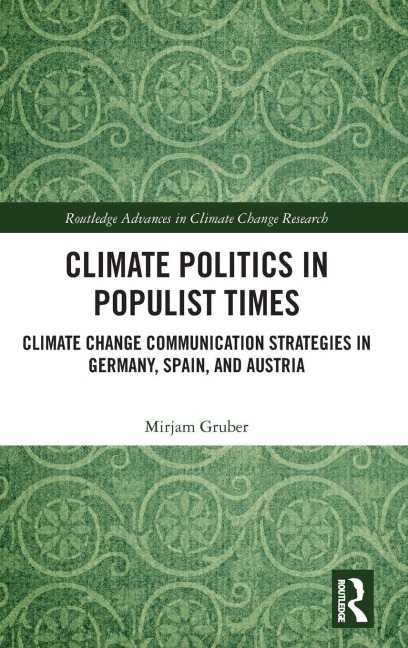
This book navigates the uncharted territory where far-right populism intersects with climate change, presenting a nuanced examination that transcends traditional research boundaries.
Mirjam Gruber is a Post-Doc Researcher at the Center for Advanced Studies of Eurac Research, Bozen-Bolzano (Italy). She completed her doctoral studies in Political Science at the University of Leipzig (Germany), focusing on climate change communication. In 2022, she enhanced her academic pursuits with a five-month research visit at the University of Leicester (United Kingdom). Until 2017, she pursued her Master's degree in Political Science and Sustainable Development at the University of Bern (Switzerland) and the University of Konstanz (Germany). During her Bachelor's studies, she specialized in International Development and Cooperation at the University of Bologna (Italy) and the University of Valladolid (Spain). Her current research interests include climate change communication, populism, far-right parties, critical discourse studies and mainstreaming of the far right.
1. Introduction A very short literature overview Research questions and research design Relevance of this research project The European context Structure of the book References 2. Navigating the Discourse: Unravelling Climate Change Communication, Political Orientation, and Populist Far-Right Ideology Conceptualisations of climate change scepticism, denial, and obstruction Climate change communication and political orientation Nationalism Ecofascism Climate change communication and populist far-right actors Analysing the arguments The ideational approach as an enlightening theoretical framework The role of populist ideology Chapter summary References 3. Methodology: Innovatively Integrating Comparative Aspects in Critical Discourse Studies Germany, Spain and Austria: Data and cases Selection and justification of the time frame Selection and justification of the cases Selection and justification of the data Critical Discourse Studies: DHA and BG The policy field of climate change: DHA and BG The discourse about climate change in populist far-right communication: DHA Chapter summary References 4. Decoding Climate Policy Fields in Germany, Spain and Austria: A Deep Dive into Mainstream Parties' Communication Germany and the climate The policy field of climate change in Germany from 2016 to 2018 The policy field of climate change in Germany from 2019 to 2020 Discussing party similarities and differences Spain and the climate The policy field of climate change in Spain from 2016 to 2018 The policy field of climate change in Spain from 2019-2020 Discussing party similarities and differences Austria and the climate The policy field of climate change in Austria from 2016 to 2018 The policy field of climate change in Austria from 2019-2020 Discussing party similarities and differences Chapter summary References 5. Understanding Far-Rights Climate Stand: Hostility, Environmental Self-Perception, and Climate Obstruction The AfD against the climate Entry-level analysis of discourse topics In-depth analysis of discourse strategies Vox against the climate Entry-level analysis of discourse topics In-depth analysis of discourse strategies The FPÖ against the climate Entry-level analysis of discourse topics In-depth analysis of discourse strategies Chapter Summary References 6. Contextualizing and Comparing: Climate Obstruction within the National Policy Field Starting easy: How does the presence of climate change among mainstream parties and PFRPs correlate? Gaining traction: How do discourses about climate change by PFRP relate to their respective national political fields? Germany and its economy Spain and its urgency Austria and its opposition to nuclear power Closing Thoughts Delving further: How do PFRPs interact with each other and what does that say about populism? Practical implication, limitations, and future research Chapter summary References 7. Conclusion References Index