Und dann auf "Zum Home-Bildschirm [+]".

Stöbern
genialokal zum Startbildschirm hinzufügen
Installieren Sie die genialokal App auf Ihrem Startbildschirm für einen schnellen Zugriff und eine komfortable Nutzung.
Installieren Sie die genialokal App auf Ihrem Startbildschirm für einen schnellen Zugriff und eine komfortable Nutzung.

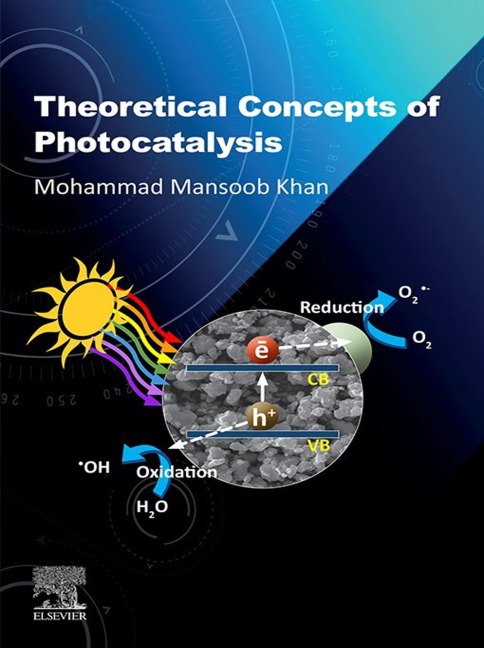
Theoretical Concepts of Photocatalysis offers a systematic overview of photocatalysis while also exploring the theory and experimental studies of charge carrier dynamics. Introducing the fundamental concepts of photocatalytic reactions involving different types of photocatalysts for various applications, including the treatment of water and air, in food packaging, and in the biomedical and medical fields, the book shows different classes of photocatalysts for novel energy and environmental related applications. In addition, significant advantages, such as its low cost, high efficiency, harmlessness and stability are discussed alongside future perspectives and challenges related to photocatalysis. Focusing on nanostructure control, synthesis methods, activity enhancement strategies, environmental applications, and perspectives of semiconductor-based nanostructures, this book offers guidelines for designing new semiconductor-based photocatalysts with low cost and high efficiency to meet the demands of the efficient utilization of solar energy in the area of energy production and environment remediation.
- Covers the different types of photocatalysts and related photocatalytic reactions
- Offers theoretical and practical concepts of energy and environmental applications
- Summarizes the fundamentals of semiconductor-based nanomaterials
Mohammad Mansoob Khan is a Professor of Inorganic Chemistry at Chemical Sciences, Faculty of Science, Universiti Brunei Darussalam, Brunei Darussalam. He earned his PhD from Aligarh Muslim University, Aligarh, India, in 2002. He has worked in India, Ethiopia, Oman, and South Korea and has established excellence in teaching and novel research. He is teaching various courses at undergraduate and postgraduate levels. He has edited three books and authored two books. He has published about 250 research and review articles. He has addressed several conferences as a Plenary speaker (01 talk), Keynote speaker (10 talks) and delivered Invited talks (15 talks). Additionally, he is associated with several journals as editor, associate editor, reviewer, etc. His expertise is in the cutting-edge area of nanochemistry, nanotechnology, materials sciences, and materials chemistry, especially in the field of inorganic and nanohybrid materials such as the synthesis of noble metal nanoparticles, their nanocomposites, metal oxides (such as TiO2, ZnO, SnO2, CeO2, etc.), and chalcogenides (such as CdS, ZnS, MoS2, etc.), perovskites, MXenes, and their nanocomposites. He is also extensively working on the band gap engineering of semiconductors (such as metal oxides and chalcogenides). The synthesized nanostructured materials are used for heterogeneous photocatalysis, hydrogen production, photoelectrodes, solar cells, sensors, and biological applications such as antibacterial, antifungal, antibiofilm activities, etc.
ntroduction of photocatalysis and photocatalysts2. Fundamentals and principles of photocatalysis3. Semiconductors as photocatalysts: UV light active materials4. Semiconductors as photocatalysts: Visible light active materials5. Synthesis methods for photocatalytic materials6. Common characterization techniques for photocatalytic materials7. Applications of photocatalytic materials8. Photocatalysis: Laboratory to market9. Future challenges for photocatalytic materials