Und dann auf "Zum Home-Bildschirm [+]".

Stöbern
genialokal zum Startbildschirm hinzufügen
Installieren Sie die genialokal App auf Ihrem Startbildschirm für einen schnellen Zugriff und eine komfortable Nutzung.
Installieren Sie die genialokal App auf Ihrem Startbildschirm für einen schnellen Zugriff und eine komfortable Nutzung.
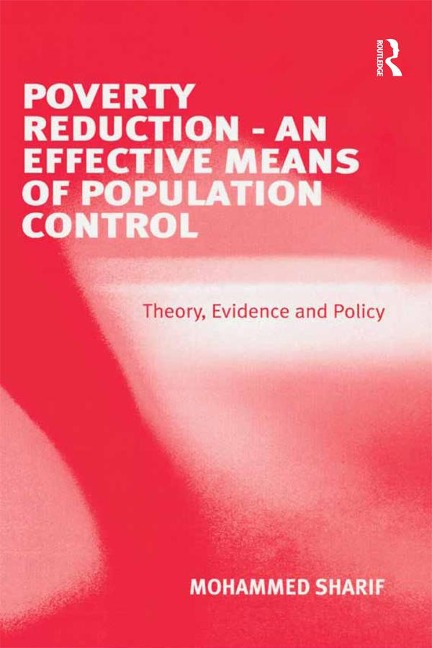
This book contends that high fertility is rational in that it achieves short term economic benefit and long term old age-support for families. Wider macroeconomic effects are not the concern of the individual family. This means that the fertility choices of the poor are not a result of ignorance. The objective of this book is to drive home the fact that it is poverty that is responsible for high fertility and that until the problem of poverty is effectively dealt with the problem of high fertility will continue to persist. The book concludes with a series of policy recommendations for the eradication of poverty.
Mohammed Sharif is Professor of Economics at the University of Rhode Island, USA. He specializes in Development Economics with special focus on poverty, subsistence, inequity, and fertility in developing countries. He has published in a wide range of journals including Kyklos and Cambridge Journal of Economics and has presented results of his research in the World Congress of the Econometric Society and the Annual Meetings of the American Economic Association. His book on Work Behavior of the World's Poor - Theory, Evidence, and Policy, also published by Ashgate, has received a laudatory review by the Journal of Economic Literature.
Chapter 1 Population Control Policy - Problems of Assumptions; Chapter 2 Population Control Policy and Working Poor Behavior - An Analysis of Incompatibility; Chapter 3 Irrational Fertility Behavior Hypothesis - An Empirical Examination, 1998-2000 Data; Chapter 4 Irrational Fertility Behavior Hypothesis - Further Examination, 2001-2005 Data; Chapter 5 Child Participation, Nature of Work, and Fertility Demand Demand - A Theoretical Analysis; Chapter 6 The Observed Landholding-Fertility Relationship - Is it Monotonic?; Chapter 7 Poverty and Fertility - Evidence and Policy Implications, 1998-2000 Data; Chapter 8 Poverty and Fertility - Further Evidence, 2001-2005 Data; Chapter 9 Poverty Eradication Policies; Chapter 10 Concluding Remarks;
Dieses eBook wird im PDF-Format geliefert und ist mit einem Adobe Kopierschutz (DRM) versehen. Sie können dieses eBook mit allen Geräten lesen, die das PDF-Format und den Adobe Kopierschutz (DRM) unterstützen.
Zum Beispiel mit den folgenden Geräten:
• tolino Reader
Laden Sie das eBook direkt über den Reader-Shop auf dem tolino herunter oder übertragen Sie das eBook auf Ihren tolino mit einer kostenlosen Software wie beispielsweise Adobe Digital Editions.
• Sony Reader & andere eBook Reader
Laden Sie das eBook direkt über den Reader-Shop herunter oder übertragen Sie das eBook mit der kostenlosen Software Sony READER FOR PC/Mac oder Adobe Digital Editions auf ein Standard-Lesegeräte mit epub- und Adobe DRM-Unterstützung.
• Tablets & Smartphones
Möchten Sie dieses eBook auf Ihrem Smartphone oder Tablet lesen, finden Sie hier unsere kostenlose Lese-App für iPhone/iPad und Android Smartphone/Tablets.
• PC & Mac
Lesen Sie das eBook direkt nach dem Herunterladen mit einer kostenlosen Lesesoftware, beispielsweise Adobe Digital Editions, Sony READER FOR PC/Mac oder direkt über Ihre eBook-Bibliothek in Ihrem Konto unter „Meine eBooks“ - „online lesen“.
Schalten Sie das eBook mit Ihrer persönlichen Adobe ID auf bis zu sechs Geräten gleichzeitig frei.
Bitte beachten Sie, dass die Kindle-Geräte das Format nicht unterstützen und dieses eBook somit nicht auf Kindle-Geräten lesbar ist.