Und dann auf "Zum Home-Bildschirm [+]".

Stöbern
genialokal zum Startbildschirm hinzufügen
Installieren Sie die genialokal App auf Ihrem Startbildschirm für einen schnellen Zugriff und eine komfortable Nutzung.
Installieren Sie die genialokal App auf Ihrem Startbildschirm für einen schnellen Zugriff und eine komfortable Nutzung.
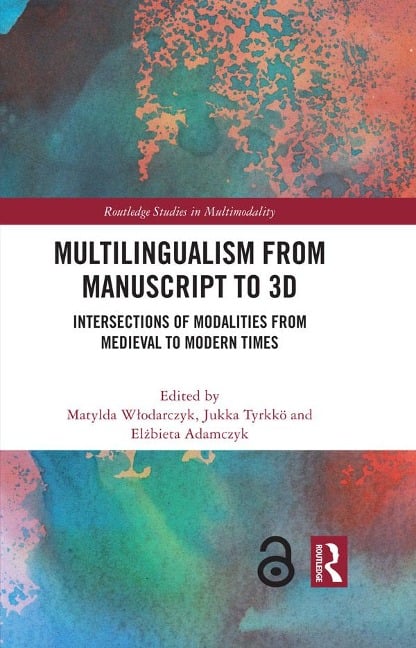
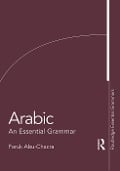
This collection explores the links between multimodality and multilingualism, charting the interplay between languages, channels and forms of communication in multilingual written texts from historical manuscripts through to the new media of today and the non-verbal associations they evoke. The volume argues that features of written texts such as graphics, layout, boundary marking and typography are inseparable from verbal content. Taken together, the chapters adopt a systematic historical perspective to investigate this interplay over time and highlight the ways in which the two disciplines might further inform one another in the future as new technologies emerge. The first half of the volume considers texts where semiotic resources are the sites of modes, where multiple linguistic codes interact on the page and generate extralinguistic associations through visual features and spatial organizaisation. The second half of the book looks at texts where this interface occurs not in the text but rather in the cultural practices involved in social materiality and text transmission. Enhancing our understandings of multimodal resources in both historical and contemporary communication, this book will be of interest to scholars in multimodality, multilingualism, historical communication, discourse analysis and cultural studies. Chapters 1, 4, and 5 of this book are available for free in PDF format as Open Access from the individual product page at www.routledge.com. Chapters 1 & 4 have been made available under a Creative Commons Attribution-Non Commercial-No Derivatives 4.0 license, with Chapter 5 being made available under a Creative Commons Attribution 4.0 license.
Matylda Wlodarczyk is University Professor in the Department of the History of English at the Faculty of English, Adam Mickiewicz University in Poznan, Poland. She has worked on the historical (socio-)pragmatics of specialised discourses. She has conducted, with Elzbieta Adamczyk and Joanna Kopaczyk (University of Glasgow) a project devoted to multilingualism in the medieval Greater Poland court oaths and co-authored the eROThA repository (2014-2019). Jukka Tyrkkö is Professor of English Linguistics at Linnaeus University, Sweden. His research interests extend from the Middle Ages to the present day, focusing on a wide range of topics including corpus linguistic methodology, lexis and phraseology, the history of medical writing, multilingualism, historical lexicography, the language of politics and history of the book. He has compiled a number of historical corpora and he develops corpus linguistic software. His recent edited volumes include Historical Dictionaries in their Paratextual Context (edited with R.W. McConchie for Mouton de Gruyter, 2018) and Applications of Pattern-Driven Methods in Corpus Linguistics (edited with Joanna Kopaczyk for John Benjamins, 2018). ORCID: 0000-0001-5251-5338 Elzbieta Adamczyk is Junior Professor of English Linguistics in the Department of English and American Studies at Bergische Universität Wuppertal, Germany. Her research interests concentrate on English historical linguistics, especially historical morphology, linguistic variation, comparative Germanic linguistics, historical multilingualism and language contact in medieval Europe. She is the author of a monograph on nominal morphology of early Germanic languages (Reshaping of the Nominal Inflection in Early Northern West Germanic, John Benjamins, 2018) and a co-author of the eROThA repository.
List of Contributors 1 Intersections of Modalities from Medieval to Modern Times MATYLDA WLODARCZYK, JUKKA TYRKKÖ AND ELZBIETA ADAMCZYK PART 1 Multilingualism vs Modes as Semiotic Resources and Elements 2 Multimodal Contexts for Visual Code- Switching: Scribal Practices in Two Manuscripts of Gower's Confessio Amantis JUSTYNA ROGOS- HEBDA 3 Multilingualism in Medieval English Glossaries: A Multimodal Analysis ANNINA SEILER 4 Metalinguistic and Visual Cues to the Co- Occurrence of Latin and Old Polish in the Electronic Repository of Greater Poland Oaths, 1386- 1446 (eROThA) MATYLDA WLODARCZYK AND ELZBIETA ADAMCZYK 5 Multimodal and Multilingual Practices in Late Medieval English Calendars MATTI PEIKOLA AND MARI- LIISA VARILA 6 The Challenges of Bringing Together Multilingualism and Multimodality: Unpacking the Structural Model of Multilingual Practice JOANNA KOPACZYK PART 2 Multilingualism vs Modes as Cultural Practices 7 "Bong swore, mesdarms et messures": Code- Switching and Multimodality in Punch Magazine during Victorian Times and Beyond JUKKA TYRKKÖ AND JUSTYNA LEGUTKO 8 Referential Multimodality, Multilingualism and Gender: How German Namibians Use Afrikaansand English Brocatives in their Computer-Mediated Communication HENNING RADKE AND ARJEN VERSLOOT 9 Examining the Multimodal and Multilingual Practices of Finnish Social Media Influencers HANNA LIMATIUS 10 Multimodal, Multidimensional, Multilingual: Informational and Sociolinguistic Hierarchies in Multilingual Product Packaging MARK SEBBA Index
Dieses eBook wird im PDF-Format geliefert und ist mit einem Adobe Kopierschutz (DRM) versehen. Sie können dieses eBook mit allen Geräten lesen, die das PDF-Format und den Adobe Kopierschutz (DRM) unterstützen.
Zum Beispiel mit den folgenden Geräten:
• tolino Reader
Laden Sie das eBook direkt über den Reader-Shop auf dem tolino herunter oder übertragen Sie das eBook auf Ihren tolino mit einer kostenlosen Software wie beispielsweise Adobe Digital Editions.
• Sony Reader & andere eBook Reader
Laden Sie das eBook direkt über den Reader-Shop herunter oder übertragen Sie das eBook mit der kostenlosen Software Sony READER FOR PC/Mac oder Adobe Digital Editions auf ein Standard-Lesegeräte mit epub- und Adobe DRM-Unterstützung.
• Tablets & Smartphones
Möchten Sie dieses eBook auf Ihrem Smartphone oder Tablet lesen, finden Sie hier unsere kostenlose Lese-App für iPhone/iPad und Android Smartphone/Tablets.
• PC & Mac
Lesen Sie das eBook direkt nach dem Herunterladen mit einer kostenlosen Lesesoftware, beispielsweise Adobe Digital Editions, Sony READER FOR PC/Mac oder direkt über Ihre eBook-Bibliothek in Ihrem Konto unter „Meine eBooks“ - „online lesen“.
Schalten Sie das eBook mit Ihrer persönlichen Adobe ID auf bis zu sechs Geräten gleichzeitig frei.
Bitte beachten Sie, dass die Kindle-Geräte das Format nicht unterstützen und dieses eBook somit nicht auf Kindle-Geräten lesbar ist.