Und dann auf "Zum Home-Bildschirm [+]".

Stöbern
genialokal zum Startbildschirm hinzufügen
Installieren Sie die genialokal App auf Ihrem Startbildschirm für einen schnellen Zugriff und eine komfortable Nutzung.
Installieren Sie die genialokal App auf Ihrem Startbildschirm für einen schnellen Zugriff und eine komfortable Nutzung.

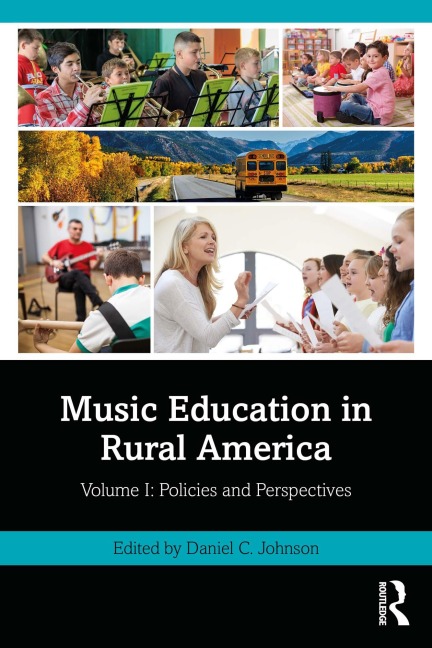
This two-volume publication is the first of its kind, advancing asset-based policies and practices in music education for nearly 10 million rural students nationwide. By exploring the influence of urbanormativity and historical trends, the authors advocate for school music programs that sustain rural values, interests, communities, and ecosystems. While earlier research has offered insights on the topic, none have assembled a collection of experts and scholars committed to promoting an asset-based view of rural music education in the United States. Volume I: Policies and Perspectives, presents ten chapters addressing a range of issues that affect one-fifth of K-12 students nationwide. Ideas encompass a multi-dimensional definition of rurality that includes population, landscape, and sociocultural contexts. The authors offer their own first-hand perspectives to describe the importance and character of rural places themselves. Throughlines of this volume are disentangling assumptions about rural schools and their resources, pedagogical potential, and musical possibilities. Written for music educators, scholars, policymakers, school administrators, and music-teacher educators, this volume affirms that geography is not inherently a limitation and that all students deserve access to responsive music education, regardless of their zip codes.
Daniel C. Johnson is Professor of Music and Music Education at the University of North Carolina, Wilmington, where he coordinates Graduate Studies in Music Education.
List of Figures Preface Acknowledgements Contributor Biographies Chapter 1. History and Current Landscape of Rural Music Education: Policy and Praxis J. Kessa Roberts and Alycia Cole Chapter 2. Surveying the Field: A Systematic Review of Rural Music Education Research in the United States Timothy E. Nowak Chapter 3. Urbanormativity in Rural School Music Vincent C. Bates Chapter 4. The Intersections of School, Community, and Music in Rural Spaces Whitney Mayo Chapter 5. Place-Based Pedagogy and Rural Communities as Cultural Contexts Catheryn Shaw Foster and Melody Causby Chapter 6. Love Your Mother: How Ecology Can Inform Music Teaching and Learning in Rural Settings Daniel J. Shevock Chapter 7. Preservice Music Teacher Education: Preparing the Next Generation for Rural Schools Daniel C. Johnson and Eric M. Pennello Chapter 8. Rural Music Teacher Retention and Turnover David N. Sanderson Chapter 9. Answering the Call for Rural Music Teacher Professional Development Daniel C. Johnson Chapter 10. Potential Unexplored: Land-Grant Institutions, Rural Engagement, and Music Education Jason B. Gossett and Angela Munroe