Und dann auf "Zum Home-Bildschirm [+]".

Stöbern
genialokal zum Startbildschirm hinzufügen
Installieren Sie die genialokal App auf Ihrem Startbildschirm für einen schnellen Zugriff und eine komfortable Nutzung.
Installieren Sie die genialokal App auf Ihrem Startbildschirm für einen schnellen Zugriff und eine komfortable Nutzung.
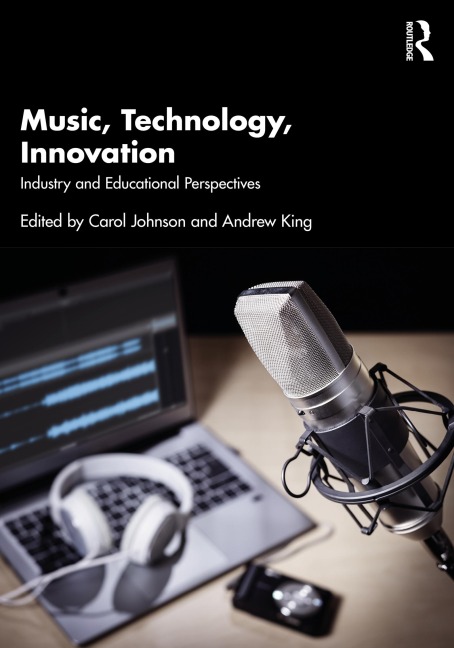
Music, Technology, Innovation: Industry and Educational Perspectives draws upon cutting-edge practice in the use of technology from both a pedagogical and industry perspective. Situated within the latest research, this edited volume explores technological innovation from a musical perspective, examines current trends within the industry, and carefully considers them from an educational perspective. Noted throughout history, music education is responsive to industry innovations. However, emerging technologies often begin with over-hyped promises before they move through various phases of development and are then repurposed for learning and teaching. Educators can adopt an innovation and develop a framework that is pedagogically sound and learner-centred. Based on these ideas, the authors together highlight industry innovations that have potential outcomes for engaging students in music learning within research-informed practices, build upon these ideas and identify proactive mechanisms for teaching music education, and work towards developing a framework for understanding these phenomena. The chapters address key topics including the ethics of technology, AI and music, online performance and teaching, gamification, big data, teaching audio production, acoustic ecology, and more. The examination of areas in contemporary innovation can further support the potential to empower teachers and students to understand the opportunities for teaching, sustainability, and growth in music education.
Carol Johnson (PhD) is Senior Lecturer in Music (Online Learning and Educational Technologies) at the Melbourne Conservatorium of Music, The University of Melbourne (Australia), and founded The Virtual School of Music in 2004. Andrew King (PhD) is Professor in Music and Technology and was Head of the School of Arts (2017-2023) at the University of Hull, UK. He is currently Pro Vice Chancellor at the University of Hull (UK).
Introduction by Carol Johnson and Andrew King Section 1: Technology, Performance and Context Industry Perspective by Chester Thompson Chapter 1: Synchronous Online Ensemble Performance by Stefano Delle Monache, Luca Comanducci, Giovanni Caspito, Augusto Sarti and Federico Avanzini Chapter 2: Performance in the Virtual Auditorium: Performance practice in Second Life by Kenneth McAlpine and James Cook Chapter 3: Enhanced Performance Training by George Waddell and Aaron Williamon Chapter 4: Developing an Online Music Orientation using the Framework for Teaching Music Online by Carol Johnson Section 2: Perspectives for Teaching Industry Perspective by Peter Lee and Tim Wilson Chapter 5: Instrumental Learning Online by Pamela D. Pike Chapter 6: Informed Teaching and Practice in Music Education: Exploring Music Technologies, Curriculum Design and Learning Environments in an Everchanging World by Brad Merrick Chapter 7: Music, Play, Games and Education by Tim Summers Chapter 8: Music Representation and Modelling: A Signal Processing Perspective by Augusto Sarti, Fabio Antonacci, and Alberto Bernadini Chapter 9: State and Practice of Music Education Software Design by Matthias Nowakowski and Aristotelis Hadjakos Chapter 10: Audio Education: Perspectives from Industry by Andrew King Chapter 11: Strategies for Teaching Audio Production Online by Jason Torrens and Paul Doornbusch Section 3: Current Issues Industry Perspective by Phil Harding and Andrew King Chapter 12: Ethics by Nicolas Gold and Ross Purves Chapter 13: Acoustic Ecology: Exploring the Role of Sound and Technology in Understanding Climate Change by Leah Barclay Chapter 14: Artificial Intelligence and Music by Robert Laidlow Chapter 15: Exploring Links Between Music and Science-Informed Play by Evangelos Himonides, Ross Purves and Nicolas Gold Chapter 16: Future Directions: Artificial Intelligence, Immersive Learning & Online Learning by Carol Johnson & Andrew King
Dieses eBook wird im PDF-Format geliefert und ist mit einem Adobe Kopierschutz (DRM) versehen. Sie können dieses eBook mit allen Geräten lesen, die das PDF-Format und den Adobe Kopierschutz (DRM) unterstützen.
Zum Beispiel mit den folgenden Geräten:
• tolino Reader
Laden Sie das eBook direkt über den Reader-Shop auf dem tolino herunter oder übertragen Sie das eBook auf Ihren tolino mit einer kostenlosen Software wie beispielsweise Adobe Digital Editions.
• Sony Reader & andere eBook Reader
Laden Sie das eBook direkt über den Reader-Shop herunter oder übertragen Sie das eBook mit der kostenlosen Software Sony READER FOR PC/Mac oder Adobe Digital Editions auf ein Standard-Lesegeräte mit epub- und Adobe DRM-Unterstützung.
• Tablets & Smartphones
Möchten Sie dieses eBook auf Ihrem Smartphone oder Tablet lesen, finden Sie hier unsere kostenlose Lese-App für iPhone/iPad und Android Smartphone/Tablets.
• PC & Mac
Lesen Sie das eBook direkt nach dem Herunterladen mit einer kostenlosen Lesesoftware, beispielsweise Adobe Digital Editions, Sony READER FOR PC/Mac oder direkt über Ihre eBook-Bibliothek in Ihrem Konto unter „Meine eBooks“ - „online lesen“.
Schalten Sie das eBook mit Ihrer persönlichen Adobe ID auf bis zu sechs Geräten gleichzeitig frei.
Bitte beachten Sie, dass die Kindle-Geräte das Format nicht unterstützen und dieses eBook somit nicht auf Kindle-Geräten lesbar ist.