Und dann auf "Zum Home-Bildschirm [+]".

Stöbern
genialokal zum Startbildschirm hinzufügen
Installieren Sie die genialokal App auf Ihrem Startbildschirm für einen schnellen Zugriff und eine komfortable Nutzung.
Installieren Sie die genialokal App auf Ihrem Startbildschirm für einen schnellen Zugriff und eine komfortable Nutzung.
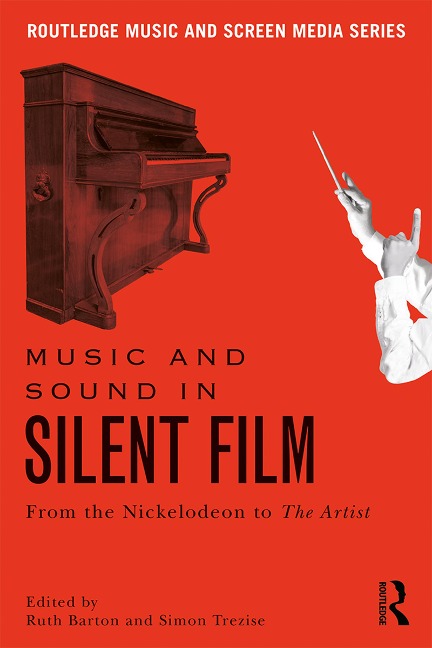
Despite their name, the silent films of the early cinematic era were frequently accompanied by music and other sound elements of many kinds, including mechanical instruments, live performers, and audience sing-alongs. The 12 chapters in this concise book explore the multitude of functions filled by music in the rapidly changing context of the silent film era, as the concept of cinema itself developed. Examples are drawn from around the globe and across the history of silent film, both during the classic era of silent film and later uses of the silent format. With contributors drawn from film studies and music disciplines, and including both senior and emerging scholars, Music and Sound in Silent Film offers an essential introduction to the origins of film music and the cinematic art form.
Ruth Barton is Associate Professor in the Department of Film, Trinity College Dublin. She is the author of Irish National Cinema, Acting Irish in Hollywood: From Fitzgerald to Farrell, Hedy Lamarr: The Most Beautiful Woman in Film, and Rex Ingram: Visionary Director of the Silent Screen. Simon Trezise is Associate Professor in the Department of Music, Trinity College Dublin. He is the editor of The Cambridge Companion to French Music.
Introduction (Simon Trezise) / Part One: The evolution of sound and performance practices, the American experience / 1. 'Better Music at Smaller Cost': Selling Mechanical Instruments to American Motion Picture Houses in the 1910s (Jim Buhler and Allison Wente) / 2. Musical Suggestions for Hollywood Films, 1908-1927 (Kendra Preston Leonard) / 3. Sing them again: audience singing in silent film (Malcolm Cook) / Part Two: The evolution of sound and performance practices, the global experience / 4. 'Players Must Be of a Good Class': Women and Concert Musicians in Irish Picture Houses, 1910-20 (Denis Condon) / 5. Women musicians in the transition between silent and sound cinema (Laraine Porter)/ Part Three: Synchronisation and scoring - historical practices / 6. Music's Role in the Development of the 'Mute' Feature Film: Ben Hur and Wings (Gillian B. Anderson) / 7. Edmund Meisel's score to Der heilige Berg (1926): Prefiguring Hollywood's 'Golden Age' narrative-scoring practices in live performance (Fiona Ford) / Part Four - Synchronisation and scoring - contemporary reworkings / 8. Carl Davis, interview by Simon Trezise / 9. Scenes from Ozu (Ed Hughes) / 10. Damaging a film; rediscovering a film. A Musical Comparison of Three DVD Editions of Nosferatu (Emilio Audissino) / 11. Electroacoustic Composition and Silent Film (Nicholas Brown) / 12. The Modern 'Silent Film' (James Wierzbicki) / 13. About the Contributors / Index
Dieses eBook wird im PDF-Format geliefert und ist mit einem Adobe Kopierschutz (DRM) versehen. Sie können dieses eBook mit allen Geräten lesen, die das PDF-Format und den Adobe Kopierschutz (DRM) unterstützen.
Zum Beispiel mit den folgenden Geräten:
• tolino Reader
Laden Sie das eBook direkt über den Reader-Shop auf dem tolino herunter oder übertragen Sie das eBook auf Ihren tolino mit einer kostenlosen Software wie beispielsweise Adobe Digital Editions.
• Sony Reader & andere eBook Reader
Laden Sie das eBook direkt über den Reader-Shop herunter oder übertragen Sie das eBook mit der kostenlosen Software Sony READER FOR PC/Mac oder Adobe Digital Editions auf ein Standard-Lesegeräte mit epub- und Adobe DRM-Unterstützung.
• Tablets & Smartphones
Möchten Sie dieses eBook auf Ihrem Smartphone oder Tablet lesen, finden Sie hier unsere kostenlose Lese-App für iPhone/iPad und Android Smartphone/Tablets.
• PC & Mac
Lesen Sie das eBook direkt nach dem Herunterladen mit einer kostenlosen Lesesoftware, beispielsweise Adobe Digital Editions, Sony READER FOR PC/Mac oder direkt über Ihre eBook-Bibliothek in Ihrem Konto unter „Meine eBooks“ - „online lesen“.
Schalten Sie das eBook mit Ihrer persönlichen Adobe ID auf bis zu sechs Geräten gleichzeitig frei.
Bitte beachten Sie, dass die Kindle-Geräte das Format nicht unterstützen und dieses eBook somit nicht auf Kindle-Geräten lesbar ist.