Und dann auf "Zum Home-Bildschirm [+]".

Stöbern
genialokal zum Startbildschirm hinzufügen
Installieren Sie die genialokal App auf Ihrem Startbildschirm für einen schnellen Zugriff und eine komfortable Nutzung.
Installieren Sie die genialokal App auf Ihrem Startbildschirm für einen schnellen Zugriff und eine komfortable Nutzung.
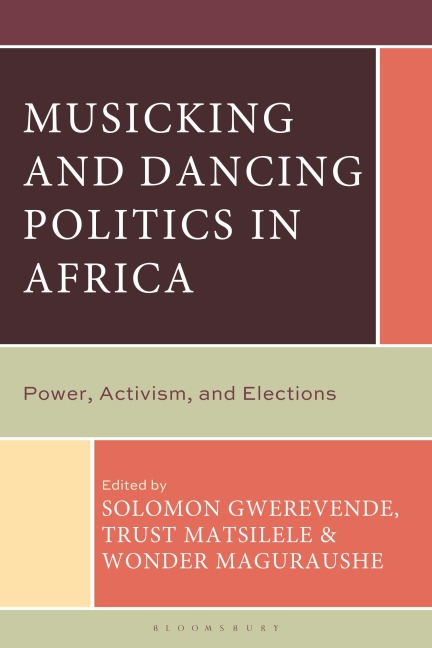
Bringing together interdisciplinary scholars, this book explores how African musical traditions and dance act as political commentary and forms of resistance in Africa.
The volume draws on Christopher Small's concept of "musicking" to explore the intersection between music, dance, and politics across the diverse cultural landscapes in Africa, particularly South Africa, Malawi, Nigeria, and Zimbabwe. Chapters cover case studies of how music and dance have been used as tools of political messaging and means of performing, visualizing and localizing activism, resistance, propaganda, and power in politics.
It is structured into three main parts. The first part examines how music and dance serve as vessels for communal memory and heritage. Part two explores the role of music and dance as a tool to fight for democracy and justice. Part three highlights the role of dance and music in elections.
This book is essential for scholars and students interested in music and dance as conceptual tools for studying politics as a cultural phenomenon in Africa.
Solomon Gwerevende is a research associate at the Music and Minority Research Centre at the University of Music and Performing Arts Vienna, Austria.
Trust Matsilele is Senior Lecturer of Journalism in the Department of English and Media at Birmingham City University, UK and Research Fellow in the Communication Science Department at the University of South Africa, South Africa.
Wonder Maguraushe is Senior Lecturer in the Music Business, Musicology and Technology Department at Midland State University, Zimbabwe.
List of Figures
Preface
Acknowledgments
Part I: From the Past to the Present: Music, Dance, Power, Memory, and Heritage
Introduction: Musicking and Dancing Politics: An Interdisciplinary Introduction
Solomon Gwerevende (University of Music and Performing Arts Vienna, Austria), Wonder Maguraushe (Midland State University, Zimbabwe), and Trust Matsilele (Birmingham Cit University, UK)
1. Memory in Song: Whose Memory and to What End?
Jacob Mapara (Chinhoyi University of Technology, Zimbabwe)
2. The Politics of Liberation Heritage: Commemorative Practices and Remembering Revolutionary Musicians in Two Southern African Countries
Alfred Ndlovu (University of Pretoria, South Africa) and Solomon Gwerevende (University of Music and Performing Arts Vienna, Austria)
3. Singing and Dancing Dubula Ibhunu: Maintaining Liberation Heritage Versus Challenging Hate Speech in South Africa
Josephat Mutangadura (Tshwane University of Technology, South Africa), Khatija Bibi Khan (University of South Africa, South Africa), and Solomon Gwerevende (University of Music and Performing Arts Vienna, Austria)
Part II: Performing Political Discourse, Democracy, and Activism for Justice
4. The Apolitical Musician? Oliver Mtukudzi's Contribution to Zimbabwe's Political Discourse Through Music (1970s-2019)
James Hlongwana (Great Zimbabwe University, Zimbabwe) and Liketso Dube (Great Zimbabwe University, Zimbabwe)
5. Zimdancehall as Youth Voices: Winky D's Recruitment of Young Musicians in the Chimurenga Against Economic and Political Challenges in Zimbabwe
Solomon Gwerevende (University of Music and Performing Arts Vienna, Austria), Alois Maluleke (Independent Scholar), and Shadreck Dzingayi (Great Zimbabwe University, Zimbabwe)
6. Singing for Democracy: The Politics of Music in Zimbabwe's Securocratic State
Pedzisai Ruhanya (University of Johannesburg, South Africa), Bekezela Gumbo (Zimbabwe Democracy Institute, Zimbabwe), and Linda Mujuru (Midlands State University, Zimbabwe)
7. Breaking the Loud Silence of Oppression through Theatrical Dance and Music Activism in Nigeria
Oluwatoyin Olokodana-James (Obafemi Awolowo University, Nigeria) and Florence Ewomazino Nweke (University of Lagos, Nigeria)
Part III: Performing Political Transition and Electoral Politics
8. The Sounds of Politics: Popular Music in Malawi's Political Transitions Since 1964
Richard Gracious Gadama (Mzuzu University, Malawi)
9. Music and Dance as Election Campaign Strategies in Nigerian Elections
Florence Ewomazino Nweke(University of Lagos, Nigeria) and Oluwatoyin Olokodana-James (Obafemi Awolowo University, Nigeria)
10. The Politics of Spectacle: Music and Dance as Election Campaign Strategies in Nigeria
Toyin Segun Onayinka (Federal University Oye-Ekiti, Nigeria), Omolola Oluwasola (University of Ibadan, Nigeria), Mustapha Olalekan Rufai (Federal University Oye-Ekiti, Nigeria), and Chinyere Mercy Ignatius (Federal University Oye-Ekiti, Nigeria)
Index
List of Contributors
Dieses eBook wird im PDF-Format geliefert und ist mit einem Adobe Kopierschutz (DRM) versehen. Sie können dieses eBook mit allen Geräten lesen, die das PDF-Format und den Adobe Kopierschutz (DRM) unterstützen.
Zum Beispiel mit den folgenden Geräten:
• tolino Reader
Laden Sie das eBook direkt über den Reader-Shop auf dem tolino herunter oder übertragen Sie das eBook auf Ihren tolino mit einer kostenlosen Software wie beispielsweise Adobe Digital Editions.
• Sony Reader & andere eBook Reader
Laden Sie das eBook direkt über den Reader-Shop herunter oder übertragen Sie das eBook mit der kostenlosen Software Sony READER FOR PC/Mac oder Adobe Digital Editions auf ein Standard-Lesegeräte mit epub- und Adobe DRM-Unterstützung.
• Tablets & Smartphones
Möchten Sie dieses eBook auf Ihrem Smartphone oder Tablet lesen, finden Sie hier unsere kostenlose Lese-App für iPhone/iPad und Android Smartphone/Tablets.
• PC & Mac
Lesen Sie das eBook direkt nach dem Herunterladen mit einer kostenlosen Lesesoftware, beispielsweise Adobe Digital Editions, Sony READER FOR PC/Mac oder direkt über Ihre eBook-Bibliothek in Ihrem Konto unter „Meine eBooks“ - „online lesen“.
Schalten Sie das eBook mit Ihrer persönlichen Adobe ID auf bis zu sechs Geräten gleichzeitig frei.
Bitte beachten Sie, dass die Kindle-Geräte das Format nicht unterstützen und dieses eBook somit nicht auf Kindle-Geräten lesbar ist.