Und dann auf "Zum Home-Bildschirm [+]".

Stöbern
genialokal zum Startbildschirm hinzufügen
Installieren Sie die genialokal App auf Ihrem Startbildschirm für einen schnellen Zugriff und eine komfortable Nutzung.
Installieren Sie die genialokal App auf Ihrem Startbildschirm für einen schnellen Zugriff und eine komfortable Nutzung.
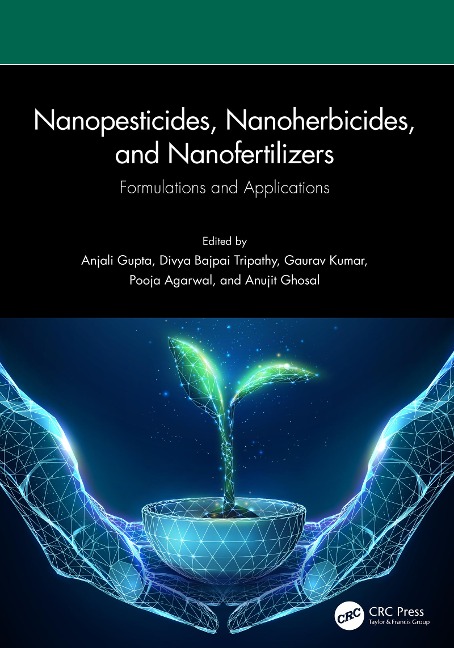
Nanopesticides, Nanoherbicides, and Nanofertilizers: Formulations and Applications demonstrates the potential for nanomaterials to revolutionize modern agriculture to become more sustainable. A team of expert scientists explain how the nanoformulation of traditionally used herbicides, fertilizers, and pesticides can protect large-scale crops from unwanted weeds and pests as well as from the environmental side effects that are caused by the bulk application of chemicals. This book demonstrates how nanomaterials, such as hydroxyapatite, clay minerals, zeolites, and polyacrylic acid, have been successfully used to develop fertilizers that promote a slower release of chemicals due to the unique properties of nanomaterials. Their use in lower concentrations helps in decreasing the toxicity to non-targeted organisms as well as lowering the risk of environmental degradation. FEATURES: - Categorically discusses the formulations and applications of nanopestides, nanoherbicides, and nanofertilizers, as well as their impact on the environment - Presents chapters on patent landscape, environmental acceptability, and environmental risks - Addresses degradation of nanoparticles as well expected toxicity and drawbacks of nanomaterial-based pesticides, herbicides, and fertilizers This book is essential reading for researchers and professionals working in the fields of biotechnology, nanomaterials and agricultural chemistry.
Dr. Anjali Gupta is Professor and Researcher in the Division of Chemistry, Galgotias University, Uttar Pradesh, India. Dr. Divya Bajpai Tripathy is Professor and Researcher in the Division of Chemistry, Galgotias University, Uttar Pradesh, India. Dr. Gaurav Kumar is Associate Professor in Clinical Research Division and Institution's Innovation Council In-Charge at Galgotias University, Uttar Pradesh, India. Dr. Pooja Agarwal is Professor in the Division of Chemistry, Galgotias University, Uttar Pradesh, India. Dr. Anujit Ghosal is Researcher at the Richardson Centre for Food Technology and Research, Department of Food and Human Nutritional Sciences, The University of Manitoba, Canada.
Chapter 1: Introduction to Nanopesticide and Nanofertilizer. Chapter 2: Sustainability Aspects for using Nanotechnology in Agriculture. Chapter 3: Nanopesticides: Formulation and Applications. Chapter 4: Nanofertilizers: Formulation and Applications. Chapter 5: Nanoherbicides: Formulations and Applications. Chapter 6: Nanopesticides, Nanoherbicides and Nanofertilizers: Risks and Environmental Acceptability. Chapter 7: Nanopesticides, Nanoherbicides and Nanofertilizers: Future Perspective. Chapter 8: Patent Landscape of Nanopesticides, Nanoherbicides and Nanofertilizers.
Dieses eBook wird im PDF-Format geliefert und ist mit einem Adobe Kopierschutz (DRM) versehen. Sie können dieses eBook mit allen Geräten lesen, die das PDF-Format und den Adobe Kopierschutz (DRM) unterstützen.
Zum Beispiel mit den folgenden Geräten:
• tolino Reader
Laden Sie das eBook direkt über den Reader-Shop auf dem tolino herunter oder übertragen Sie das eBook auf Ihren tolino mit einer kostenlosen Software wie beispielsweise Adobe Digital Editions.
• Sony Reader & andere eBook Reader
Laden Sie das eBook direkt über den Reader-Shop herunter oder übertragen Sie das eBook mit der kostenlosen Software Sony READER FOR PC/Mac oder Adobe Digital Editions auf ein Standard-Lesegeräte mit epub- und Adobe DRM-Unterstützung.
• Tablets & Smartphones
Möchten Sie dieses eBook auf Ihrem Smartphone oder Tablet lesen, finden Sie hier unsere kostenlose Lese-App für iPhone/iPad und Android Smartphone/Tablets.
• PC & Mac
Lesen Sie das eBook direkt nach dem Herunterladen mit einer kostenlosen Lesesoftware, beispielsweise Adobe Digital Editions, Sony READER FOR PC/Mac oder direkt über Ihre eBook-Bibliothek in Ihrem Konto unter „Meine eBooks“ - „online lesen“.
Schalten Sie das eBook mit Ihrer persönlichen Adobe ID auf bis zu sechs Geräten gleichzeitig frei.
Bitte beachten Sie, dass die Kindle-Geräte das Format nicht unterstützen und dieses eBook somit nicht auf Kindle-Geräten lesbar ist.