Und dann auf "Zum Home-Bildschirm [+]".

Stöbern
genialokal zum Startbildschirm hinzufügen
Installieren Sie die genialokal App auf Ihrem Startbildschirm für einen schnellen Zugriff und eine komfortable Nutzung.
Installieren Sie die genialokal App auf Ihrem Startbildschirm für einen schnellen Zugriff und eine komfortable Nutzung.
Ihr gewünschter Artikel ist in 0 Buchhandlungen vorrätig - wählen Sie hier eine Buchhandlung in Ihrer Nähe aus:

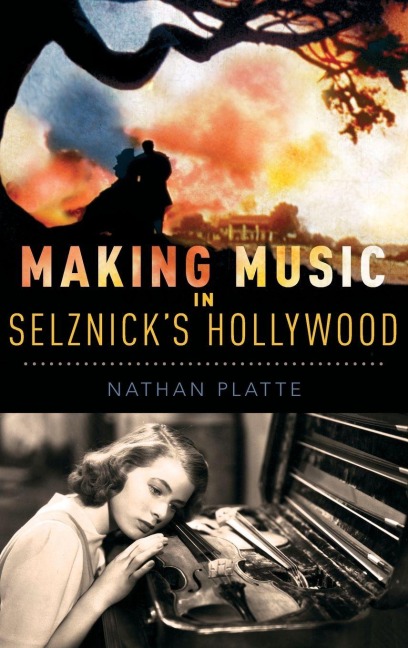
Through the rise and fall of the Hollywood studio system, David O. Selznick reigned as Hollywood's preeminent producer. His reputation depended in large part on music. The orchestral cacophony of King Kong, the pulsing electronic sonorities of Spellbound, and the Tara theme from Gone with the Wind made music a distinguishing feature of the Selznick experience. By flaunting music's role in film and overseeing its distribution through sheet music, concerts, radio broadcasts, and soundtrack albums, Selznick cultivated a fascination with film scores. But he did not do it alone. In Making Music in Selznick's Hollywood, Nathan Platte brings to light the men and women whose work sounds throughout Selznick's many films. The cast includes familiar composers like Max Steiner, Franz Waxman, and Dimitri Tiomkin, but extends to overlooked contributors, including music editor Audray Granville, orchestrator Hugo Friedhofer, harpist Louise Klos, choral director Jester Hairston, publicist Ted Wick, and many others. Novelists, studio writers, and directors like Alfred Hitchcock also influenced the soundscapes of Selznick's films. Whether working with the producer directly or managing his presence from a distance, all had to reckon with Selznick's musical preoccupations. Rarely was it easy. Rewritten scores, fired personnel, and other skirmishes reflect the troubles-and uneven compromises-that shaped music for films like Gone with the Wind, Duel in the Sun, and Rebecca. Even Selznick anticipated that such problems would "go down in the history of Hollywood as the last wild fling of people who really fiddled-and how -while Hollywood burned." Drawing on extensive archival research, Platte recounts those stories here, tracing Selznick's musical labors during the silent era through his work at the major studios and his culminating efforts at Selznick International Pictures. Taken together, Selznick's films provide a sweeping vista of the relationships among musicians and filmmakers that defined the Hollywood sound.
Nathan Platte teaches music history at the University of Iowa. He is co-author of Franz Waxman's Rebecca: A Film Score Guide (Scarecrow Press, 2012) and co-editor of The Routledge Film Music Sourcebook (Routledge, 2011).
- Contents
- Foreword by Daniel Goldmark
- About the Companion Website
- Introduction
- Part I: Selznick in the Studio System
- 1. In the Selznick Family Tradition
- 2. "Drama Rising Like Might Music": Selznick and Steiner at RKO
- 3. Variations on a Theme: Selznick and Stothart at MGM
- Part II: Musically Independent
- 4. The Start of Selznick International Pictures
- 5. Music Director Differences: Artful Arbitration through Selznick International's Busiest Years
- Part III: Music for Hollywood's Prestige Producer
- 6. Gone with the Wind, Part I: Producing the Score
- 7. Gone with the Wind, Part II: The Music of "Max Steiner and Co."
- 8. "I know just what she's going through": Rebecca's Music for Interiors
- 9. "Together" for the Last Time in Since You Went Away
- 10. Success in Spite of Itself: The Trouble with Spellbound
- Part IV: Postwar Experiments
- 11. From the Ranch to the Drawing Room: Duel in the Sun and The Paradine Case
- 12. "Our Valedictory to Wild Extravagance": The Curious Portrait of Jennie
- 13. Selznick Beyond Hollywood
- 14. Conclusion
- Acknowledgements
- Select Bibliography