Und dann auf "Zum Home-Bildschirm [+]".

Stöbern
genialokal zum Startbildschirm hinzufügen
Installieren Sie die genialokal App auf Ihrem Startbildschirm für einen schnellen Zugriff und eine komfortable Nutzung.
Installieren Sie die genialokal App auf Ihrem Startbildschirm für einen schnellen Zugriff und eine komfortable Nutzung.
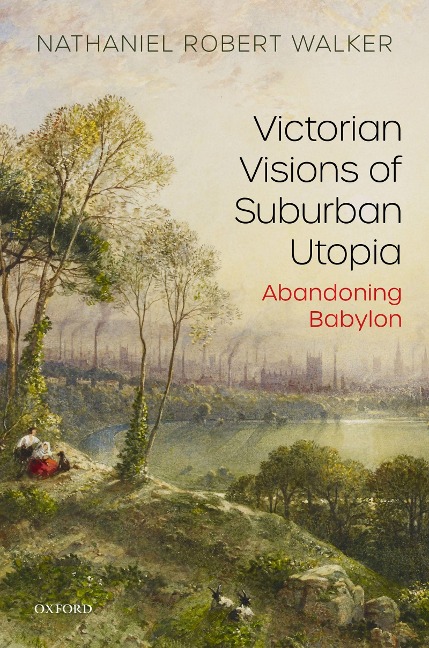
The rise of suburbs and disinvestment from cities have been defining features of life in many countries over the course of the twentieth century. In Victorian Visions of Suburban Utopia, Nathaniel Walker asks: why did we abandon our dense, complex urban places and seek to find "the best of the city and the country" in the flowery suburbs? While looking back at the architecture and urban design of the 1800s offers some answers, Walker argues that a great missing piece of the story can be found in Victorian utopian literature. The replacement of cities with high-tech suburbs was repeatedly imagined and breathlessly described in the socialist dreams and science-fiction fantasies of dozens of British and American authors. Some of these visionaries - such as Robert Owen, Edward Bulwer-Lytton, Edward Bellamy, William Morris, Ebenezer Howard, and H. G. Wells - are enduringly famous, while others were street vendors or amateur chemists who have been all but forgotten. Together, they fashioned strange and beautiful imaginary worlds built of synthetic gemstones, lacy metal colonnades, and unbreakable glass, staffed by robotic servants and teeming with flying carriages. As varied as their futuristic visions could be, Walker reveals how most of them were unified by a single, desperate plea: for humanity to have a future worth living, we must abandon our smoky, poor, chaotic Babylonian cities for a life in shimmering gardens.
Nathaniel Robert Walker is Associate Professor of Architectural History at The Catholic University of America. He earned his PhD at Brown University, and studies the relationships between architecture, aesthetics, public space, urban design, political power, and dreams of the future, both utopian and apocalyptic. He has published essays in ARRIS, Buildings and Landscapes, the Journal of the Society of Architectural Historians, Traditional Dwellings and Settlements Review, Utopian Studies, and a number of edited volumes, including Suffragette City: Women, Politics and the Built Environment, which he co-edited with E. Darling. He has curated two exhibitions dealing with the connections between architecture, urbanism, and human dreams: Building Expectations: Past and Present Visions of the Architectural Future (Bell Gallery, Providence), and The City Luminous: Architectures of Hope in an Age of Fear (City Gallery, Charleston, co-curated with J. Streit).
- Introduction: The Dream Before the Dream - 1: "God Made the Country, Man Made the Town": The Foundations of Modern Suburban Utopias - 2: Socialist Schemes and Suburban Dreams - 3: Urban Non-Fiction and Suburban Science Fiction - 4: Empires of Hygiene and Horror - 5: The Republic of the Future - 6: Architecture Under Nationalism - 7: Gardening in the Apocalypse - Conclusion: "And Was Jerusalem Builded Here?"
Dieses eBook wird im PDF-Format geliefert und ist mit einem Adobe Kopierschutz (DRM) versehen. Sie können dieses eBook mit allen Geräten lesen, die das PDF-Format und den Adobe Kopierschutz (DRM) unterstützen.
Zum Beispiel mit den folgenden Geräten:
• tolino Reader
Laden Sie das eBook direkt über den Reader-Shop auf dem tolino herunter oder übertragen Sie das eBook auf Ihren tolino mit einer kostenlosen Software wie beispielsweise Adobe Digital Editions.
• Sony Reader & andere eBook Reader
Laden Sie das eBook direkt über den Reader-Shop herunter oder übertragen Sie das eBook mit der kostenlosen Software Sony READER FOR PC/Mac oder Adobe Digital Editions auf ein Standard-Lesegeräte mit epub- und Adobe DRM-Unterstützung.
• Tablets & Smartphones
Möchten Sie dieses eBook auf Ihrem Smartphone oder Tablet lesen, finden Sie hier unsere kostenlose Lese-App für iPhone/iPad und Android Smartphone/Tablets.
• PC & Mac
Lesen Sie das eBook direkt nach dem Herunterladen mit einer kostenlosen Lesesoftware, beispielsweise Adobe Digital Editions, Sony READER FOR PC/Mac oder direkt über Ihre eBook-Bibliothek in Ihrem Konto unter „Meine eBooks“ - „online lesen“.
Schalten Sie das eBook mit Ihrer persönlichen Adobe ID auf bis zu sechs Geräten gleichzeitig frei.
Bitte beachten Sie, dass die Kindle-Geräte das Format nicht unterstützen und dieses eBook somit nicht auf Kindle-Geräten lesbar ist.