Und dann auf "Zum Home-Bildschirm [+]".

Stöbern
genialokal zum Startbildschirm hinzufügen
Installieren Sie die genialokal App auf Ihrem Startbildschirm für einen schnellen Zugriff und eine komfortable Nutzung.
Installieren Sie die genialokal App auf Ihrem Startbildschirm für einen schnellen Zugriff und eine komfortable Nutzung.
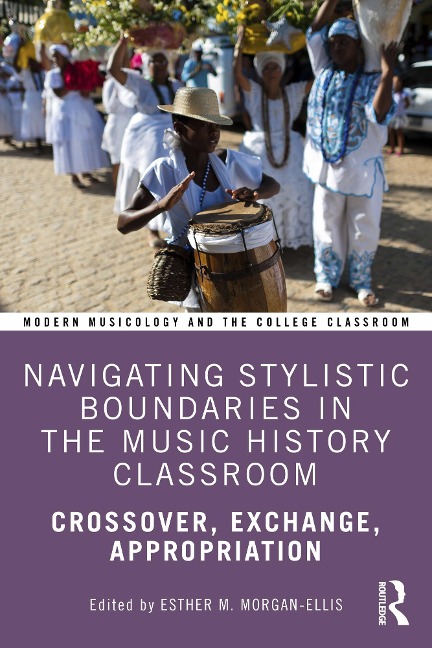
At a time of transformation in the music history classroom and amid increasing calls to teach a global music history, Navigating Stylistic Boundaries in the Music History Classroom adds nuance to the teaching of varied musical traditions by examining the places where they intersect and the issues of musical exchange and appropriation that these intersections raise. Troubling traditional boundaries of genre and style, this collection of essays helps instructors to denaturalize the framework of Western art music and invite students to engage with other traditions-vernacular, popular, and non-Western-on their own terms. The book draws together contributions by a wide range of active scholars and educators to investigate the teaching of music history around cases of stylistic borders, exploring the places where different practices of music and values intersect. Each chapter in this collection considers a specific case in which an artist or community engages in what might be termed musical crossover, exchange, or appropriation and delves deeper into these concepts to explore questions of how musical meaning changes in moving across worlds of practice. Addressing works that are already widely taught but presenting new ways to understand and interpret them, this volume enables instructors to enrich the perspectives on music history that they present and to take on the challenge of teaching a more global music history without flattening the differences between traditions.
Esther M. Morgan-Ellis is Associate Professor of Music History at the University of North Georgia.
Introduction: Teaching Liminal Musicking ESTHER M. MORGAN-ELLIS PART I: Denaturalizing Western Art Music 1 European Art Music is an Ethnic Music: Fraying the Edges in a Music History Classroom D. LINDA PEARSE AND SANDRIA P. BOULIANE 2 From Beijing to Paris: Teaching Music of the Global Eighteenth Century QINGFAN JIANG 3 "Song of the Spirit Dance" and Native American Songs: Teaching about Appropriation in Late Nineteenth- and Early Twentieth-Century Symphonic Compositions ERINN E. KNYT 4 Examining Vernacular Borrowings to Denaturalize Western Art Music: The Case of "Hoe-Down" ESTHER M. MORGAN-ELLIS PART II: Teaching Blended Musics 5 Music of the Hyphen: Diaspora Music as Process and Product VARSHINI NARAYANAN 6 African-Focused Approaches to Teaching African Popular Music in Western Classrooms ALABA ILESANMI 7 Por ti seré: Jarocho Fusion and Revivalism in "La Bamba" GREGORY REISH PART III: Training Global Musicians 8 From Brazilian Worship Houses to a U.S. College: Recontextualizations of Afro-Brazilian Religious Music and Movement MARC M. GIDAL 9 Crossing Over Popular and Classical Traditions through Musical Theater ALEX BÁDUE 10 The Anti-Colonial Conservatory: The Case of the University "Folk Band" CHRISTOPHER J. SMITH Index
Dieses eBook wird im PDF-Format geliefert und ist mit einem Adobe Kopierschutz (DRM) versehen. Sie können dieses eBook mit allen Geräten lesen, die das PDF-Format und den Adobe Kopierschutz (DRM) unterstützen.
Zum Beispiel mit den folgenden Geräten:
• tolino Reader
Laden Sie das eBook direkt über den Reader-Shop auf dem tolino herunter oder übertragen Sie das eBook auf Ihren tolino mit einer kostenlosen Software wie beispielsweise Adobe Digital Editions.
• Sony Reader & andere eBook Reader
Laden Sie das eBook direkt über den Reader-Shop herunter oder übertragen Sie das eBook mit der kostenlosen Software Sony READER FOR PC/Mac oder Adobe Digital Editions auf ein Standard-Lesegeräte mit epub- und Adobe DRM-Unterstützung.
• Tablets & Smartphones
Möchten Sie dieses eBook auf Ihrem Smartphone oder Tablet lesen, finden Sie hier unsere kostenlose Lese-App für iPhone/iPad und Android Smartphone/Tablets.
• PC & Mac
Lesen Sie das eBook direkt nach dem Herunterladen mit einer kostenlosen Lesesoftware, beispielsweise Adobe Digital Editions, Sony READER FOR PC/Mac oder direkt über Ihre eBook-Bibliothek in Ihrem Konto unter „Meine eBooks“ - „online lesen“.
Schalten Sie das eBook mit Ihrer persönlichen Adobe ID auf bis zu sechs Geräten gleichzeitig frei.
Bitte beachten Sie, dass die Kindle-Geräte das Format nicht unterstützen und dieses eBook somit nicht auf Kindle-Geräten lesbar ist.