Und dann auf "Zum Home-Bildschirm [+]".

Stöbern
genialokal zum Startbildschirm hinzufügen
Installieren Sie die genialokal App auf Ihrem Startbildschirm für einen schnellen Zugriff und eine komfortable Nutzung.
Installieren Sie die genialokal App auf Ihrem Startbildschirm für einen schnellen Zugriff und eine komfortable Nutzung.

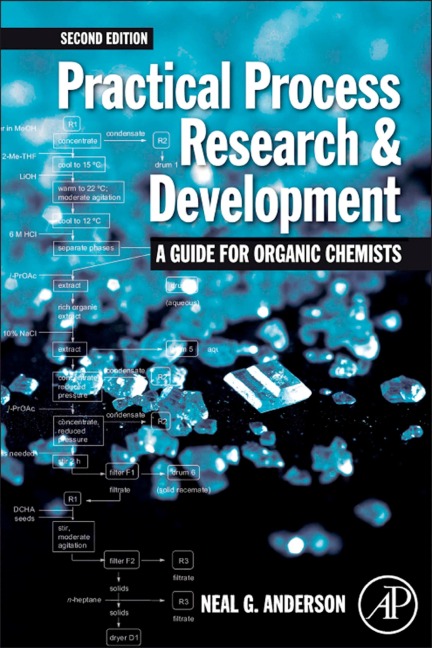
Designed to provide a comprehensive, step-by-step approach to organic process research and development in the pharmaceutical, fine chemical, and agricultural chemical industries, this book describes the steps taken, following synthesis and evaluation, to bring key compounds to market in a cost-effective manner. It describes hands-on, step-by-step, approaches to solving process development problems, including route, reagent, and solvent selection; optimising catalytic reactions; chiral syntheses; and "green chemistry." Second Edition highlights:- Reflects the current thinking in chemical process R&D for small molecules- Retains similar structure and orientation to the first edition. - Contains approx. 85% new material- Primarily new examples (work-up and prospective considerations for pilot plant and manufacturing scale-up)- Some new/expanded topics (e.g. green chemistry, genotoxins, enzymatic processes)- Replaces the first edition, although the first edition contains useful older examples that readers may refer to
- Provides insights into generating rugged, practical, cost-effective processes for the chemical preparation of "small molecules" - Breaks down process optimization into route, reagent and solvent selection, development of reaction conditions, workup, crystallizations and more - Presents guidelines for implementing and troubleshooting processes
Neal G. Anderson is a synthetic organic chemist with over 40 years of experience in chemical process R&D in the pharmaceutical industry. He earned a B.S. degree in biology from the University of Illinois and a Ph.D. in medicinal chemistry from the University of Michigan, followed by industrial post-doctoral studies at McNeil Laboratories. He has extensive hands-on experience in the laboratory, pilot plant, and in manufacturing facilities. At Squibb / Bristol-Myers Squibb he made key contributions to processes for the manufacture of four major drug substances, including captopril, and has participated in 12 manufacturing start-ups and introductions of many processes to pilot plants. He received a BMS President's Award and spot awards, and his final position was Principal Scientist. In 1997, Anderson established Anderson's Process Solutions L.L.C., a consulting firm based in the USA to offer practical guidance on developing and implementing processes for bulk pharmaceuticals and fine chemicals. As part of these consulting services, he presents courses on selected aspects of practical process R&D. He is experienced in laboratory research, scale-up, and technology transfer to ensure reproducibility and optimal product quality.
1. Introduction to the role of process development 2. Process safety3. Route selection 4. Reagent selection5. Solvent selection6. Effects of water7. In-process assays, in-process controls, and specifications8. Practical considerations for scale-up9. Optimizing processes by minimizing impurities10. Optimizing organometallic reactions 11. Workup12. Crystallization and purification13. Final product form and impurities14. Continuous operations 15. Refining the process for simplicity and ruggedness16. Process validation and implementation17. TroubleshootingGlossary and indices: general, reagents, reactions, and drug substances