Und dann auf "Zum Home-Bildschirm [+]".

Stöbern
genialokal zum Startbildschirm hinzufügen
Installieren Sie die genialokal App auf Ihrem Startbildschirm für einen schnellen Zugriff und eine komfortable Nutzung.
Installieren Sie die genialokal App auf Ihrem Startbildschirm für einen schnellen Zugriff und eine komfortable Nutzung.
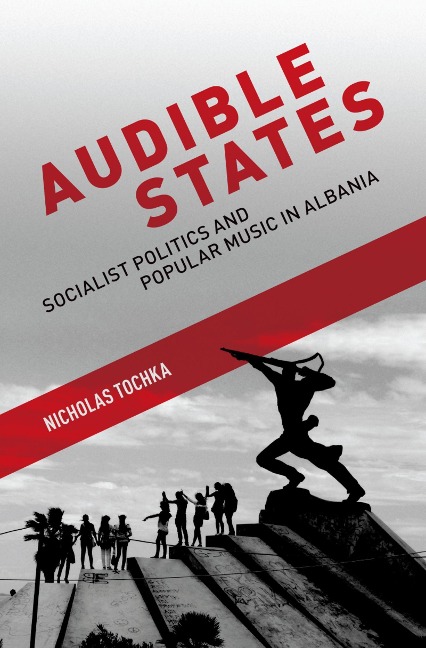
During the Cold War, state-sponsored musical performances were central to the diplomatic agendas of the United States and the Soviet Union. But states on the periphery of the conflict also used state-funded performances to articulate their positions in the polarized global network. In Albania in particular, the postwar government invested heavily in public performances at home, effectively creating a new genre of popular music: the wildly popular light music. In Audible States: Socialist Politics and Popular Music in Albania, author Nicholas Tochka traces an aural history of Albania's government through a close examination of the development and reception of light music at Radio-Television Albania's Festival of Song. Drawing on a wide range of archival resources and over forty interviews with composers, lyricists, singers, and bureaucrats, Tochka describes how popular music became integral to governmental projects to improve society--and a major concern for both state-socialist and postsocialist regimes between 1945 and the present. Tochka's narrative begins in the immediate postwar period, arguing that state officials saw light music as a means to cultivate a modern population under socialism. As the Cold War ended, postsocialist officials turned again to light music, now hoping that these musicians could help shape Albania into a capitalist, "European" state. Interweaving archival research with ethnographic interviews, Audible States demonstrates that modern political orders do not simply render social life visible, but also audible. Incorporating insights from ethnomusicology, governmentality studies, and post-socialist studies, Audible States presents an original perspective on music and government that reveals the fluid, pervasive, but ultimately limited nature of state power in the modern world. A remarkably researched and engagingly written study, Audible States is a foundational text in the growing literature on popular music and culture in post-socialist Europe and will be of great interest for readers interested in popular music, sound studies, and the politics of the Cold War.
Nicholas Tochka is Visiting Assistant Professor of Ethnomusicology at the University of Maryland. A graduate of Stony Brook University and Hofstra University, his work integrates history and ethnography to explore how musicians and listeners make meaningful lives for themselves under modern political orders.
Table of Contents
Acknowledgments List of Illustrations Introduction 1 Administering Music 2 Debating Song 3 Cultivating Individuality 4 Voicing Transition 5 Promoting Albania Epilogue: Hearing Like A State Appendix: Research Materials Notes References
Dieses eBook wird im PDF-Format geliefert und ist mit einem Adobe Kopierschutz (DRM) versehen. Sie können dieses eBook mit allen Geräten lesen, die das PDF-Format und den Adobe Kopierschutz (DRM) unterstützen.
Zum Beispiel mit den folgenden Geräten:
• tolino Reader
Laden Sie das eBook direkt über den Reader-Shop auf dem tolino herunter oder übertragen Sie das eBook auf Ihren tolino mit einer kostenlosen Software wie beispielsweise Adobe Digital Editions.
• Sony Reader & andere eBook Reader
Laden Sie das eBook direkt über den Reader-Shop herunter oder übertragen Sie das eBook mit der kostenlosen Software Sony READER FOR PC/Mac oder Adobe Digital Editions auf ein Standard-Lesegeräte mit epub- und Adobe DRM-Unterstützung.
• Tablets & Smartphones
Möchten Sie dieses eBook auf Ihrem Smartphone oder Tablet lesen, finden Sie hier unsere kostenlose Lese-App für iPhone/iPad und Android Smartphone/Tablets.
• PC & Mac
Lesen Sie das eBook direkt nach dem Herunterladen mit einer kostenlosen Lesesoftware, beispielsweise Adobe Digital Editions, Sony READER FOR PC/Mac oder direkt über Ihre eBook-Bibliothek in Ihrem Konto unter „Meine eBooks“ - „online lesen“.
Schalten Sie das eBook mit Ihrer persönlichen Adobe ID auf bis zu sechs Geräten gleichzeitig frei.
Bitte beachten Sie, dass die Kindle-Geräte das Format nicht unterstützen und dieses eBook somit nicht auf Kindle-Geräten lesbar ist.