Und dann auf "Zum Home-Bildschirm [+]".

Stöbern
genialokal zum Startbildschirm hinzufügen
Installieren Sie die genialokal App auf Ihrem Startbildschirm für einen schnellen Zugriff und eine komfortable Nutzung.
Installieren Sie die genialokal App auf Ihrem Startbildschirm für einen schnellen Zugriff und eine komfortable Nutzung.

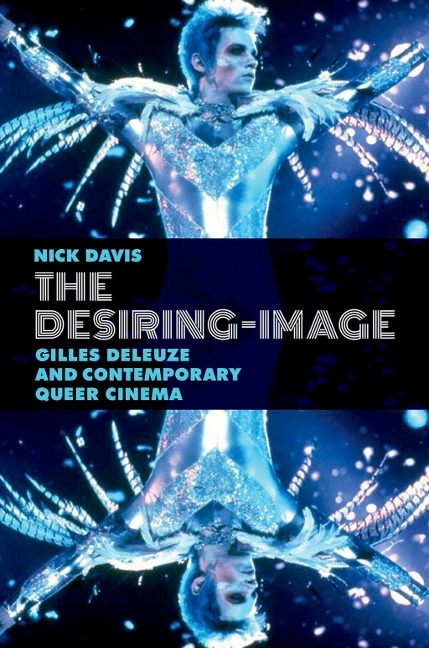
The Desiring-Image yields new models of queer cinema produced since the late 1980s, based on close formal analysis of diverse films as well as innovative contributions to current film theory. The book defines "queer cinema" less as a specific genre or in terms of gay and lesbian identity, but more broadly as a kind of filmmaking that conveys sexual desire and orientation as potentially fluid within any individual's experience, and as forces that can therefore unite unlikely groups of people along new lines, socially, sexually, or politically. The films driving this analysis range from celebrated fixtures of the New Queer Cinema of the 1990s (including Cheryl Dunye's The Watermelon Woman and Todd Haynes's Velvet Goldmine) to sexually provocative films of the same era that are rarely classified as queer (David Cronenberg's Dead Ringers and Naked Lunch) to breakout films by 21st-century directors (Rodney Evans's Brother to Brother, John Cameron Mitchell's Shortbus). To frame these readings and to avoid heterosexist assumptions in other forms of film analysis, The Desiring-Image revisits the work of the philosopher Gilles Deleuze, whose two major works on cinema somehow never address the radical ideas about desire he expresses in other texts. This book brings those notions together in innovative ways, making them clear and accessible to newcomers and field specialists alike, with clear, illustrated examples drawn from a wide range of movies extending beyond the central case studies. Thus, The Desiring-Image speaks to readers interested in queer and gay/lesbian studies, in film theory, in feminist and sexuality scholarship, and in theory and philosophy, putting those discourses into rich, surprising conversations with popular cinema of the last 30 years.
Nick Davis is Associate Professor of English and Gender & Sexuality Studies at Northwestern University.
Acknowledgments Abbreviations Introduction: The Desiring Image The Triple Womb Queering the Cinema Books New Queer Is . . . New Queer Ain't Seven Pillars of Schizo Homo Pomo A Word on Orientation, or Around 1991 Preview of Coming Attractions 1. "Beyond Gay": Dead Ringers and Queer Perceptions "We're Just Not Sure What Kind It Is" Dissenting from "A Dissenting View" Mutant Textuality Perceptions of Perception: Movement, Time, Subtraction Perceptions and Desire: Types of Flows Out-of-Fields and the Desiring-Image The Desiring-Images of Dead Ringers First Out-of-Field: The Mantles vs. the World Second Out-of-Field: The Love that Keeps Almost Speaking Its Name Third Out-of-Field: The Triple-Womb and the "Either . . . or . . . or . . ." Fourth Out-of-Field: Impulse and Immanence The Desiring-Image as Relation-Image 2. Hard Bodies and Sex-Blobs: Deterritorializing Desire in Naked Lunch and Shortbus Innaresting Sex Arrangements Peaks, Sheets, and Series "Everything Is Permitted": Incompossibilities of Desire Schizos and Counterpublics If on a Summer's Night a Sex-Blob Sounds, Stutters, and Scatterplots A Kafka High or a New Low?: Quandaries of the Minor Shortbus: The Queer Politics of "Actual" Sex Does This Bus Only Make One Stop? 3. "Something in Her Face": Queering the Affection-Image in The Watermelon Woman Who Is She, and What Is She to You? The Riddle of the Lesbian Affection-Image Like Clockwork, or How to Make a Face Facing Elsie, and the Mystery of the Other Person Black Lesbians and Their Others Peaks of Present, or What Ever Happened to Lesbian Community? Sheets of Past and Centers of Indetermination A Singular Face, Implying Multitudes Deflective Unities and Oracular Chores Faces in the Crowd Facing Forward 4. Brother to Brother and Adventures in Queer Crystallography Queer Crystallography Crystals, Then and Now The Four Types Looking for Bruce / Looking for Perry Through a Crystal-Image, Darkly What's Sex Got to Do with It? 5. Crystal-Queer Economies: Beau Travail What's Money Got to Do with It? The Oyster and the Book in Blood The Broken Compass and the Three Economies Beau travail, or the Ambiguities Compound Crystals Bachelors and Belles transitions 6. Theses on a Philosophy of Queer History: Velvet Goldmine Changing the World / Changing Ourselves Angels, Aliens, and Orphans Point A to Point B Wild Cards and Unexpected Critiques Toward Productive Ends The Minors and the Miners Conclusion Glossary Notes Works Cited Index