Und dann auf "Zum Home-Bildschirm [+]".

Stöbern
genialokal zum Startbildschirm hinzufügen
Installieren Sie die genialokal App auf Ihrem Startbildschirm für einen schnellen Zugriff und eine komfortable Nutzung.
Installieren Sie die genialokal App auf Ihrem Startbildschirm für einen schnellen Zugriff und eine komfortable Nutzung.

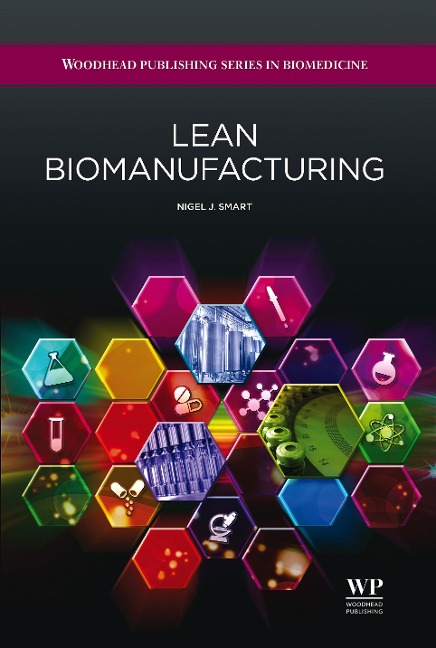
With decreasing profit margins, increasing cost pressures, growing regulatory compliance concerns, mounting pressure from generic drugs and increasing anxiety about the future of healthcare reimbursement, pharmaceutical manufacturers are now forced to re-examine and re-assess the way they have been doing things. In order to sustain profitability, these companies are looking to reduce waste (of all kinds), improve efficiency and increase productivity. Many of them are taking a closer look at lean manufacturing as a way to achieve these goals. Lean biomanufacturing re-visits lean principles and then applies them sympathetically - in a highly practical approach - to the specific needs of pharmaceutical processes, which present significantly different challenges to more mainstream manufacturing processes. A major goal of the book is to highlight those problems and issues that appear more specific or unique to biopharmaceutical manufacturing situations and to provide some insights into what challenges are the important ones to solve and what techniques, tools and mechanisms to employ to be successful.Following an introduction to lean biomanufacturing, the book goes on to discuss lean technologies and methods applied in biomanufacturing. Later chapters cover the creation and implementation of the Transition Plan, issues facing the biopharmaceutical industry, creating a lean approach towards biopharmaceutical processes and the contribution of simulation models in developing these processes. The final chapter covers examples of new technology innovations which help facilitate lean biomanufacturing. - A focus on the issues associated with the application of lean principles to biomanufacturing - Practical examples of factors which can affect biopharmaceutical processes - Coverage of key factors which require integration to run an efficient biopharmaceutical process
Nigel J. Smart PhD is a 30 year veteran of the biotechnology industry who has spent his career involved in developing and manufacturing numerous recombinant protein, monoclonal antibody and vaccine products. He holds a BSc from the University of Leicester, and an MSc and PhD in Fermentation Technology/Biochemical Engineeringfrom the University of Manchester. His career has spanned academia, Big Pharma and progressive biotechnology companies involved in cutting-edge biopharmaceutical products. For the last eleven years he has been a much sought-after consultant solving operational problems and compliance related issues to the pharmaceutical and biopharmaceutical industry. This has also included advising the US government on manufacturing strategies to produce a variety of biological countermeasures for the biodefense program. As Managing Partner of Smart Consulting Group, Dr Smart is now a proponent of lean approaches to biopharmaceutical manufacturing processes and leads the company's business team in this area.
Dedication Foreword List of figures List of tables Acknowledgements About the author Chapter 1: An introduction to Lean biomanufacturing Abstract: 1.1 What is Lean? 1.2 Muda, muda, muda - the seven forms of waste 1.3 Creation of value through the application of Lean 1.4 SIPOC analysis 1.5 Flow charting 1.6 Pull versus push; a change in paradigm for Lean production 1.7 Benefits of a pull strategy 1.8 Considering cost issues 1.9 New approaches to manufacturing 1.10 The driving force for innovation Chapter 2: Lean technologies/methods to be applied to biomanufacturing Abstract: 2.1 Some key thoughts 2.2 Box score 2.3 Some key points 2.4 Members of the value stream mapping team 2.5 Where to start? 2.6 Tools 2.7 Mapping the process 2.8 Value stream mapping and identifying waste 2.9 DMAIC - Define Measure Analyze Improve Control 2.10 PDCA - Plan Do Check Act 2.11 Kaizen events/Kaizen blitz 2.12 Tracing the root cause of waste 2.13 The 5S tool 2.14 Transition Plan: translation of the current state to a new state Transition Plan 2.15 Cultural changes and the importance of change management as a key component of Lean manufacturing/Lean enterprise initiatives 2.16 Change management and culture transition 2.17 Cycle time reduction 2.18 Increasing throughput 2.19 Process flow implementation and control of variability 2.20 Control of downtime 2.21 Pull system implementation 2.22 Reduction of work in progress Chapter 3: Creation, execution and implementation of the Transition Plan Abstract: 3.1 Background 3.2 The Analytics Phase 3.3 Value stream mapping 3.4 Important tools for implementation of a Transition Plan 3.5 Change Management 3.6 Practical Change Management tips and points needed for a successful Transition Process implementation 3.7 Deployment Phase 3.8 Evolution of the implementation rollout 3.9 Summary points Chapter 4: Issues and problems for the biopharmaceutical industry that make the situation challenging Abstract: 4.1 The regulation process 4.2 Equipment issues 4.3 Facility issues 4.4 Upstream/downstream compatibilities 4.5 Skill sets and manual dexterity 4.6 Compliance issues 4.7 Possibilities for product adulteration Chapter 5: Developing a Lean approach to biopharmaceutical processes Abstract: 5.1 Creation of the value stream maps for processes 5.2 Integration of QC testing laboratories 5.3 So what are some key considerations? 5.4 Customer-driven project management (CDPM) 5.5 Lean laboratory: brief description integration and testing strategies 5.6 Lean compliance: how quality is maintained efficiently 5.7 Lean compliance and quality systems 5.8 Key points for Lean compliance associated with supplier management 5.9 Developing a Lean product disposition process 5.10 How to go about removing waste 5.11 Re-engineering a new approach; creation and implementation of new state Chapter 6: The contribution of simulation models in the development of Lean biopharmaceutical processes Abstract: 6.1 Clinical trial material development and production 6.2 Commercial scale manufacturing 6.3 Review of the potential of simulation modeling on Lean manufacturing 6.4 Important factors for Lean realization in using simulation models 6.5 Throughput analysis and process bottlenecking 6.6 Disposable v. conventional system analysis 6.7 Concluding thoughts Chapter 7: Integration of biomanufacturing with Lean laboratory operations Abstract: 7.1 Use of value stream and process flow mapping techniques to determine best practice 7.2 Integration of biomanufacturing with Lean laboratory operations 7.3 Summary of some key points 7.4 Integration of data management systems to advance analytical efficiency 7.5 Constraints brought into play by regulatory considerations 7.6 Concluding thoughts Chapter 8: Lean compliance and considerations connected with enabling Lean manufacturing Abstract: 8.1 Enterprise system approach to quality management 8.2 Summary Chapter 9: Ready to use technologies and their role in Lean biomanufacturing Abstract: 9.