Und dann auf "Zum Home-Bildschirm [+]".

Stöbern
genialokal zum Startbildschirm hinzufügen
Installieren Sie die genialokal App auf Ihrem Startbildschirm für einen schnellen Zugriff und eine komfortable Nutzung.
Installieren Sie die genialokal App auf Ihrem Startbildschirm für einen schnellen Zugriff und eine komfortable Nutzung.
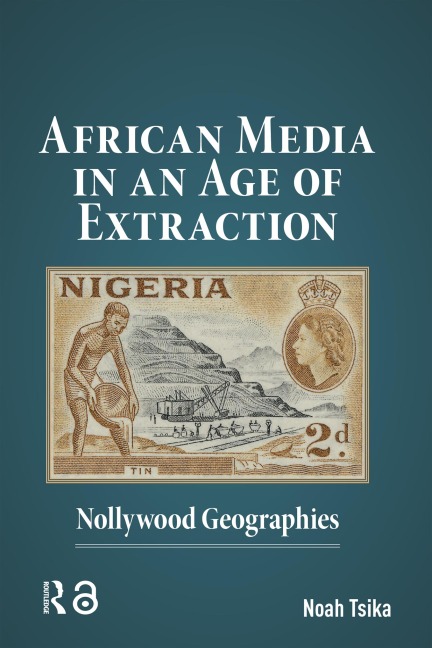
African Media in an Age of Extraction takes a fresh, site-specific look at the relationship between moving images and the mining of natural resources, arguing that where we "place" Nollywood and other industries has important practical and conceptual consequences. Such locations are not just spatial metaphors but also tangible geographies with material connections to extractive economies. Sites of film production are often spaces of oil prospecting, timber harvesting, and mineral extraction-natural environments continuously transformed by capital. African Media in an Age of Extraction links such absolute spaces-reclaimed lands, razed forests, petroleum zones, abandoned coal mines collecting moss, vast tin fields inspiring illegal dredging by populations locked out of the licit economy-to the abstract and lived dimensions of film villages, shooting locations, and exhibition centers. The geographies of African media industries are not fixed locations cleanly separated from surrounding areas or from the wider world (including Hollywood), nor are they fully detachable from the mineral and hydrocarbon resources that also define them. Considering multiple scales-the local, the national, the regional, the continental, the planetary-this book takes stock of the physical terrain and extractive objects that Nollywood shares with other industries and that structure screen media more broadly. Topographies, political economies, national identities, and natural resources are entwined in ways that cinema makes intelligible and that carry the potential to transform the way we see the medium itself.
Noah Tsika is Professor of Film and Media Studies at Queens College and the City University of New York Graduate Center. His books include Nollywood Stars: Media and Migration in West Africa and the Diaspora and Cinematic Independence: Constructing the Big Screen in Nigeria.
Acknowledgments, Introduction: Nollywood's Spatial Frames, Chapter 1: Resource Cinemas: Sites, Symbols, and Specters of Extraction, Chapter 2: Breaking African Ground: Location Shooting and the Search for Resource Enclaves, Chapter 3: Dredging Nollywood: Corporations, Land Reclamation, and the Lure of Neoliberalism, Chapter 4: Twilight Forests: Cinema and Deforestation, Chapter 5: Bad Fuel: Oil Consciousness from Hollywood to Nollywood, Conclusion: Environments of Interaction, Bibliography, Index
Dieses eBook wird im PDF-Format geliefert und ist mit einem Adobe Kopierschutz (DRM) versehen. Sie können dieses eBook mit allen Geräten lesen, die das PDF-Format und den Adobe Kopierschutz (DRM) unterstützen.
Zum Beispiel mit den folgenden Geräten:
• tolino Reader
Laden Sie das eBook direkt über den Reader-Shop auf dem tolino herunter oder übertragen Sie das eBook auf Ihren tolino mit einer kostenlosen Software wie beispielsweise Adobe Digital Editions.
• Sony Reader & andere eBook Reader
Laden Sie das eBook direkt über den Reader-Shop herunter oder übertragen Sie das eBook mit der kostenlosen Software Sony READER FOR PC/Mac oder Adobe Digital Editions auf ein Standard-Lesegeräte mit epub- und Adobe DRM-Unterstützung.
• Tablets & Smartphones
Möchten Sie dieses eBook auf Ihrem Smartphone oder Tablet lesen, finden Sie hier unsere kostenlose Lese-App für iPhone/iPad und Android Smartphone/Tablets.
• PC & Mac
Lesen Sie das eBook direkt nach dem Herunterladen mit einer kostenlosen Lesesoftware, beispielsweise Adobe Digital Editions, Sony READER FOR PC/Mac oder direkt über Ihre eBook-Bibliothek in Ihrem Konto unter „Meine eBooks“ - „online lesen“.
Schalten Sie das eBook mit Ihrer persönlichen Adobe ID auf bis zu sechs Geräten gleichzeitig frei.
Bitte beachten Sie, dass die Kindle-Geräte das Format nicht unterstützen und dieses eBook somit nicht auf Kindle-Geräten lesbar ist.