Und dann auf "Zum Home-Bildschirm [+]".

Stöbern
genialokal zum Startbildschirm hinzufügen
Installieren Sie die genialokal App auf Ihrem Startbildschirm für einen schnellen Zugriff und eine komfortable Nutzung.
Installieren Sie die genialokal App auf Ihrem Startbildschirm für einen schnellen Zugriff und eine komfortable Nutzung.
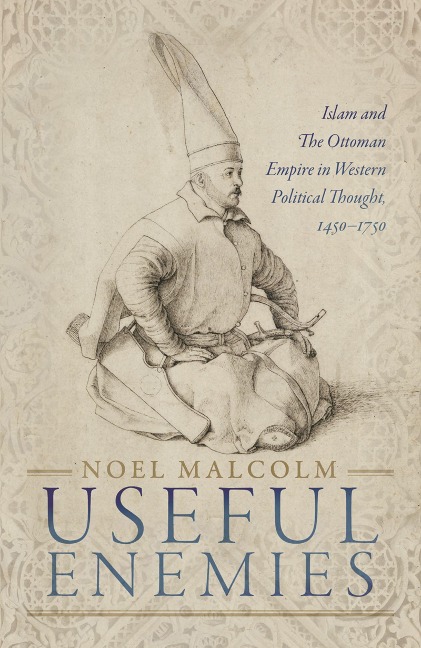
From the fall of Constantinople in 1453 until the eighteenth century, many Western European writers viewed the Ottoman Empire with almost obsessive interest. Typically they reacted to it with fear and distrust; and such feelings were reinforced by the deep hostility of Western Christendom towards Islam. Yet there was also much curiosity about the social and political system on which the huge power of the sultans was based. In the sixteenth century, especially, when Ottoman territorial expansion was rapid and Ottoman institutions seemed particularly robust, there was even open admiration. In this path-breaking book Noel Malcolm ranges through these vital centuries of East-West interaction, studying all the ways in which thinkers in the West interpreted the Ottoman Empire as a political phenomenon - and Islam as a political religion. Useful Enemies shows how the concept of 'oriental despotism' began as an attempt to turn the tables on a very positive analysis of Ottoman state power, and how, as it developed, it interacted with Western debates about monarchy and government. Noel Malcolm also shows how a negative portrayal of Islam as a religion devised for political purposes was assimilated by radical writers, who extended the criticism to all religions, including Christianity itself. Examining the works of many famous thinkers (including Machiavelli, Bodin, and Montesquieu) and many less well-known ones, Useful Enemies illuminates the long-term development of Western ideas about the Ottomans, and about Islam. Noel Malcolm shows how these ideas became intertwined with internal Western debates about power, religion, society, and war. Discussions of Islam and the Ottoman Empire were thus bound up with mainstream thinking in the West on a wide range of important topics. These Eastern enemies were not just there to be denounced. They were there to be made use of, in arguments which contributed significantly to the development of Western political thought.
Noel Malcolm read History and English Literature at Peterhouse, Cambridge, and was a research student at Trinity College, Cambridge, where he wrote his doctoral thesis on Thomas Hobbes. He began his career as Fellow of Gonville and Caius Colleege, Cambridge; he was then political columnist and, subsequently, Foreign Editor of the Spectator, and then chief political columnist of the Daily Telegraph. He gave the Carlyle Lectures at Oxford in 2001 and, since 2002, he has been a Senior Research Fellow at All Souls College, Oxford. He is a Fellow of the British Academy, and an Honorary Fellow of Peterhouse, Trinity, and Gonville and Caius. He has published books and articles on, among other subjects, early modern philosophy (with a particular emphasis on Hobbes), and the history and culture of the Balkans, especially during the Ottoman period. He was knighted in 2014 for services to scholarship, journalism, and European history.
- Preface - 1: The Fall of Constantinople, the Turks, and the Humanists - 2: Views of Islam: standard assumptions - 3: Habsburgs and Ottomans: 'Europe' and the conflict of empires - 4: Protestantism, Calvinoturcism, and Turcopapalism - 5: Alliances with the infidel - 6: The new paradigm - 7: Machiavelli and Reason of State - 8: Campanella - 9: Despotism I: the origins - 10: Analyses of Ottoman strength and weakness - 11: Justifications of warfare, and plans for war and peace - 12: Islam as a political religion - 13: Critical and radical uses of Islam I: Vanini to Toland - 14: Critical and radical uses of Islam II: Bayle to Voltaire - 15: Despotism II: seventeenth-century theories - 16: Despotism III: Montesquieu - Conclusion - List of manuscripts - Bibliography - Index
Dieses eBook wird im PDF-Format geliefert und ist mit einem Adobe Kopierschutz (DRM) versehen. Sie können dieses eBook mit allen Geräten lesen, die das PDF-Format und den Adobe Kopierschutz (DRM) unterstützen.
Zum Beispiel mit den folgenden Geräten:
• tolino Reader
Laden Sie das eBook direkt über den Reader-Shop auf dem tolino herunter oder übertragen Sie das eBook auf Ihren tolino mit einer kostenlosen Software wie beispielsweise Adobe Digital Editions.
• Sony Reader & andere eBook Reader
Laden Sie das eBook direkt über den Reader-Shop herunter oder übertragen Sie das eBook mit der kostenlosen Software Sony READER FOR PC/Mac oder Adobe Digital Editions auf ein Standard-Lesegeräte mit epub- und Adobe DRM-Unterstützung.
• Tablets & Smartphones
Möchten Sie dieses eBook auf Ihrem Smartphone oder Tablet lesen, finden Sie hier unsere kostenlose Lese-App für iPhone/iPad und Android Smartphone/Tablets.
• PC & Mac
Lesen Sie das eBook direkt nach dem Herunterladen mit einer kostenlosen Lesesoftware, beispielsweise Adobe Digital Editions, Sony READER FOR PC/Mac oder direkt über Ihre eBook-Bibliothek in Ihrem Konto unter „Meine eBooks“ - „online lesen“.
Schalten Sie das eBook mit Ihrer persönlichen Adobe ID auf bis zu sechs Geräten gleichzeitig frei.
Bitte beachten Sie, dass die Kindle-Geräte das Format nicht unterstützen und dieses eBook somit nicht auf Kindle-Geräten lesbar ist.