Und dann auf "Zum Home-Bildschirm [+]".

Stöbern
genialokal zum Startbildschirm hinzufügen
Installieren Sie die genialokal App auf Ihrem Startbildschirm für einen schnellen Zugriff und eine komfortable Nutzung.
Installieren Sie die genialokal App auf Ihrem Startbildschirm für einen schnellen Zugriff und eine komfortable Nutzung.
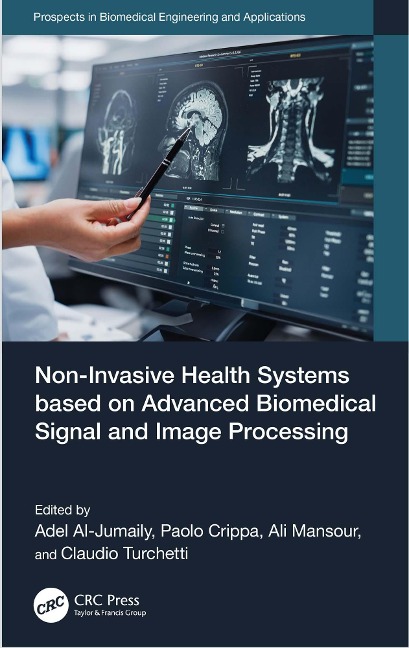
This book contains up-to-date noninvasive monitoring and diagnosing systems closely developed by a set of scientists, engineers, and physicians. The chapters are the results of different biomedical projects and theoretical studies that were coupled by simulations and real-world data. Non-Invasive Health Systems based on Advanced Biomedical Signal and Image Processing provides a multifaceted view of various biomedical and clinical approaches to health monitoring systems. The authors introduce advanced signal- and image-processing techniques as well as other noninvasive monitoring and diagnostic systems such as inertial sensors in wearable devices and novel algorithm-based hybrid learning systems for biosignal processing. The book includes a discussion of designing electronic circuits and systems for biomedical applications and analyzes several issues related to real-world data and how they relate to health technology including ECG signal monitoring and processing in the operating room. The authors also include detailed discussions of different systems for monitoring various conditions and diseases including sleep apnea, skin cancer, deep vein thrombosis, and prosthesis controls. This book is intended for a wide range of readers including scientists, researchers, physicians, and electronics and biomedical engineers. It will cover the gap between theory and real life applications.
Adel Al-Jumaily is a researcher and academic leader with more than two decades of experience. He is a Professor at the University of Technology Brunei and a professor research fellow at ENSTA-Bretagne. His research area is Computational Intelligence and Humanized Computational Intelligence. He has published more than 250 peer-reviewed papers. He has 13 patents, 12 of which are sponsored by industry. Adel has supervised more than 40 PhD and master's students and received two supervision awards. Paolo Crippa is an Associate Professor of electronics at the Department of Information Engineering of the Universita Politecnica delle Marche, Ancona, Italy. His research interests include micro and nanoelectronics, statistical device modeling, mixed-signal and RF integrated circuit design, biomedical circuits, systems and signal processing, neural networks, and non-linear system identification. He has published more than 120 papers in international journals, edited books, and conference proceedings. He is a member of the editorial boards and technical program committees of several international scientific journals and conferences. He is an IEEE senior member and a member of the Italian AEIT. Ali Mansour has held many positions: Postdoctoral at LTIRF-INPG (Grenoble- France), Researcher at BMC-RIKEN (Nagoya-Japan), Teacher-Researcher at ENSIETA (Brest-France), Senior-Lecturer at Curtin-University (Perth-Australia), Invited- Professor at ULCO (Calais-France), Professor at Tabuk University (KSA), and recently Professor at ENSTA-Bretagne (Brest-France). He has published numerous refereed publications, several books, and book chapters, and has supervised many Post- Docs, PhDs, and MScs. He is interested in statistics, signal processing, robotics, telecom, biomedical engineering, electronic warfare, and cognitive radio. Claudio Turchetti received the Laurea degree in electronics engineering from the University of Ancona, Italy, in 1979. He joined the Universita Politecnica delle Marche, Ancona, in 1980, where he is currently a Full Professor of Embedded Systems design. He has published more than 160 papers, the most relevant are in IEEE Journal of Solid-State Circuits, IEEE Transactions on Electron Devices, IEEE Transactions on Neural Networks and Learning Systems, IEEE Transaction on Signal Processing, IEEE Transaction on Cybernetics, IEEE Journal of Biomedical and Health Informatics, IEEE Transaction on Consumer Electronics, IEEE Journal on Emerging and Selected Topics in Circuits and Systems, IEEE Access, and IEEE Open Journal on Circuits and Systems.
1. Upper Limb Recovery Prediction Based on Multilevel Mixed Effect EMG Synergy and Biomarker Values. 2. EMG Feature Extraction Based on Cardinality with Deep Learning Concepts. 3. Surface Electromyography Sensors for Human Activity Recognition: Recent Advancements and Perspectives. 4. ECG signal monitoring and processing in the operating room. 5. Photoplethysmography and Inertial Sensors in Wearable Devices for Healthcare: Multimodal Signal Processing for Increasing Accuracy. 6. Non-invasive system for measuring parameters relevant to sleep quality and detecting sleep diseases: The data model. 7. PREDICTING INCIDENCE OF STROKE VIA SUPERVISED MACHINE LEARNING METHODS ON CLASS IMBALANCED DATA. 8. Ultrasound vector flow imaging, a promising technique towards a new carotid atheroma risk stratification. 9. A Pre-screening Technique for Coronary Artery Disease with Multi-channel Phonocardiography and Electrocardiography. 10. Exploring the feasibility of estimating the carotid-to-femoral pulse wave velocity using machine learning algorithms. 11. DVT Diagnosis based on HOS & Scattering Operators. 12. Non-invasive AI-assisted Techniques for 3D Printing of the Heart via Image Analysis: Current State, Challenges, and Future Directions. 13. COVID-19 and Pneumonia Detection System using Deep Learning with Chest X-ray Images. 14. Scattering Operators and high order statistics along with Elastography to Identify & Characterize Salivary Gland Abnormalities. 15. SA-SVM Classification-Based Smart Feature Selection Algorithm for Skin Cancer Detection. 16. A Review on Advanced CNN Architecture in Diagnosing Alzheimer's Disease. 17. Combination of sensors-based monitoring system and internet of things (IoT): A survey and framework for remote and intensive care unit patients. 18. End-to end solutions for the Remote Monitoring of Post-operative Prehabilitation program: IoT solution challenges.
Dieses eBook wird im PDF-Format geliefert und ist mit einem Adobe Kopierschutz (DRM) versehen. Sie können dieses eBook mit allen Geräten lesen, die das PDF-Format und den Adobe Kopierschutz (DRM) unterstützen.
Zum Beispiel mit den folgenden Geräten:
• tolino Reader
Laden Sie das eBook direkt über den Reader-Shop auf dem tolino herunter oder übertragen Sie das eBook auf Ihren tolino mit einer kostenlosen Software wie beispielsweise Adobe Digital Editions.
• Sony Reader & andere eBook Reader
Laden Sie das eBook direkt über den Reader-Shop herunter oder übertragen Sie das eBook mit der kostenlosen Software Sony READER FOR PC/Mac oder Adobe Digital Editions auf ein Standard-Lesegeräte mit epub- und Adobe DRM-Unterstützung.
• Tablets & Smartphones
Möchten Sie dieses eBook auf Ihrem Smartphone oder Tablet lesen, finden Sie hier unsere kostenlose Lese-App für iPhone/iPad und Android Smartphone/Tablets.
• PC & Mac
Lesen Sie das eBook direkt nach dem Herunterladen mit einer kostenlosen Lesesoftware, beispielsweise Adobe Digital Editions, Sony READER FOR PC/Mac oder direkt über Ihre eBook-Bibliothek in Ihrem Konto unter „Meine eBooks“ - „online lesen“.
Schalten Sie das eBook mit Ihrer persönlichen Adobe ID auf bis zu sechs Geräten gleichzeitig frei.
Bitte beachten Sie, dass die Kindle-Geräte das Format nicht unterstützen und dieses eBook somit nicht auf Kindle-Geräten lesbar ist.