Und dann auf "Zum Home-Bildschirm [+]".

Stöbern
genialokal zum Startbildschirm hinzufügen
Installieren Sie die genialokal App auf Ihrem Startbildschirm für einen schnellen Zugriff und eine komfortable Nutzung.
Installieren Sie die genialokal App auf Ihrem Startbildschirm für einen schnellen Zugriff und eine komfortable Nutzung.
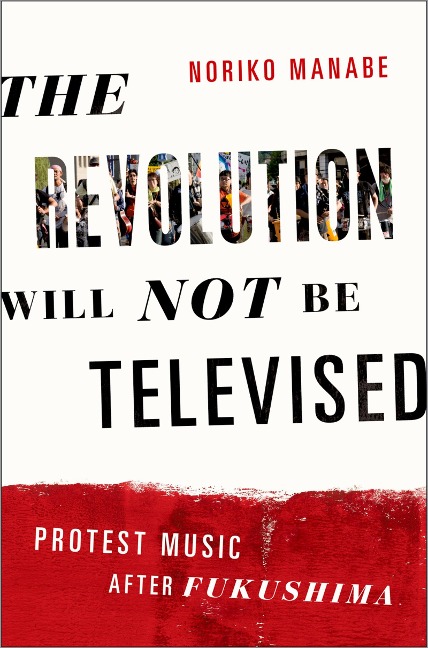
Nuclear power has been a contentious issue in Japan since the 1950s, and in the aftermath of the Fukushima nuclear power plant disaster, the conflict has only grown. Government agencies and the nuclear industry continue to push a nuclear agenda, while the mainstream media adheres to the official line that nuclear power is Japan's future. Public debate about nuclear energy is strongly discouraged. Nevertheless, antinuclear activism has swelled into one of the most popular and passionate movements in Japan, leading to a powerful wave of protest music. The Revolution Will Not Be Televised: Protest Music After Fukushima shows that music played a central role in expressing antinuclear sentiments and mobilizing political resistance in Japan. Combining musical analysis with ethnographic participation, author Noriko Manabe offers an innovative typology of the spaces central to the performance of protest music--cyberspace, demonstrations, festivals, and recordings. She argues that these four spaces encourage different modes of participation and methods of political messaging. The openness, mobile accessibility, and potential anonymity of cyberspace have allowed musicians to directly challenge the ethos of silence that permeated Japanese culture post-Fukushima. Moving from cyberspace to real space, Manabe shows how the performance and reception of music played at public demonstrations are shaped by the urban geographies of Japanese cities. While short on open public space, urban centers in Japan offer protesters a wide range of governmental and commercial spaces in which to demonstrate, with activist musicians tailoring their performances to the particular landscapes and soundscapes of each. Music festivals are a space apart from everyday life, encouraging musicians and audience members to freely engage in political expression through informative and immersive performances. Conversely, Japanese record companies and producers discourage major-label musicians from expressing political views in recordings, forcing antinuclear musicians to express dissent indirectly: through allegories, metaphors, and metonyms. The first book on Japan's antinuclear music, The Revolution Will Not Be Televised provides a compelling new perspective on the role of music in political movements.
Noriko Manabe is Assistant Professor of Music at Princeton University. She has been conducting field research on the Japanese antinuclear movement since 2011 and on Japanese hip-hop, reggae, and EDM scenes since 2005. She was previously a ranked analyst researching the internet, media, and videogame industries at JP Morgan in Tokyo. She holds a PhD in Music from CUNY Graduate Center with concentrations in ethnomusicology and music theory.
I Section One: The Background 1 Introduction: Analyzing political music under self-censorship 2 The nuclear past and present: Structures of power and civil resistance 3 Musicians in the antinuclear movement: Motivations, roles, and risks II Section Two: Spaces of Protest 4 Cyberspace: Playback and participation 5.1 Demonstrations (1): Introduction to music in demonstrations 5.2 Demonstrations (2): Emergence of sound demonstrations 5.3 Demonstrations (3): The evolution of performance style in antinuclear demonstrations 5.4 Demonstrations (4): Urban geography, music, and protest 6 Festivals: Differing models of communication 7 Recordings: Allegories, metaphors, and metonyms 8 Conclusion: Protesting under (and against) constraints Bibliography
Dieses eBook wird im PDF-Format geliefert und ist mit einem Adobe Kopierschutz (DRM) versehen. Sie können dieses eBook mit allen Geräten lesen, die das PDF-Format und den Adobe Kopierschutz (DRM) unterstützen.
Zum Beispiel mit den folgenden Geräten:
• tolino Reader
Laden Sie das eBook direkt über den Reader-Shop auf dem tolino herunter oder übertragen Sie das eBook auf Ihren tolino mit einer kostenlosen Software wie beispielsweise Adobe Digital Editions.
• Sony Reader & andere eBook Reader
Laden Sie das eBook direkt über den Reader-Shop herunter oder übertragen Sie das eBook mit der kostenlosen Software Sony READER FOR PC/Mac oder Adobe Digital Editions auf ein Standard-Lesegeräte mit epub- und Adobe DRM-Unterstützung.
• Tablets & Smartphones
Möchten Sie dieses eBook auf Ihrem Smartphone oder Tablet lesen, finden Sie hier unsere kostenlose Lese-App für iPhone/iPad und Android Smartphone/Tablets.
• PC & Mac
Lesen Sie das eBook direkt nach dem Herunterladen mit einer kostenlosen Lesesoftware, beispielsweise Adobe Digital Editions, Sony READER FOR PC/Mac oder direkt über Ihre eBook-Bibliothek in Ihrem Konto unter „Meine eBooks“ - „online lesen“.
Schalten Sie das eBook mit Ihrer persönlichen Adobe ID auf bis zu sechs Geräten gleichzeitig frei.
Bitte beachten Sie, dass die Kindle-Geräte das Format nicht unterstützen und dieses eBook somit nicht auf Kindle-Geräten lesbar ist.