Und dann auf "Zum Home-Bildschirm [+]".

Stöbern
genialokal zum Startbildschirm hinzufügen
Installieren Sie die genialokal App auf Ihrem Startbildschirm für einen schnellen Zugriff und eine komfortable Nutzung.
Installieren Sie die genialokal App auf Ihrem Startbildschirm für einen schnellen Zugriff und eine komfortable Nutzung.
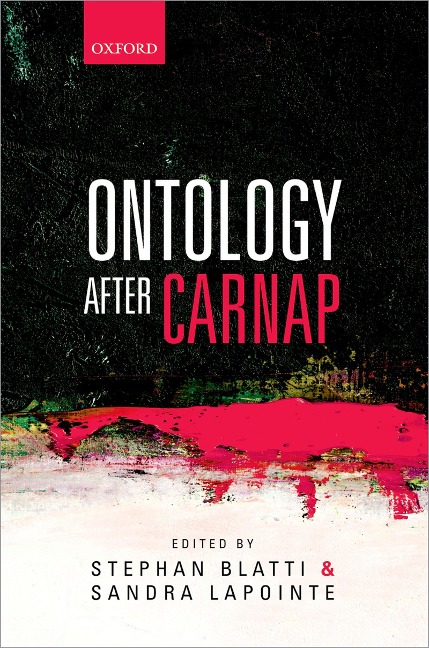
Analytic philosophy is once again in a methodological frame of mind. Nowhere is this more evident than in metaphysics, whose practitioners and historians are actively reflecting on the nature of ontological questions, the status of their answers, and the relevance of contributions both from other areas within philosophy (e.g., philosophical logic, semantics) and beyond (notably, the natural sciences). Such reflections are hardly new: the debate between Willard van Orman Quine and Rudolf Carnap about how to understand and resolve ontological questions is widely seen as a turning point in twentieth-century analytic philosophy. And indeed, this volume is occasioned by the fact that the deflationary approach to metaphysics advocated by Carnap in that debate is once again attracting considerable interest and support.
Containing eleven original essays by many of today's leading voices in metametaphysics, Ontology After Carnap aims both to deepen our understanding of Carnap's contributions to metaontology and to explore how this legacy might be mined for insights into the contemporary debate. This collection will be of interest to scholars and students working in metaphysics, semantics, philosophical logic, metaphilosophy, and the history of analytic philosophy.
Stephan Blatti is Associate Professor and Chair of Philosophy at the University of Memphis, where he also serves as Director of the Marcus W. Orr Center for the Humanities and is an affiliate member of the Institute for Intelligent Systems. His work focuses primarily on personal identity and its relation to issues in ontology, philosophical psychology, philosophy of biology, and at the intersection of metaphysics and ethics. In addition to numerous articles, he is the co-editor (with Paul Snowdon) of Animalism: New Essays on Persons, Animals and Identity (OUP, 2016) Sandra Lapointe is an Associate Professor of Philosophy and a Research Affiliate of the Bertrand Russell Research Centre at McMaster University. A Commonwealth alumna and a Fellow of the Humboldt Foundation, she completed her PhD in 2000 at the University of Leeds (UK) and held various research positions (Montreal, Luxembourg, France) before accepting tenure-track jobs at Concordia University in Montreal and then at Kansas State University in Manhattan, Kansas. She specializes in the history of analytical philosophy. Her published work includes New Anti-Kant (ed., with Clinton Tolley, 2014), Bolzano's Theoretical Philosophy (2011), Qu'est-ce que l'analyse? (2008), and a number of other books, articles, and book chapters. She is currently the Chief Editor of the Journal for the History of Analytical Philosophy and coordinates the activities of the Society for the Study of the History of Analytical Philosophy.
- 1: Stephan Blatti and Sandra Lapointe: Introduction - 2: Thomas Hofweber: Carnap's Big Idea - 3: Robert Kraut: Three Carnaps on Ontology - 4: Alan Sidelle: Frameworks and Deflation in 'Empiricism, Semantics and Ontology' and Recent Metametaphysics - 5: Stephen Biggs and Jessica Wilson: Carnap, the Necessary A Posteriori, and Metaphysical Nihilism - 6: Eli Hirsch: Three Degrees of Carnapian Tolerance - 7: Amie Thomasson: Carnap and the Prospects for Easy Ontology - 8: Simon Evnine: Much Ado about Something-from-Nothing; or, Problems for Ontological Minimalism - 9: Matti Eklund: Carnap's Legacy for the Contemporary Metaontological Debate - 10: Richard Creath: Carnap and Ontology: Foreign Travel and Domestic Understanding - 11: Greg Lavers: Carnap on Abstract and Theoretical Entities - 12: Kathrin Koslicki: Questions of Ontology
Dieses eBook wird im PDF-Format geliefert und ist mit einem Adobe Kopierschutz (DRM) versehen. Sie können dieses eBook mit allen Geräten lesen, die das PDF-Format und den Adobe Kopierschutz (DRM) unterstützen.
Zum Beispiel mit den folgenden Geräten:
• tolino Reader
Laden Sie das eBook direkt über den Reader-Shop auf dem tolino herunter oder übertragen Sie das eBook auf Ihren tolino mit einer kostenlosen Software wie beispielsweise Adobe Digital Editions.
• Sony Reader & andere eBook Reader
Laden Sie das eBook direkt über den Reader-Shop herunter oder übertragen Sie das eBook mit der kostenlosen Software Sony READER FOR PC/Mac oder Adobe Digital Editions auf ein Standard-Lesegeräte mit epub- und Adobe DRM-Unterstützung.
• Tablets & Smartphones
Möchten Sie dieses eBook auf Ihrem Smartphone oder Tablet lesen, finden Sie hier unsere kostenlose Lese-App für iPhone/iPad und Android Smartphone/Tablets.
• PC & Mac
Lesen Sie das eBook direkt nach dem Herunterladen mit einer kostenlosen Lesesoftware, beispielsweise Adobe Digital Editions, Sony READER FOR PC/Mac oder direkt über Ihre eBook-Bibliothek in Ihrem Konto unter „Meine eBooks“ - „online lesen“.
Schalten Sie das eBook mit Ihrer persönlichen Adobe ID auf bis zu sechs Geräten gleichzeitig frei.
Bitte beachten Sie, dass die Kindle-Geräte das Format nicht unterstützen und dieses eBook somit nicht auf Kindle-Geräten lesbar ist.