Und dann auf "Zum Home-Bildschirm [+]".

Stöbern
genialokal zum Startbildschirm hinzufügen
Installieren Sie die genialokal App auf Ihrem Startbildschirm für einen schnellen Zugriff und eine komfortable Nutzung.
Installieren Sie die genialokal App auf Ihrem Startbildschirm für einen schnellen Zugriff und eine komfortable Nutzung.
Ihr gewünschter Artikel ist in 0 Buchhandlungen vorrätig - wählen Sie hier eine Buchhandlung in Ihrer Nähe aus:

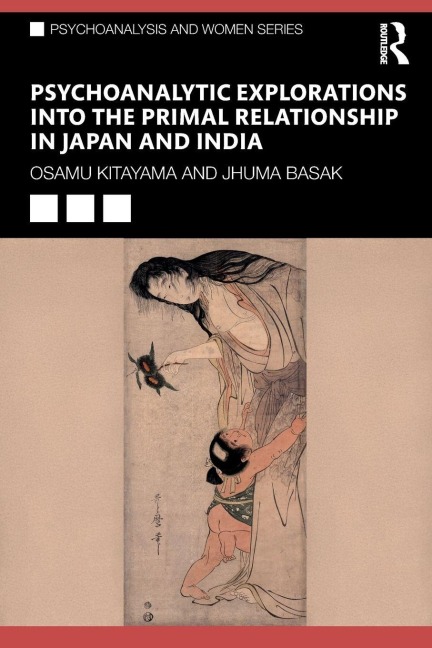
In this landmark collaboration, Osamu Kitayama and Jhuma Basak chronical their long-standing collaboration and cultural exchange to survey the importance of familial relationships in Japan and India, exploring primal relations through a cross-cultural psychoanalytic lens.
Osamu Kitayama is a Training and Supervising Analyst at the Japan Psychoanalytic Society, Professor Emeritus at Kyushu University and President of Hakuoh University. He served as President of the Japan Psychoanalytic Society from 2016-2019 and continues to work with patients in private practice. He has authored numerous articles on culturally oriented psychoanalysis and books. Jhuma Basak is a Training and Supervising Analyst at the Indian Psychoanalytical Society. She has published on culture and gender. Over the past 20 years, she has presented at IPA Congresses along with the first Keynote from Asia-Pacific, 4th IPA-region at the 53rd IPA Congress (International Journal of Psychoanalysis). A past Co-chair of COWAP Asia-Pacific, she co-edited Psychoanalytic and Socio-Cultural Perspectives on Women in India: Violence, Safety and Survival (2021).
Foreword Acknowledgement Content Introductions PART 1 The prohibition of 'Don't Look' in Mythology, Culture, & Clinical Contexts 1. Creating Bridges: Japanese 'resistance' and approaches 2. Depth-psychotherapy in Shame Culture 3. Re-weaving the story of the prohibition of 'Don't Look' 4. The Wounded Caretaker & Forced Guilt 5. Dependence and Transience: Beauty or Danger 6. Various Narratives Centring on "under the bridge" 7. Cultural Invocation of Maternal-fusion in Males - India and Japan 8. Vicissitudes of Transience in Covid Times - Reflection on 'Shame Culture', India PART 2 The Triadic Tryst 9. Being Drawn into a Primal scene 10. Music Heard When One jumps into a Swamp 11. Enthralled Infancy in a Bed of Parental Tryst PART 3 An Interface - 'Listening to Asian Female Voices' 12. Jhuma Basak to Osamu Kitayama 13. Osamu Kitayama to Jhuma Basak